
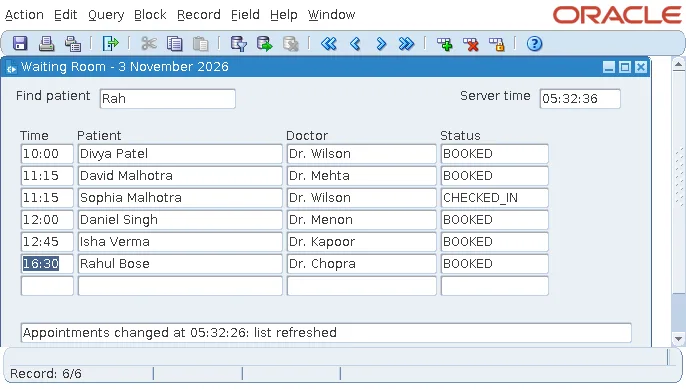
How to Use Timers in Oracle Forms
Timers in Oracle Forms 14.1.2: a clock, what repeating timers cost, and the one-shot timer that runs code a trigger cannot.
Timers in Oracle Forms 14.1.2: a clock, what repeating timers cost, and the one-shot timer that runs code a trigger cannot.
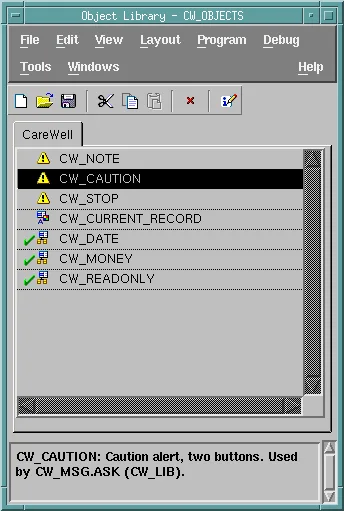
Keep every form of an Oracle Forms 14.1.2 application consistent with an object library: subclassing, SmartClasses, and template forms.
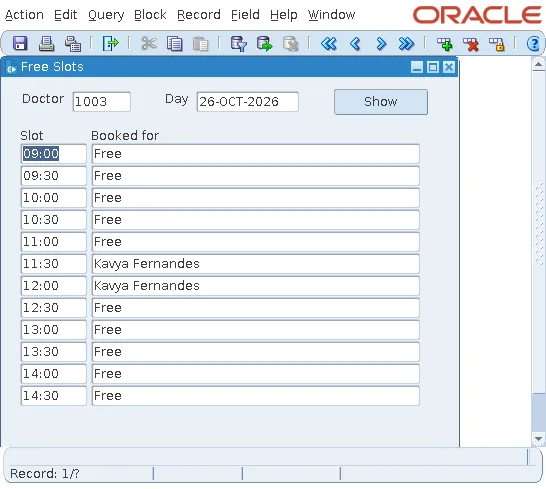
When rows exist in no table: an Oracle Forms 14.1.2 block on transactional triggers that computes a doctor's slots in ON-SELECT and ON-FETCH.
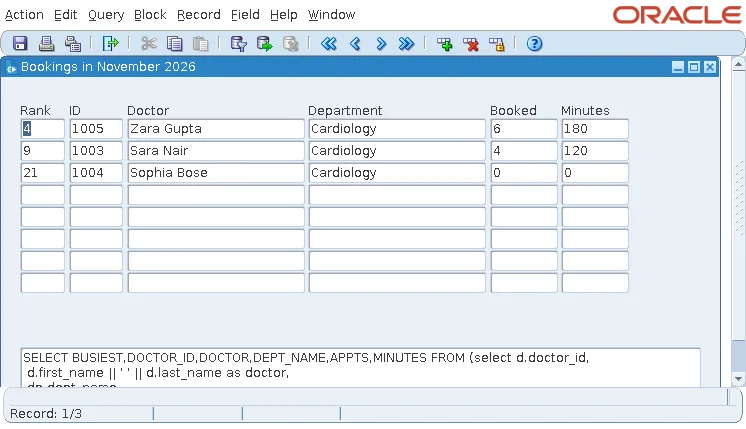
Show a report with ANSI joins and analytic functions in an Oracle Forms 14.1.2 block, without creating a view, and see the SQL it sends.
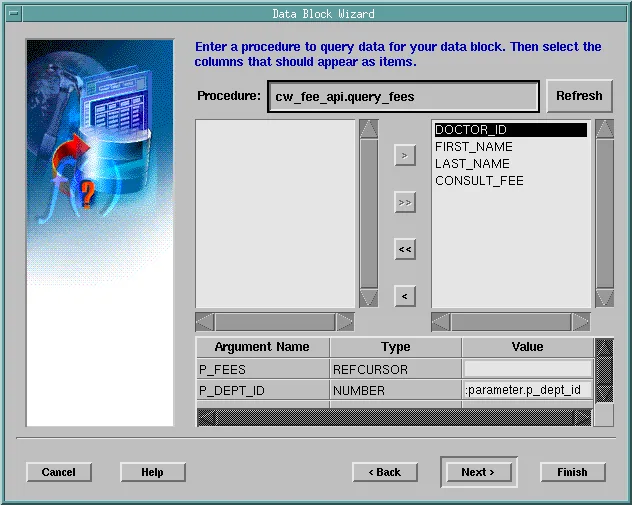
Route every query and change through a PL/SQL API: an Oracle Forms 14.1.2 block on stored procedures, from the package to its error messages.
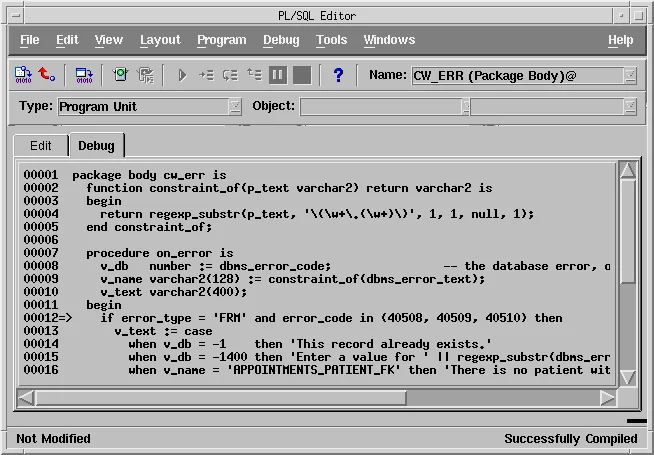
Find what goes wrong in Oracle Forms 14.1.2: run a form in the debugger, step through code, inspect variables, and attach to running forms.
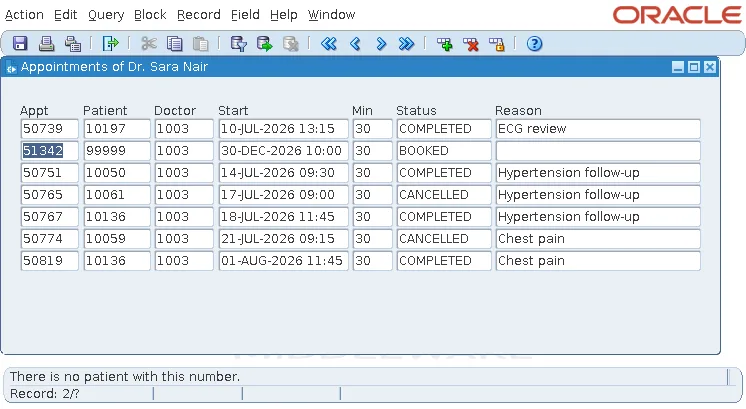
Messages, alerts, and errors in Oracle Forms 14.1.2, and how ON-ERROR turns database errors into messages users understand.
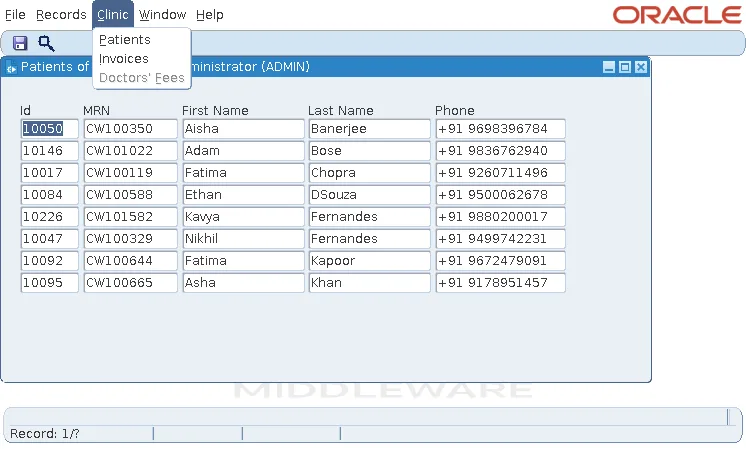
Application roles and database-role menu security in Oracle Forms 14.1.2: disabling menu items by role, checking roles in forms, and the setup.
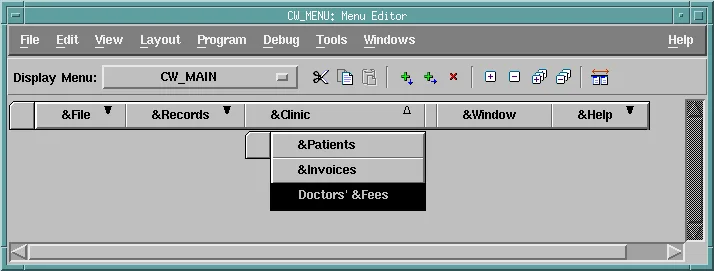
Replace the default menu in Oracle Forms 14.1.2 with your own menu module, popup menus, and items that change at run time.
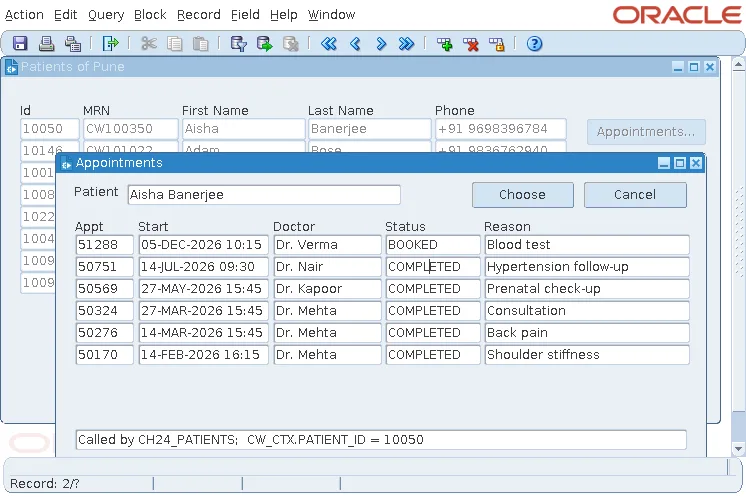
Parameter lists, global variables, and shared library data in Oracle Forms 14.1.2: how called forms get their input and return a choice.
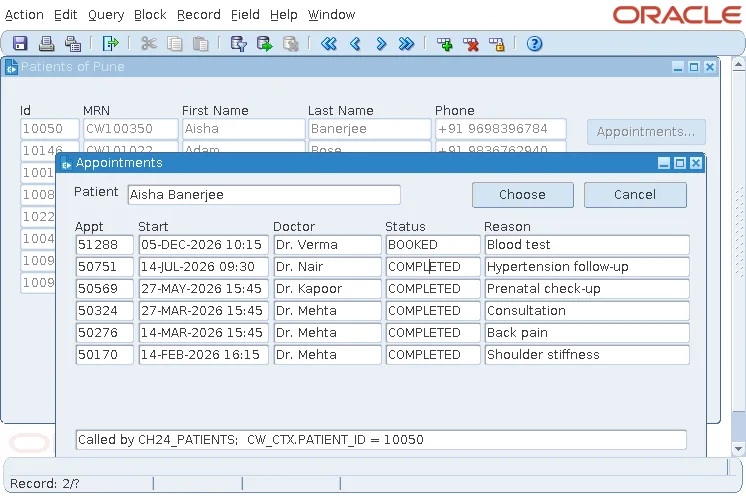
CALL_FORM, OPEN_FORM, and NEW_FORM in Oracle Forms 14.1.2: when to use each, their options, commits across forms, and switching forms.
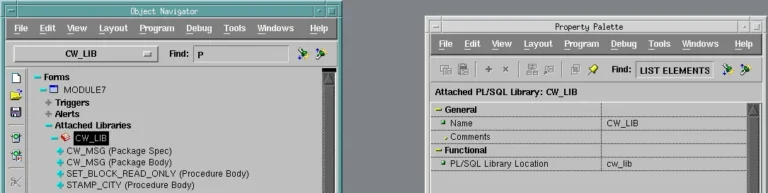
Share code across Oracle Forms 14.1.2 with a PL/SQL library: create it, attach it without a path, deploy the .plx, and change it safely.
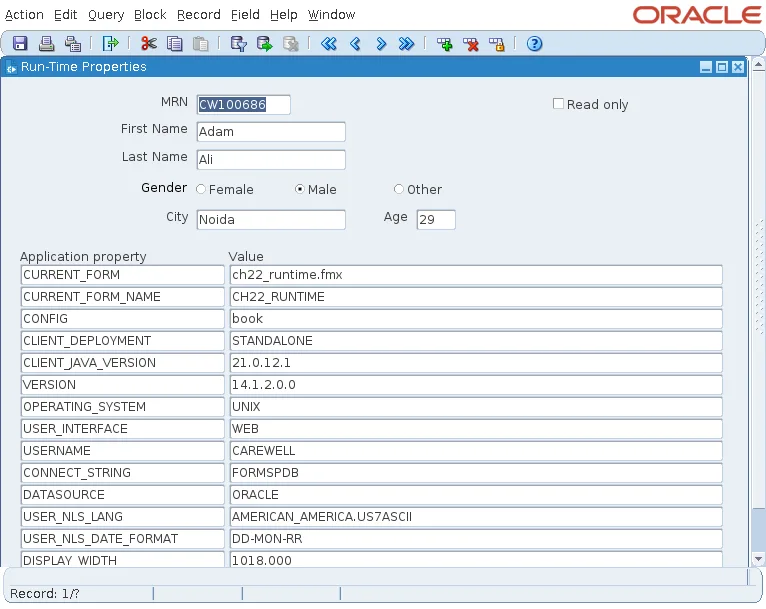
Every property GET_APPLICATION_PROPERTY returns in Oracle Forms 14.1.2, with a form that lists its own session, and what can be changed.
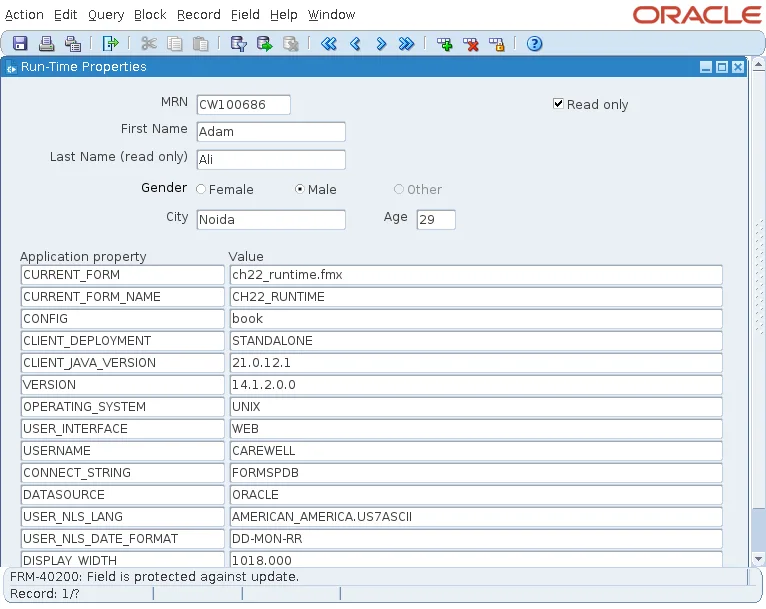
The FIND_, GET_, SET_ pattern of Oracle Forms 14.1.2, the item properties you change most, and generic code that walks a block.
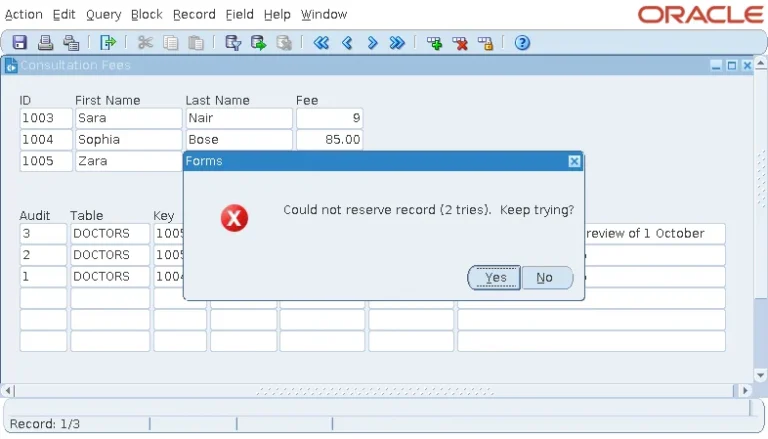
Record locking in Oracle Forms 14.1.2: Immediate and Delayed modes, locks held by others, rows changed by others, and preventing lost updates.
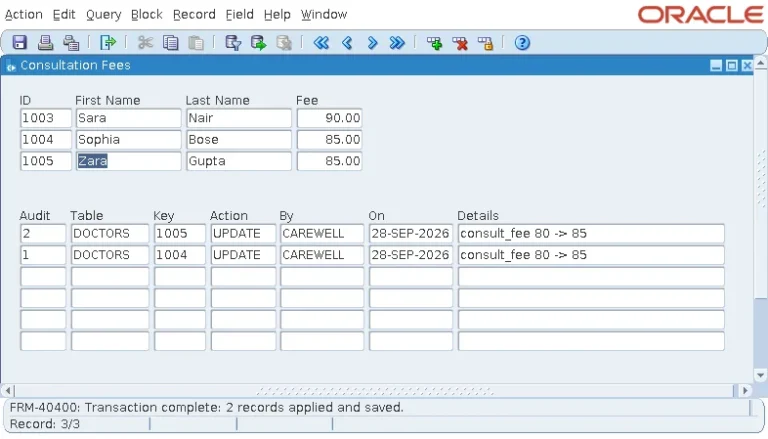
What happens when an Oracle Forms 14.1.2 form saves: the commit steps and triggers, audit rows, generated keys, POST, and rollback.
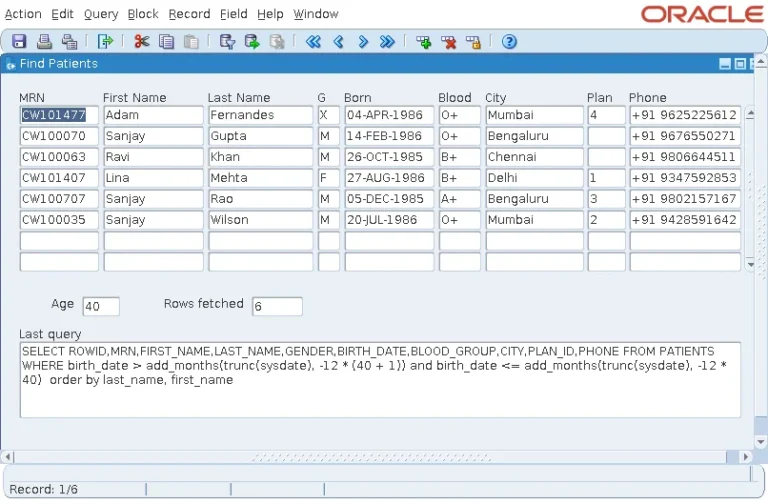
PRE-QUERY and POST-QUERY triggers, the query built-ins, the system variables of queries, and how Oracle Forms 14.1.2 fetches rows.
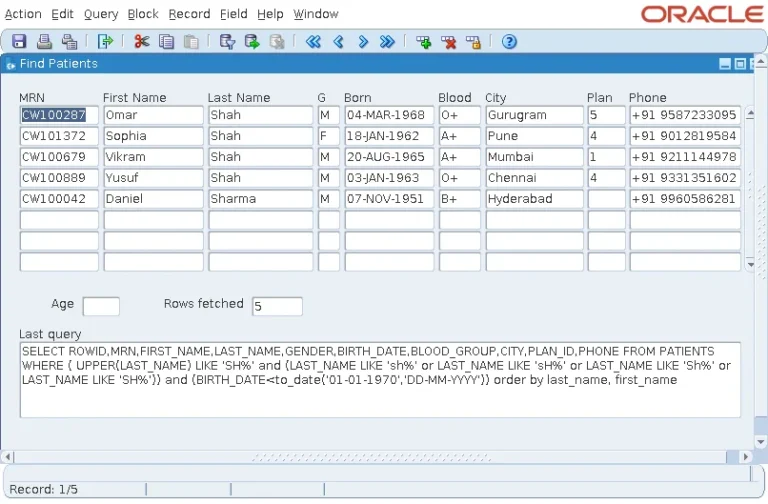
Query by example in Oracle Forms 14.1.2: Enter Query mode, every search operator, the SQL behind it, Count Query, and the Query/Where window.