Oracle APEX 26.1 API by Example
Every method and event of the APEX JavaScript API and every procedure and function of its PL/SQL packages — more than 1,850 APIs — each with an example that ran in APEX 26.1 and the output it really produced. Plus 32 practical recipes for the tasks you meet in every application.
- apex.item
- apex.region
- Interactive grid
- apex.server
- apex.model
- APEX_JSON
- APEX_EXEC
- APEX_WEB_SERVICE
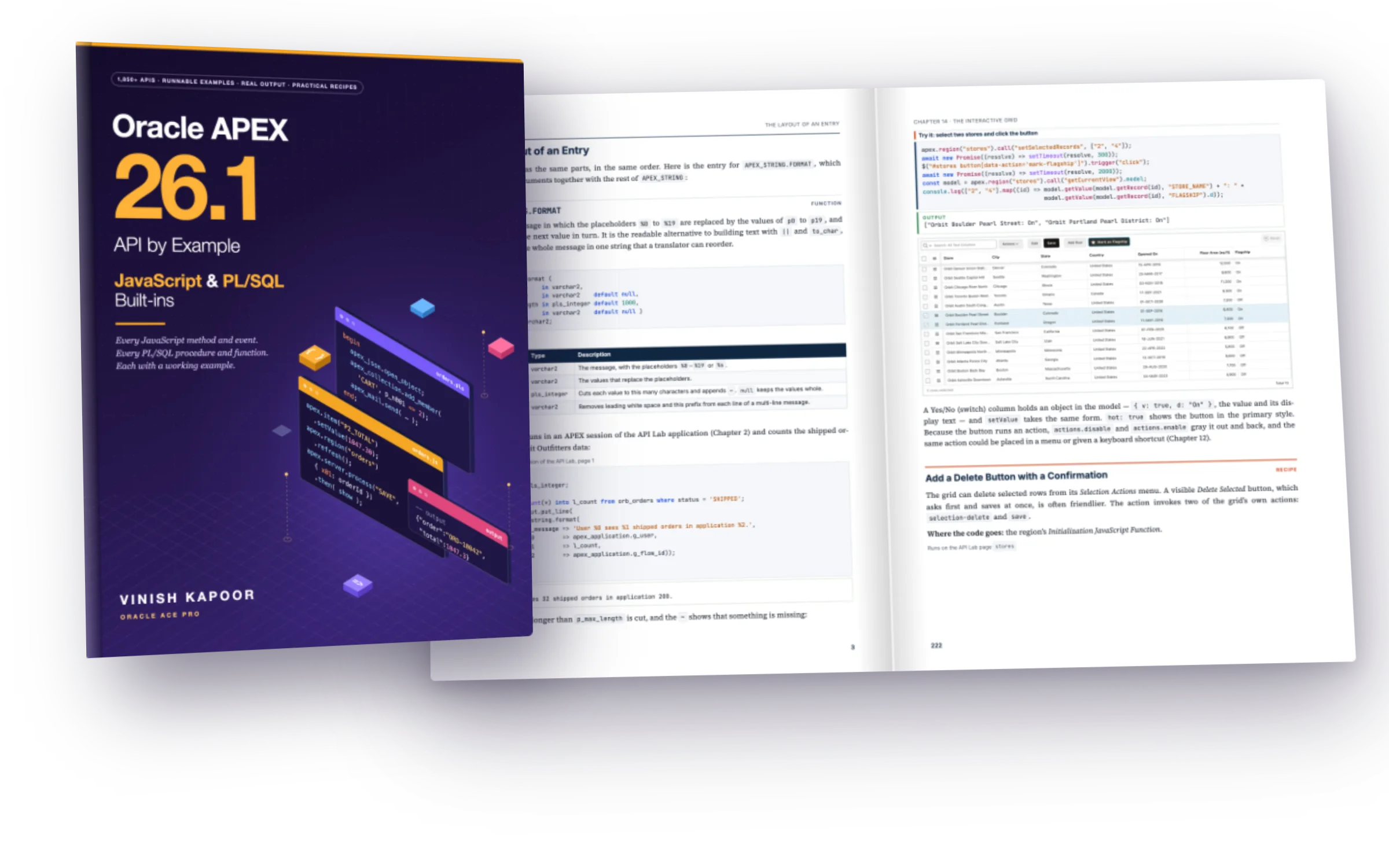
The API reference, with the examples it never had
The official reference tells you what a function takes. It rarely shows what it returns, how it behaves on a real page, or what to combine it with. This book runs every one of them and shows you.
Signatures, guesses, and trial runs
- Parameter lists with few examples, and almost never the output they produce.
- You test each call yourself to learn what it really returns.
- Snippets scattered over blogs and forums, each for a different APEX release.
- Behavior that differs from the documentation, found only in production.
Every API, run and shown
- An example for every method, event, procedure, and function, run in APEX 26.1.
- The real output of every example, printed as it came out — none of it typed by hand.
- 32 recipes that combine APIs: grid toolbars, dialogs, shortcuts, live totals.
- 18 places where APEX 26.1 behaves differently from its documentation, collected in Appendix B.
Syntax, example, real output
Every entry has the same parts, in the same order: what the API is for, how to call it, an example that runs in the book's API Lab, and exactly what that example printed.
Find the API
By task in the contents, or by name in Appendix C, which lists all 1,853 APIs with their pages. Each entry starts with its purpose and syntax.
Run the example
A short, practical example on a page of the API Lab, the application you install from the book's code repository.
Read the real output
What the example printed when it ran in APEX 26.1 — here, that the third argument suppresses the change event.
Real pages from the book
Syntax blocks, parameter tables, examples with their output, screenshots where the page changes, and recipes that say where each piece of code goes. Click any page to read it.
Pages shown from the full-color edition. The Kindle and Apple Books editions have every screenshot and code listing in color; the paperback is printed in black and white.
32 recipes for the tasks you meet every day
Chapters 4 to 16 end with recipes that combine several APIs. Each one says where the code goes — a dynamic action, the page's load code, a grid's Initialization JavaScript Function — and shows the result.
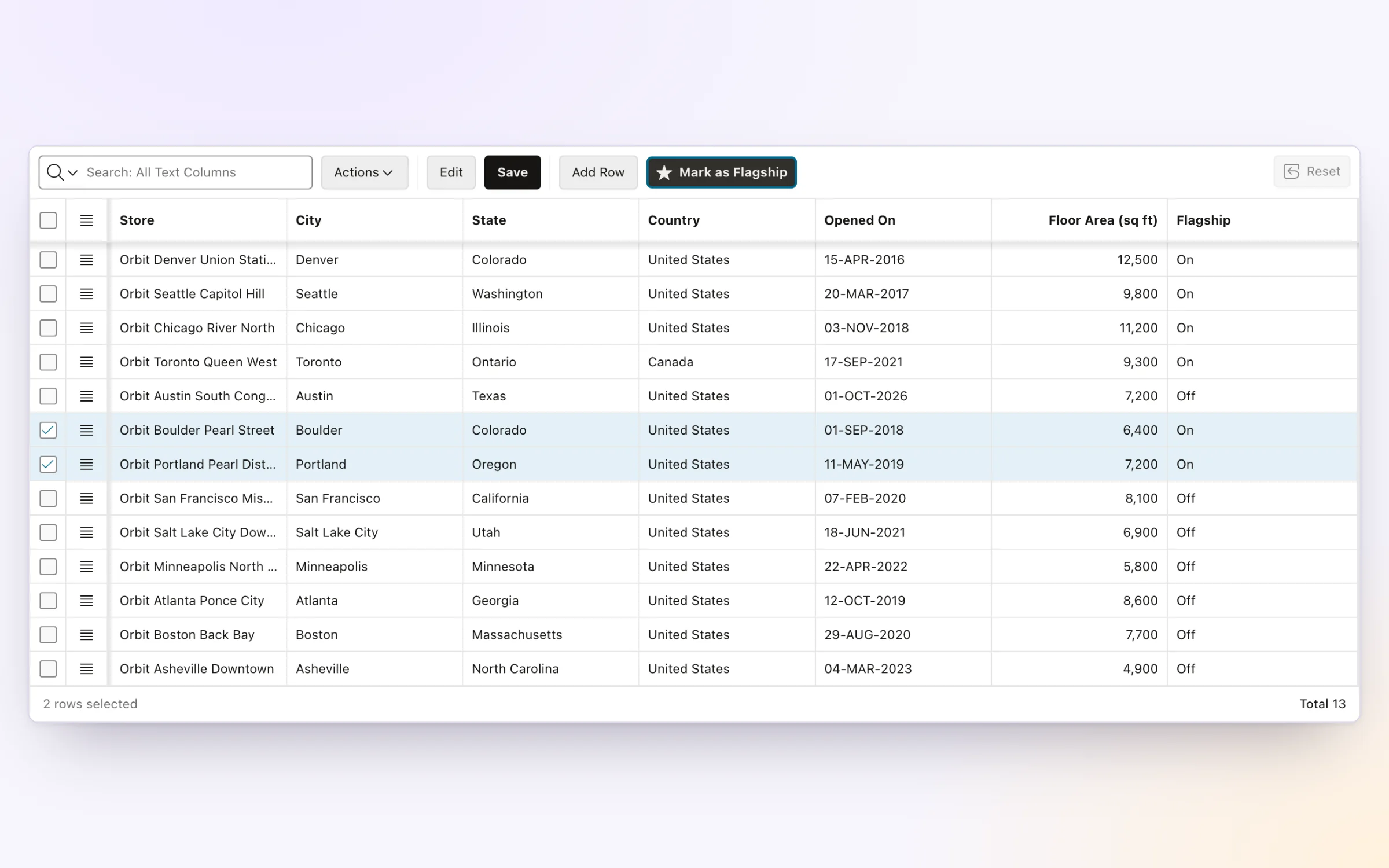
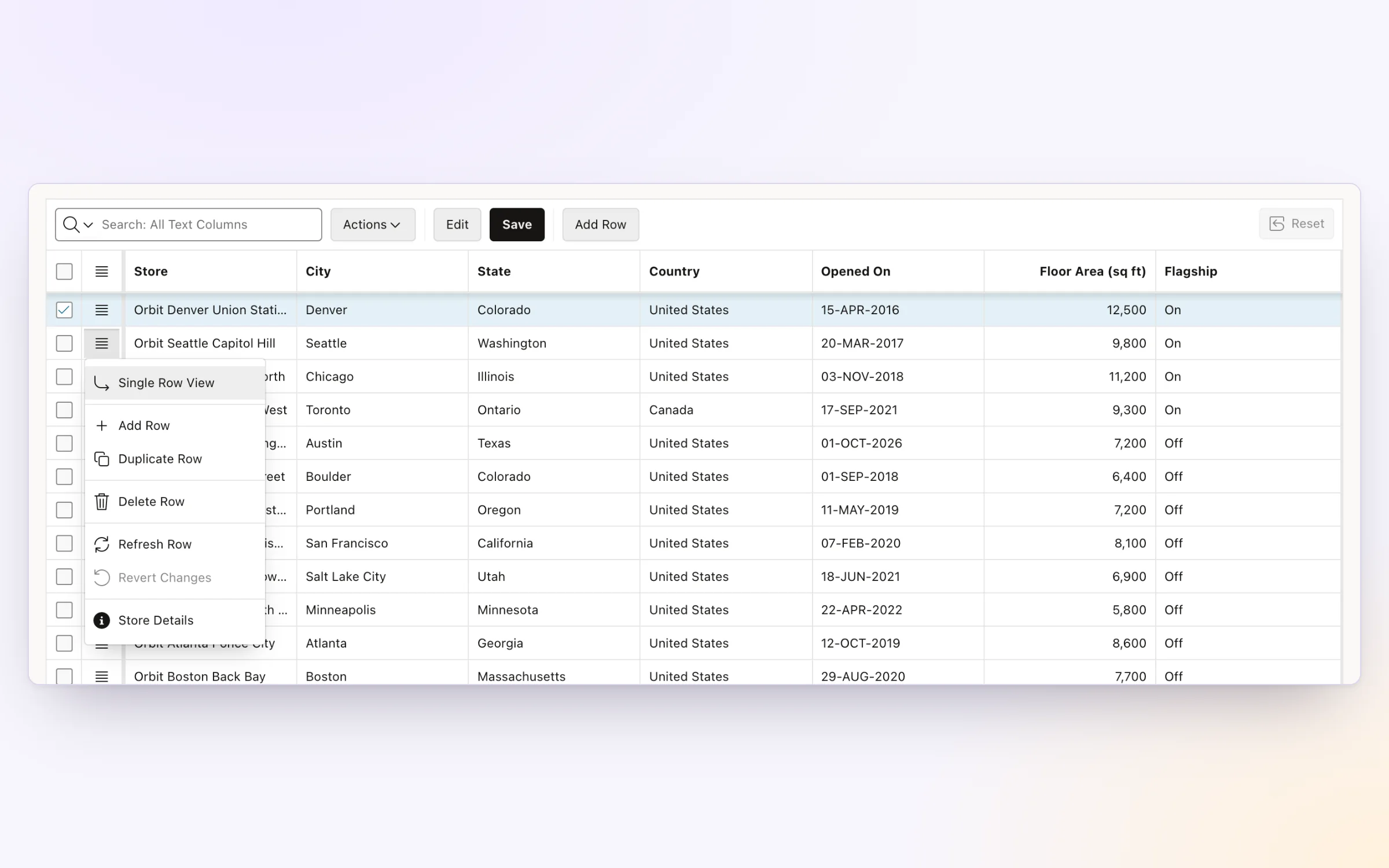
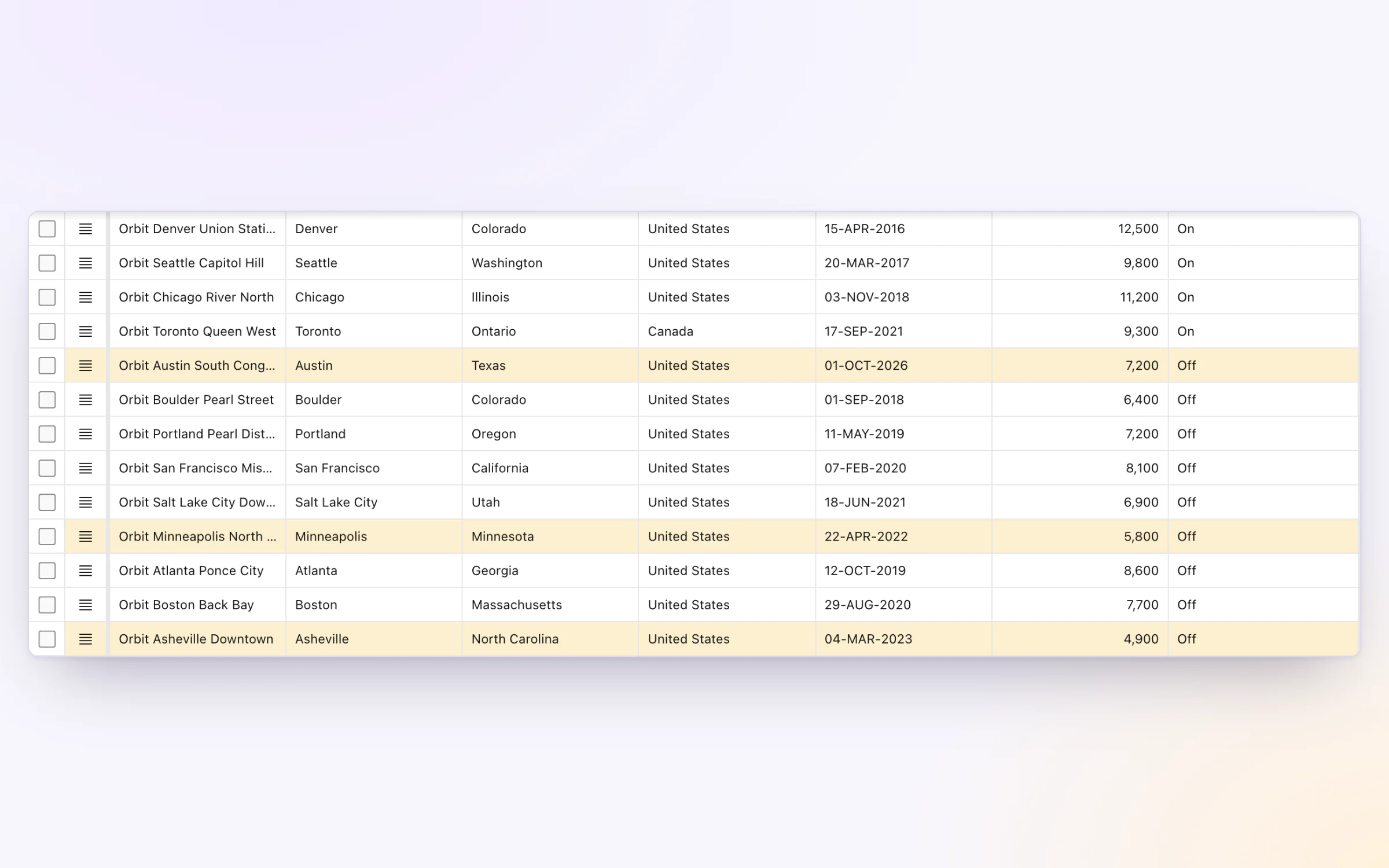
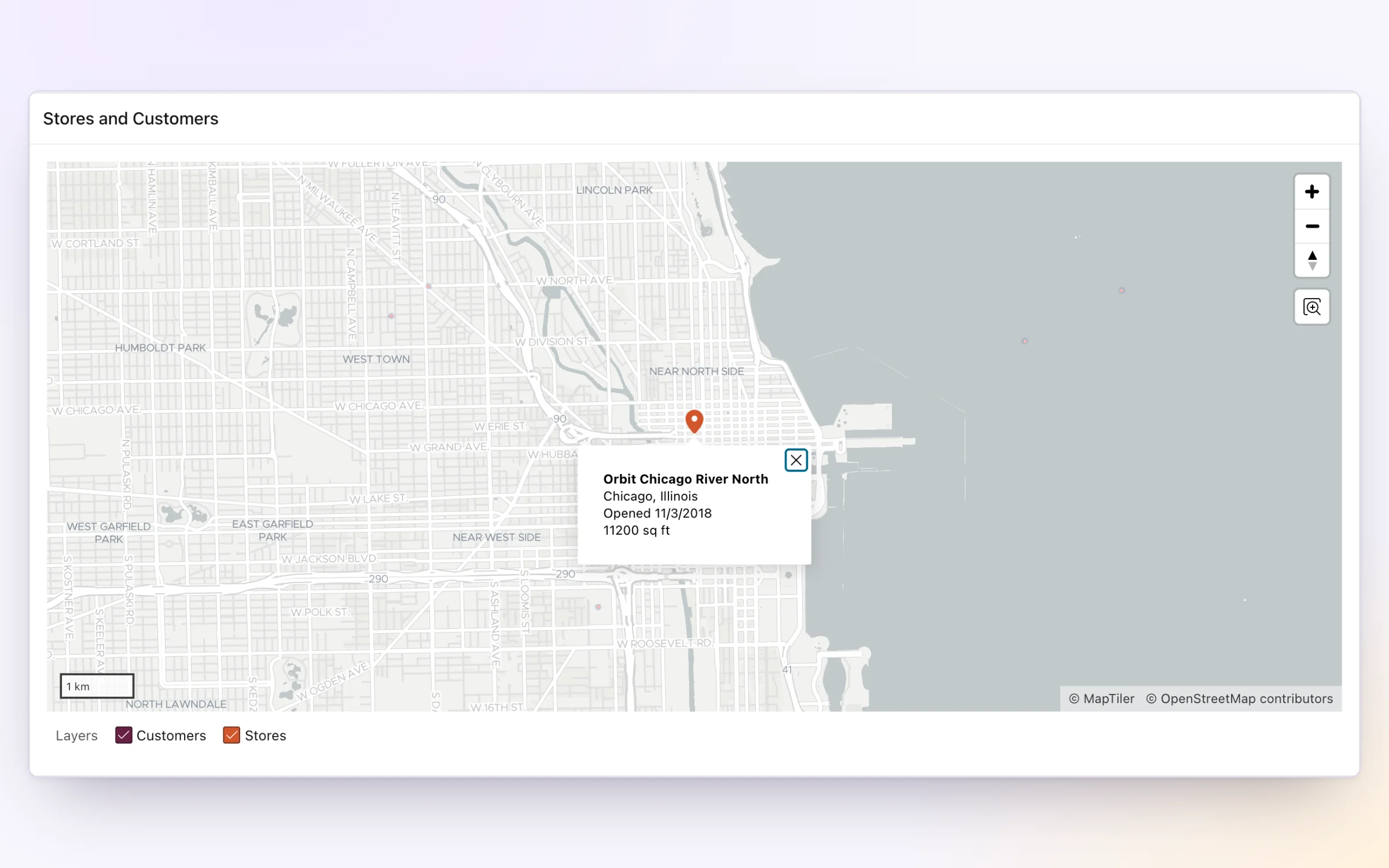
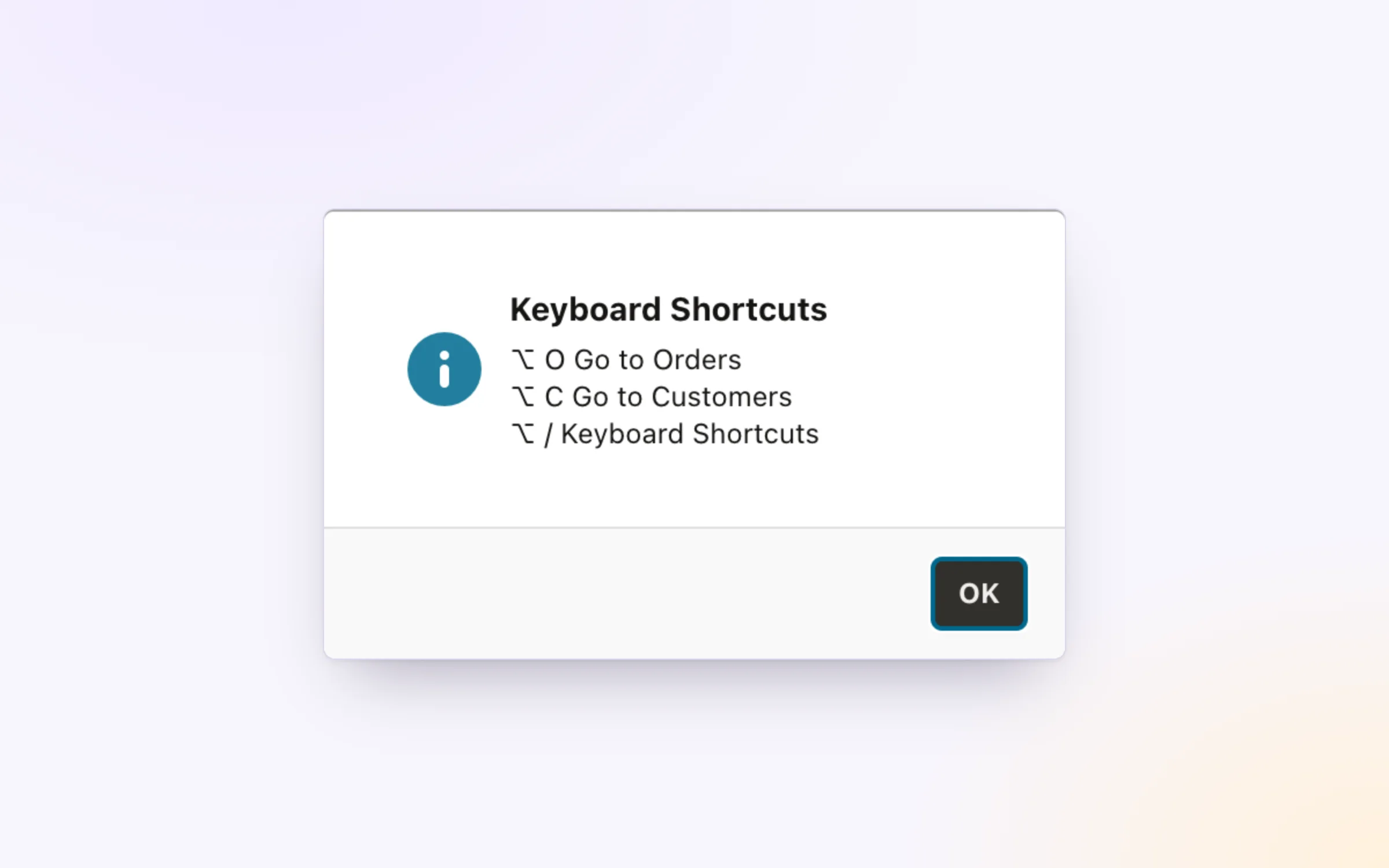
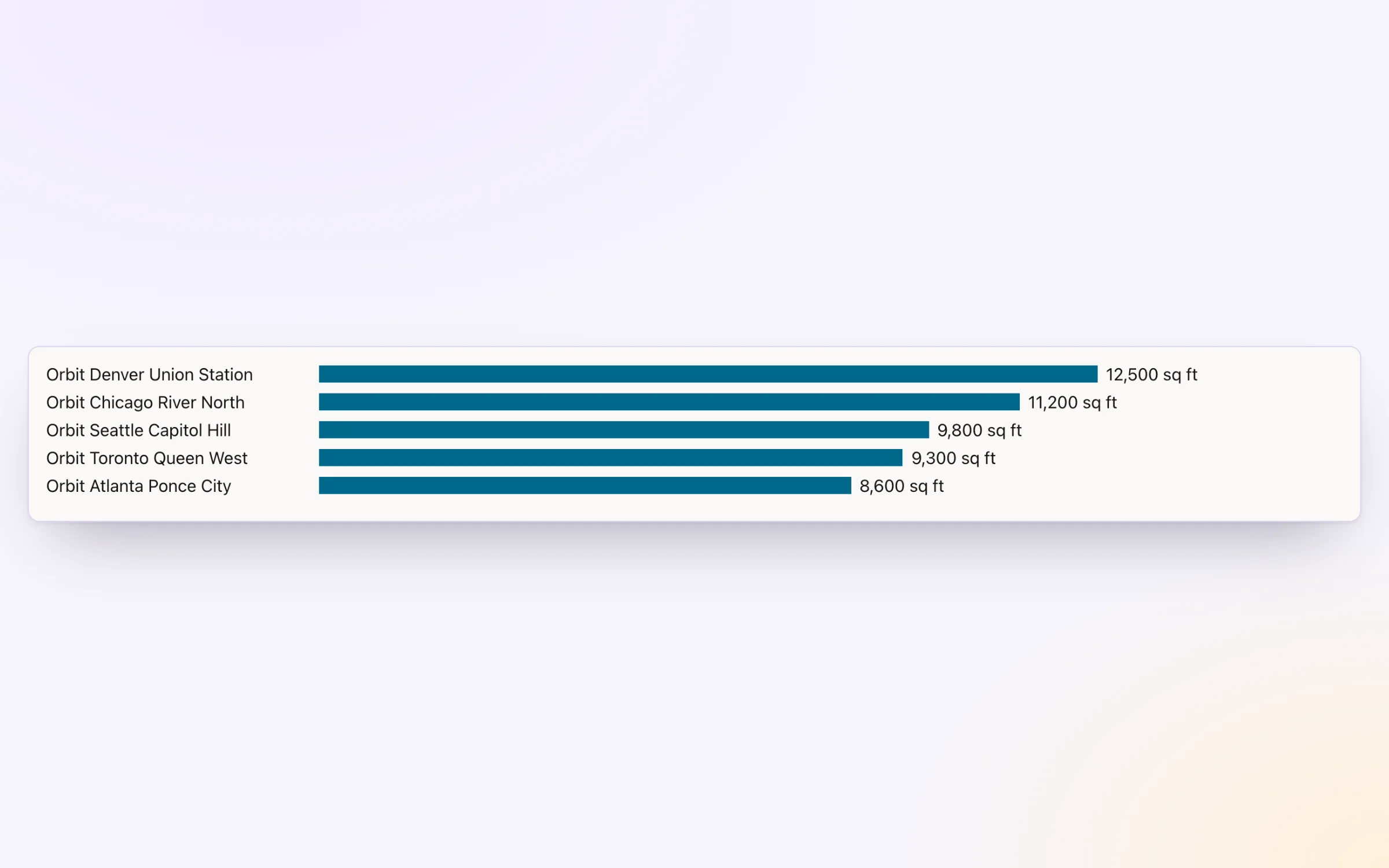
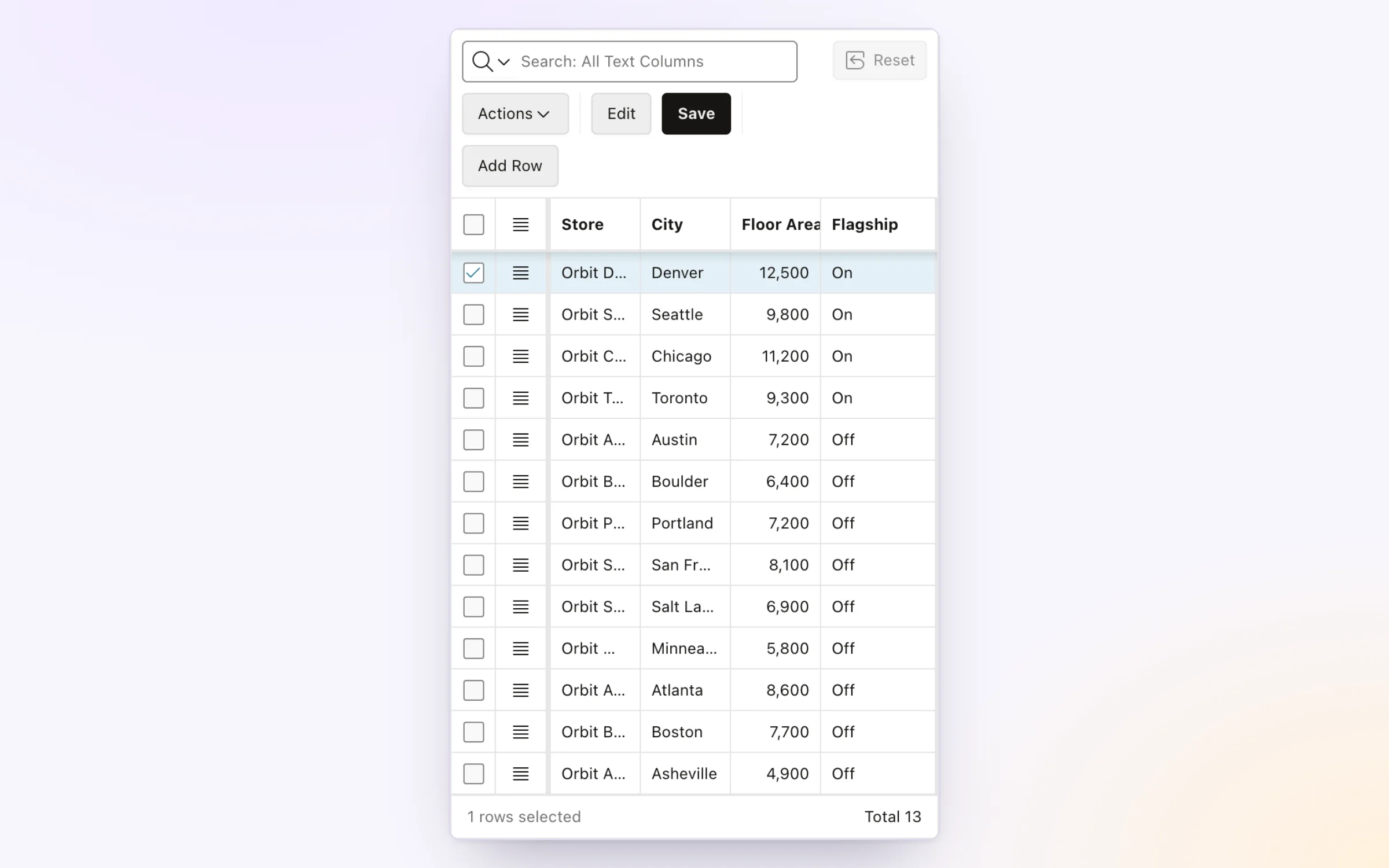
Chapter 14: a Mark as Flagship button in the grid's toolbar, enabled only while rows are selected, sets a column and saves.
Both APIs of Oracle APEX, completely
23 JavaScript namespaces, 13 interfaces, and 9 widgets with 615 methods and 72 events — and all 63 APEX_ packages with their 917 procedures and functions.
Three parts, 32 chapters
A reference you do not read front to back: start with Chapters 1 and 2, then go to the API you need. The JavaScript chapters end with recipes.
Getting Ready
How an entry is laid out, and the API Lab: the ORBIT schema and the application in which every example runs.
- 1How to Use This Book
- 2The API Lab
The JavaScript API
Every namespace, interface, and widget of the APEX JavaScript API, with a recipes section at the end of the chapters from 4 on.
- 3The apex Namespace and Global Functions
- 4Items: apex.item
- 5Regions: apex.region
- 6Region Types: Cards, Facets, Reports, and Maps
- 7Pages, Navigation, Dialogs, and Themes
- 8Messages, Languages, Locales, and Dates
- 9Server Calls, Dynamic Actions, Events, and Debugging
- 10Storage and Progressive Web Apps
- 11Utilities, Templates, and Widgets
- 12Actions
- 13The Data Model: apex.model
- 14The Interactive Grid
- 15Grid, Table Model View, and Record View
- 16Trees, Menus, and Icon Lists
The PL/SQL API
All 63 APEX_ packages, grouped by what they do, from session context to administration.
- 17Application, Session, and Page Context
- 18APEX_UTIL
- 19Strings, Escaping, and Markup
- 20JSON, Parsing, and ZIP Files
- 21Collections
- 22Data Access and Export: APEX_EXEC
- 23Web Services, Credentials, and Tokens
- 24Authentication, Authorization, and Access Control
- 25E-mail, Printing, and Barcodes
- 26Errors, Debugging, and Translation
- 27Interactive Reports and Grids
- 28Tasks, Workflows, Automations, and Background Processes
- 29Generative AI, Search, Maps, and PWA
- 30Plug-ins
- 31Application Lifecycle: Install, Export, and Dependencies
- 32Instance and Workspace Administration
Deprecated, New, and the Index
What to use instead of a deprecated API, what is new in 26.1, and every API by name.
- ADeprecated APIs and Their Replacements
- BWhat Is New in the 26.1 APIs
- CIndex of Every API
What is new, and where 26.1 differs from its documentation
New and changed APIs carry a New in 26.1 badge where they are documented. Running every example also turned up behavior the documentation does not describe; Appendix B collects both.
Run in 26.1
Every example ran in Oracle APEX 26.1 on Oracle AI Database 26ai while the book was written.
Real output
No output was typed by hand: the book prints exactly what each example produced.
One sample schema
All examples use the ORBIT schema of the first book, installed with one script.
Free to run
Oracle AI Database 26ai Free, APEX, and the API Lab application from the code repository.
Every JavaScript method and event. Every PL/SQL procedure and function. Each with a working example.
- Paperback, 528 pages
- Kindle and Apple Books in color
- Free code on GitHub
Who is this book for?
APEX developers who write JavaScript in their pages and PL/SQL behind them, and want to know exactly what each API does before they use it. It is a reference: you look up the API you need, read its entry, and run its example.
Do I need the first book?
No. This book stands on its own. It uses the same ORBIT sample schema as Oracle APEX 26.1: The Complete Guide, which teaches how to build a complete application; this one documents the APIs behind it in depth.
What exactly does it cover?
The whole APEX 26.1 JavaScript API — 23 namespaces, 13 interfaces, and 9 widgets with 615 methods and 72 events — and all 63 APEX_ PL/SQL packages with their 917 procedures and functions. Deprecated APIs are listed with their replacements in Appendix A.
Is the output really from running the code?
Yes. A runner executed every example in Oracle APEX 26.1 on Oracle AI Database 26ai, and the book prints what it produced: console output for JavaScript, query results and DBMS_OUTPUT for PL/SQL, and a screenshot when the page changes.
What are the recipes?
32 practical tasks at the end of Chapters 4 to 16, such as getting the selected rows of an interactive grid, adding a toolbar or delete button, refreshing a report when its dialog closes, or saving with Ctrl+S. Each says where the code goes and shows the result.
Where is the code?
On GitHub, free: the api-book folder of github.com/devvinish/apex-book-code-examples has the API Lab application and all 518 examples with their outputs, next to the ORBIT sample schema.
Is the paperback in color?
The paperback is printed in black and white on white paper, 8.5 by 11 inches, 528 pages, with a matte cover. The Kindle and Apple Books editions show every screenshot and code listing in color.
Which versions does it cover?
Oracle APEX 26.1 on Oracle AI Database 26ai. New and changed APIs carry a New in 26.1 badge, and Appendix B lists them together with the behavior that differs from the documentation.
Paperback, Kindle, or Apple Books
Every edition has the same 32 chapters and three appendices. Pick the paperback for your desk, and the Kindle or Apple Books edition for color screenshots and code on any screen.
- Get the bookFrom Amazon or Apple Books, in the edition you prefer.
- Install the API LabThe ORBIT schema and the lab application from the code repository, as Chapter 2 describes.
- Look up an APIRead its entry, run its example, and compare your output with the book's.
Paperback
$44.99on Amazon.com
- 528 pages, 8.5 × 11 in
- Black and white on white paper
- Matte cover
- ISBN 9798176933673
Kindle edition
$12.99on Amazon.com
- Screenshots and code in color
- Reflowable on any Kindle
- Linked contents and index
- Kindle apps for phone, tablet and PC
Apple Books
Screenshots and code in color, on iPhone, iPad, and Mac.
$12.99on Apple Books
Buy on Apple BooksThe code of the book, free, in the folder api-book: the API Lab application and all 518 examples with their outputs, next to the ORBIT sample schema.
setup/the API Lab application and its install scriptexamples/js/the JavaScript examples and the 32 recipesexamples/plsql/the PL/SQL examples, one folder per package