
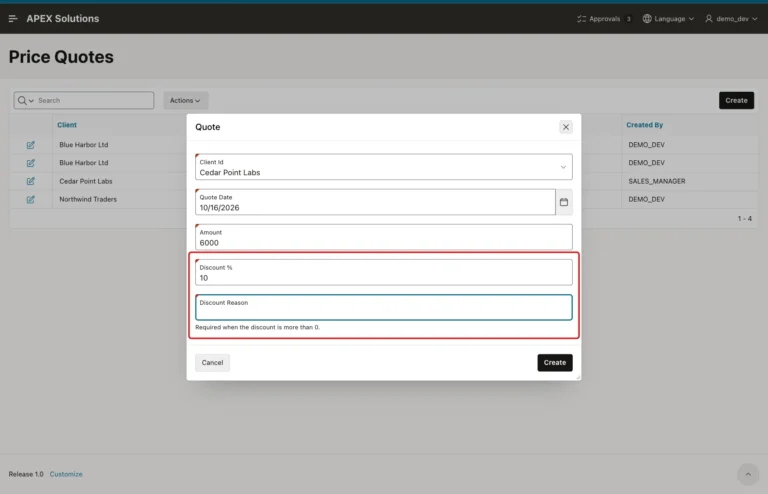
How to Make a Field Required Only When Another Field Has a Value in Oracle APEX
Toggle the required marker and attribute with a dynamic action, repeat the rule in a conditional validation and protect the table with a check constraint.
Posts tagged AI-Assisted are created with support from artificial intelligence. I use AI tools to research, draft, and refine ideas—combining human insight with machine precision to deliver clear, informed, and creative content.
Toggle the required marker and attribute with a dynamic action, repeat the rule in a conditional validation and protect the table with a check constraint.
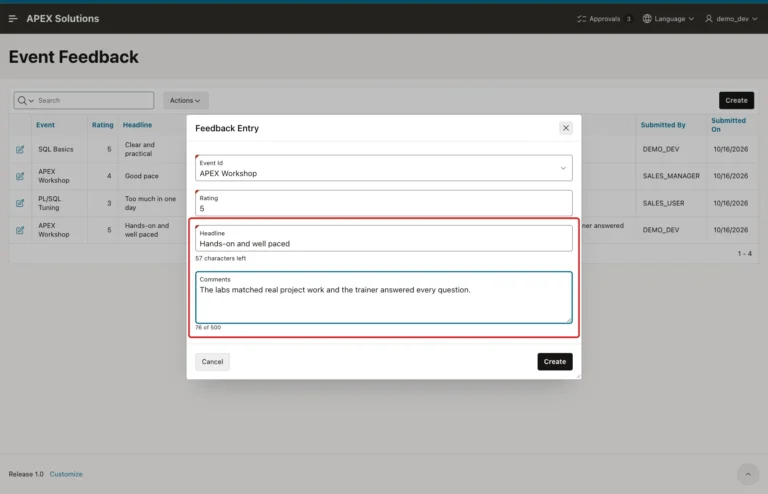
Turn on the Textarea Character Counter, match Maximum Length to the column, add a server-side length validation and show characters left on a Text Field.
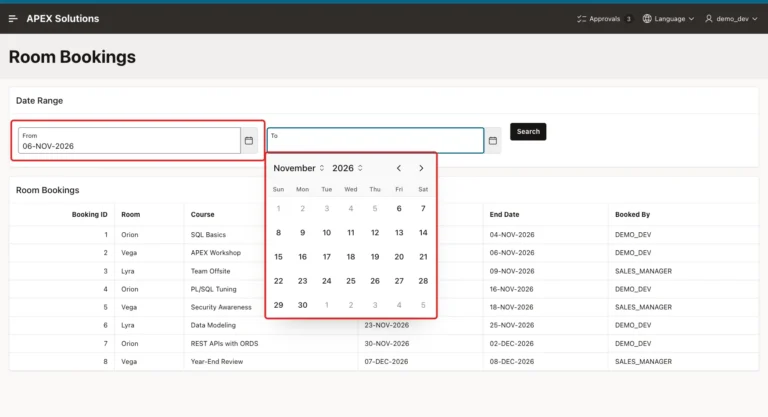
Link two date pickers with Minimum and Maximum Item, add a server-side validation and a check constraint, and filter a classic report by an overlapping date range.
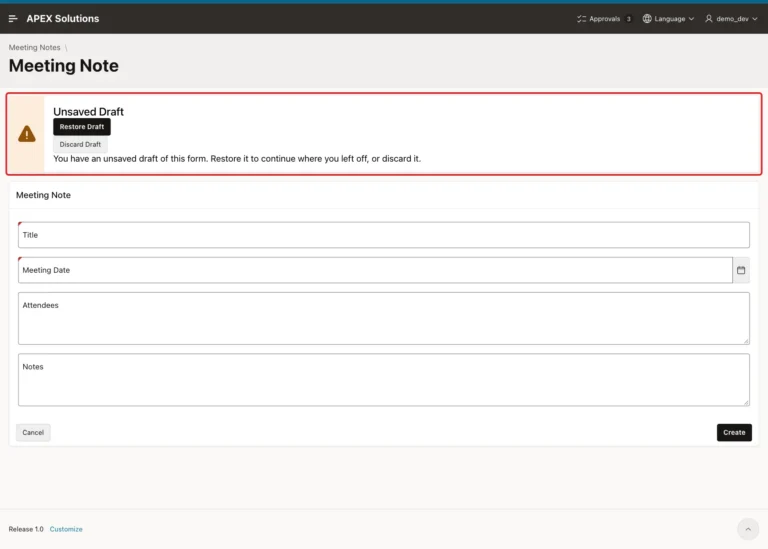
Build server-side form drafts with a JSON draft table, a debounced dynamic action, a restore notice with Restore and Discard buttons, and a cleanup process.
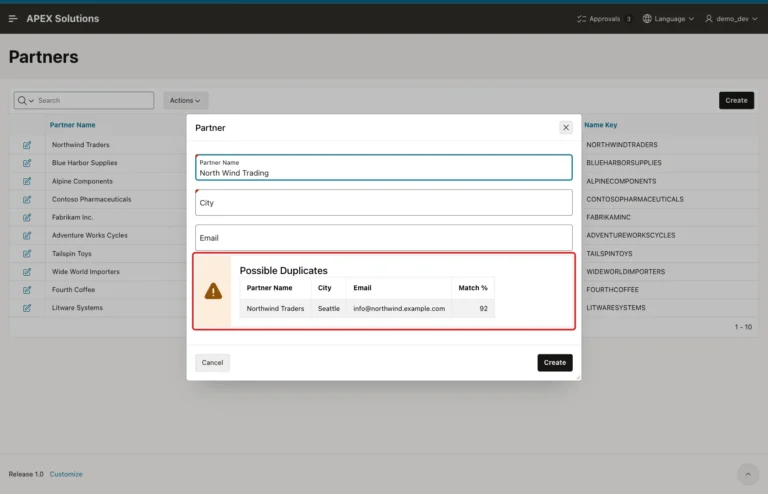
Build a possible-duplicates warning with a virtual name key, Jaro-Winkler scores, a classic report in an Alert region and a debounced Key Release dynamic action.
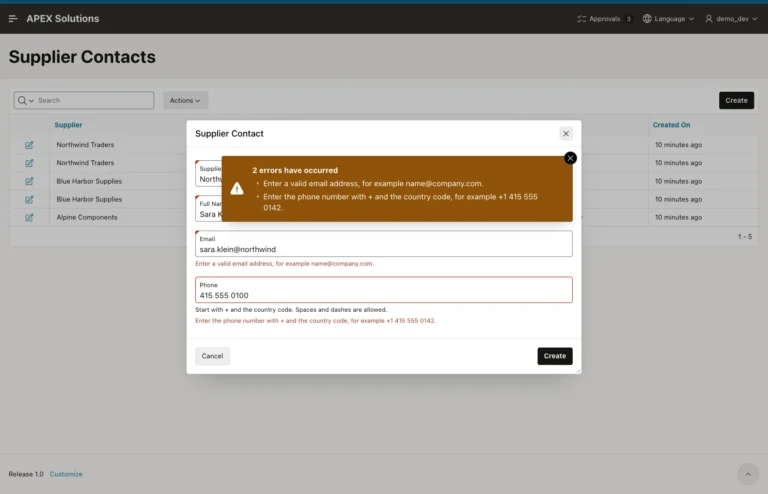
Add regular expression validations, E-Mail and Phone Number subtypes, and matching REGEXP_LIKE check constraints, then test valid and invalid values.
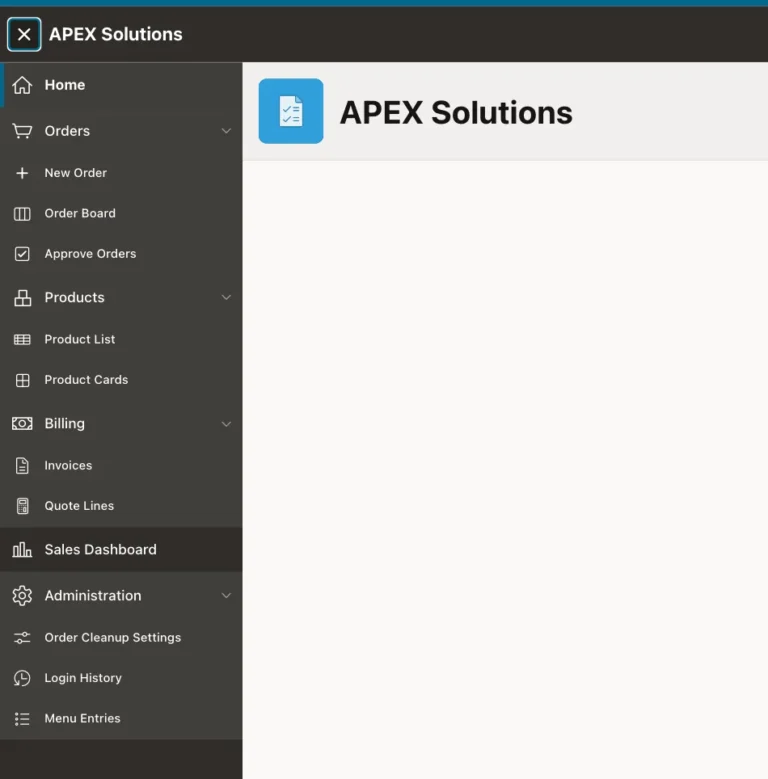
Create a MENU_ENTRIES table, turn it into a role-filtered dynamic list, use it as the navigation menu, and add an admin page to edit the entries.
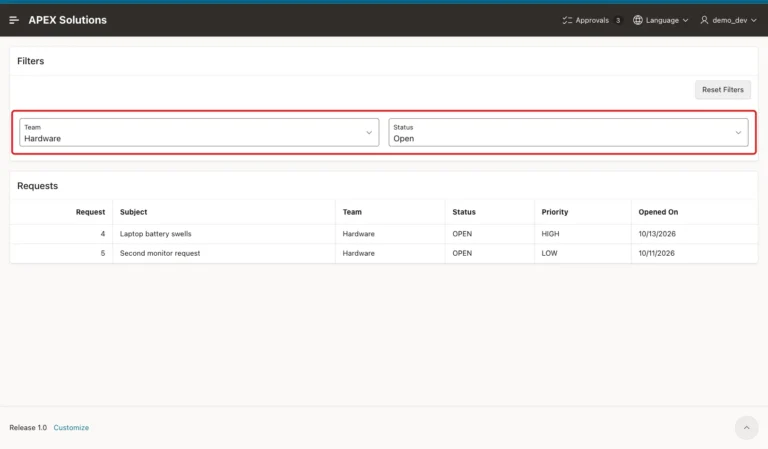
Set filter items to Per User (Persistent) storage, refresh the report with a dynamic action, add a Reset Filters button, and check the saved preferences in SQL.
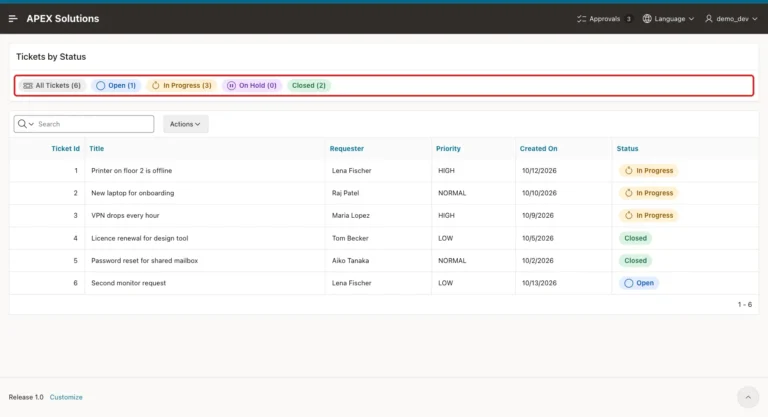
Create a template component plug-in with Partial and Report templates, map its attributes, add CSS, and use it as a region and as a report column.
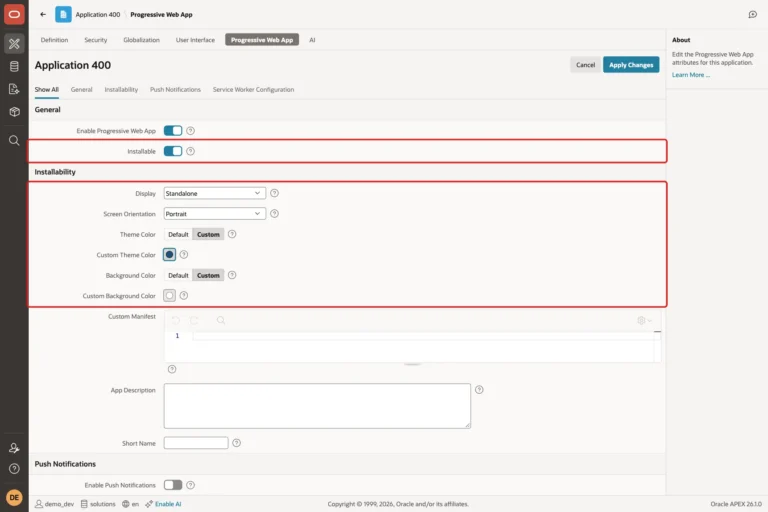
Change the app icon, turn on Installable, set display mode, colors and short name, add a screenshot, and check the manifest, service worker and offline page.
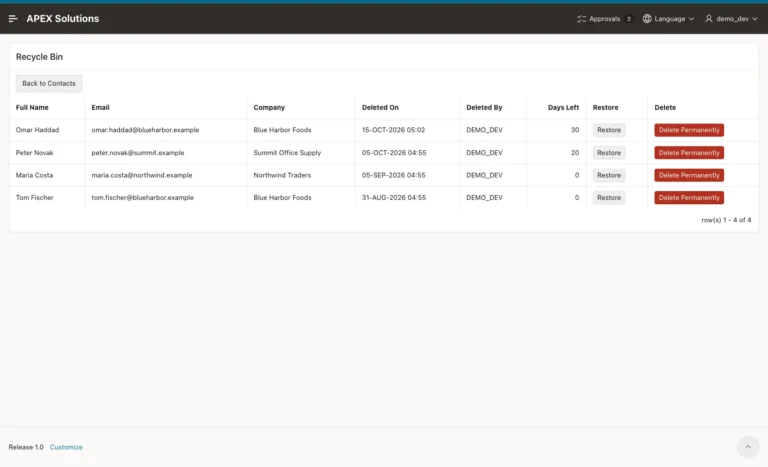
Turn the form's Delete into a soft delete, build a Recycle Bin page with Restore and Delete Permanently, and purge rows after 30 days with an automation.
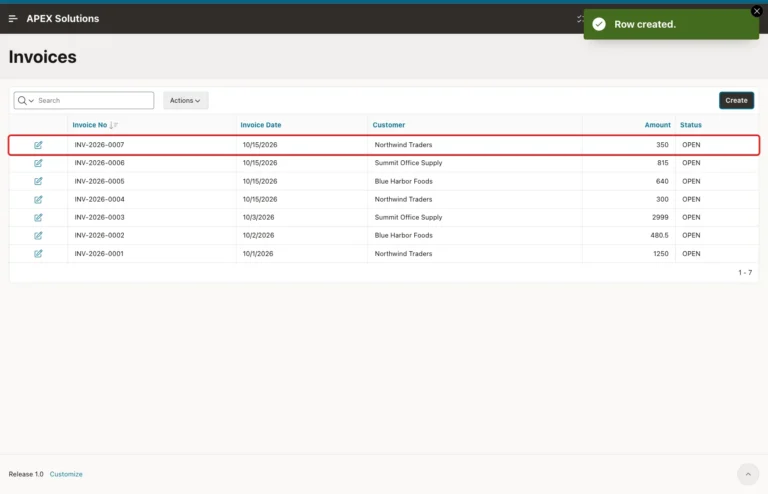
Build a counter table and a numbering function, assign the number when an APEX form saves, and test rollbacks, concurrent users and a new year.
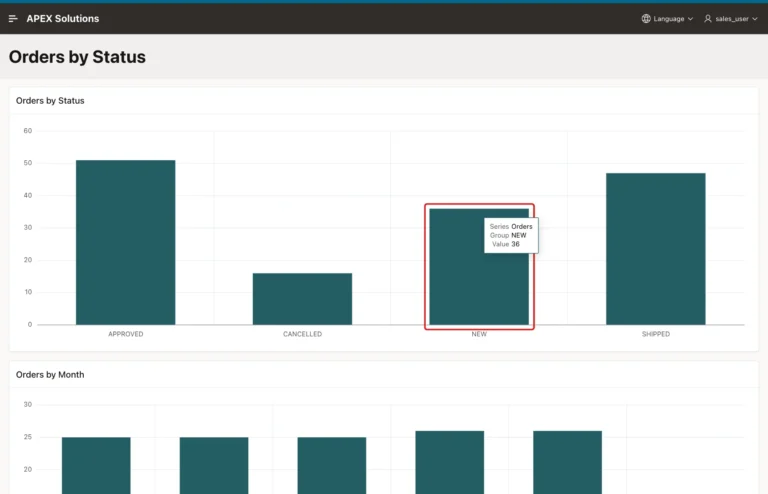
Build a bar chart and a report page, pass the clicked value or a hidden key through the series link, and test counts, cache clearing and checksums.
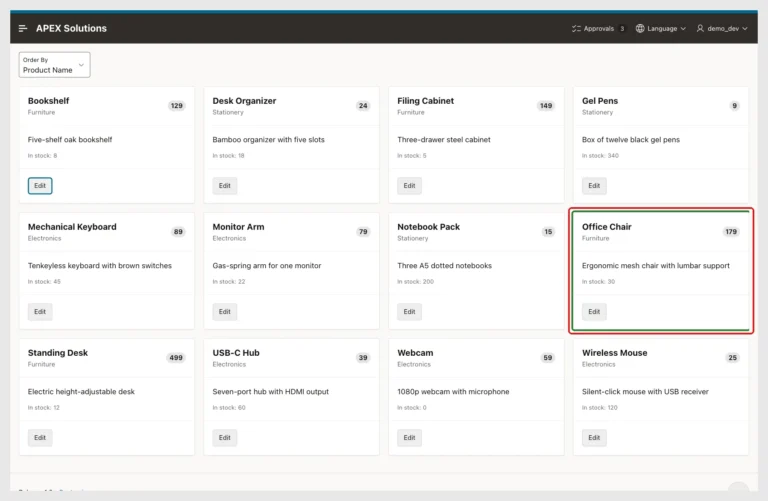
Build a Cards page and a drawer form, return the edited key, refresh the region on Dialog Closed, and test errors, Cancel and Delete.
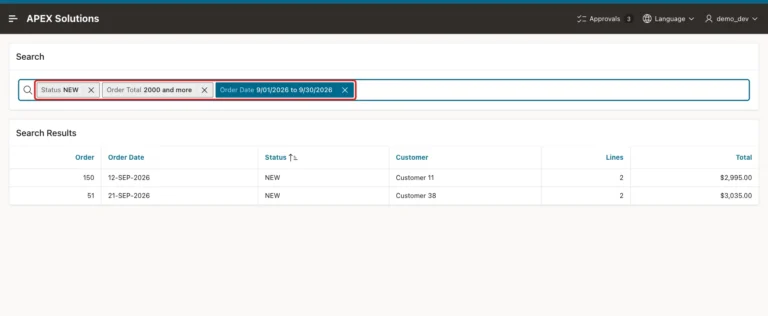
Build a Smart Filters page step by step, add range filters with manual entry, compare search text with filter values, and check every count with SQL.
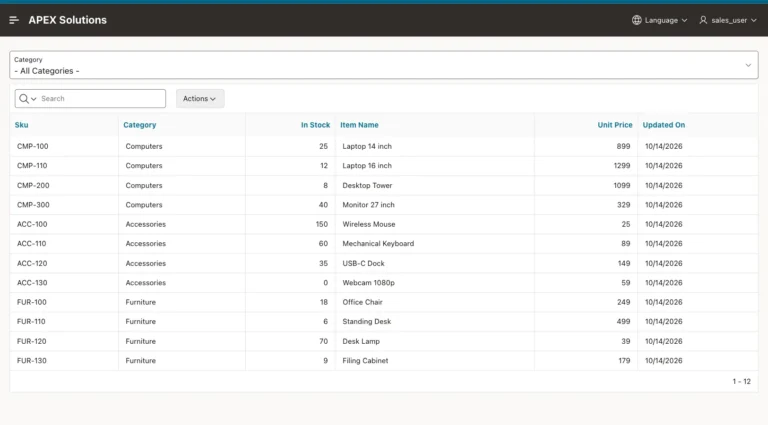
Publish an API with ORDS, create a REST Data Source, filter an Interactive Report through a URL parameter, and copy the rows into a local table.
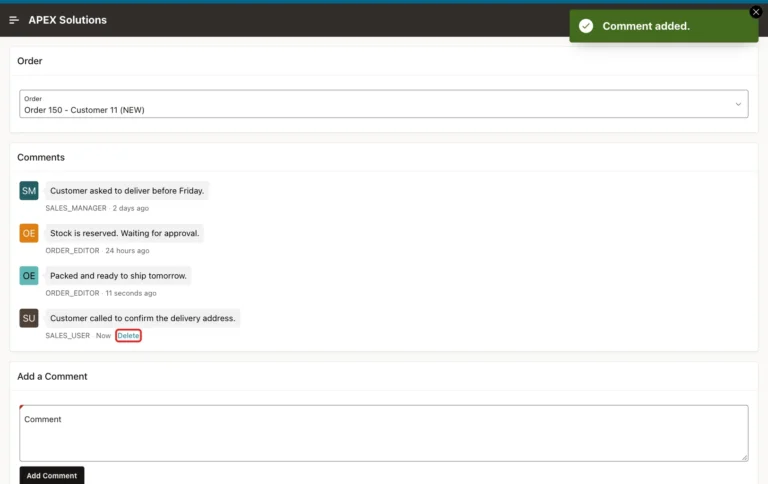
A comments table with declarative defaults, the Comments page wizard, a new comment form, and a Delete action that the server limits to the author.
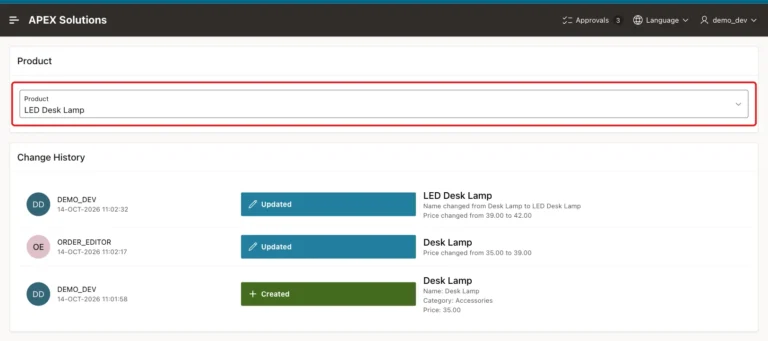
Keep every row version with Flashback Data Archive, compare versions in a view, and show the changes with the Timeline report template.