
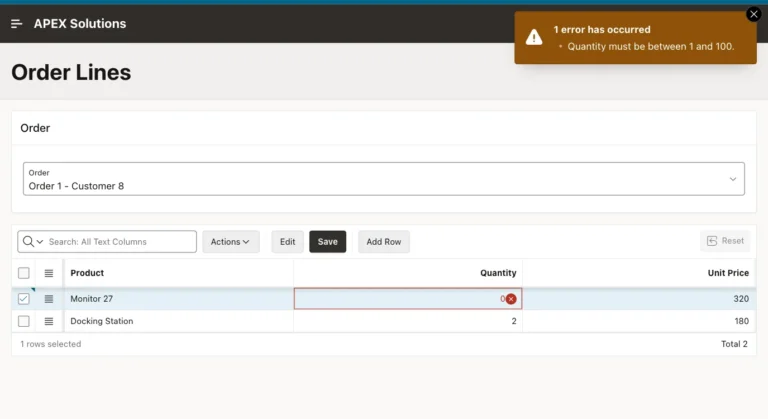
How to Validate Interactive Grid Rows Before Saving in Oracle APEX
Add row validations to an editable Interactive Grid, catch duplicate products per order, and see where a database constraint must take over.
Posts tagged AI-Assisted are created with support from artificial intelligence. I use AI tools to research, draft, and refine ideas—combining human insight with machine precision to deliver clear, informed, and creative content.
Add row validations to an editable Interactive Grid, catch duplicate products per order, and see where a database constraint must take over.
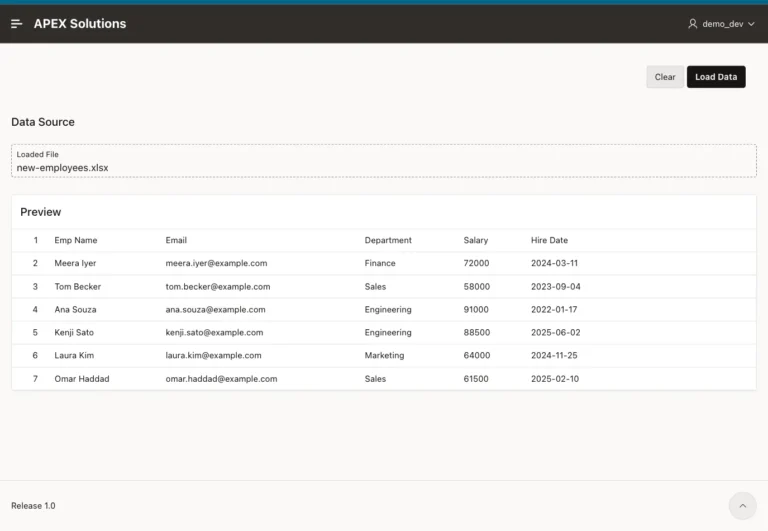
Create a Data Load Definition from a sample workbook, map its columns, and add a page where users upload, preview, and load Excel data.
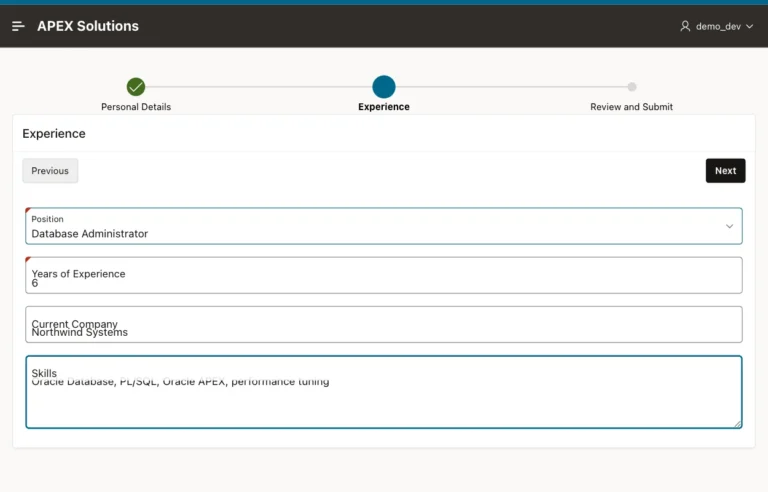
Split a long form into steps with a progress list, keep values between pages, review them, and save everything at the last step.
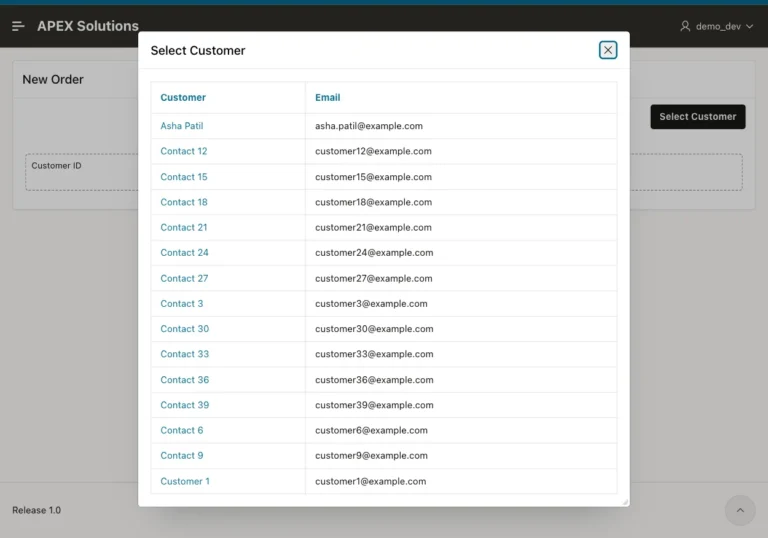
Build a customer picker dialog that returns the chosen ID and name to the parent page, with no custom JavaScript callbacks.
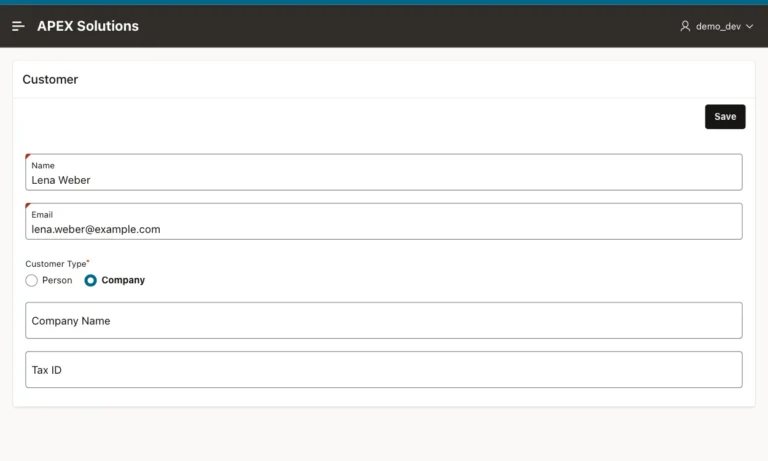
Show company fields only for company customers with a dynamic action, and keep the server side consistent with validations and a process.
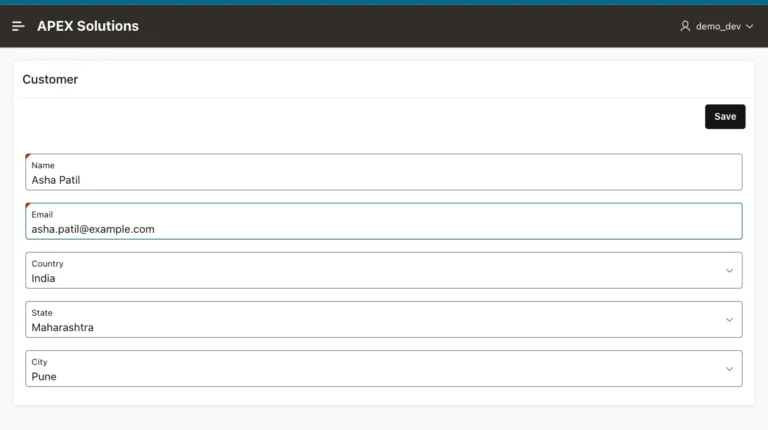
Build country, state, and city select lists that filter each other in Oracle APEX, using the Cascading List of Values settings.
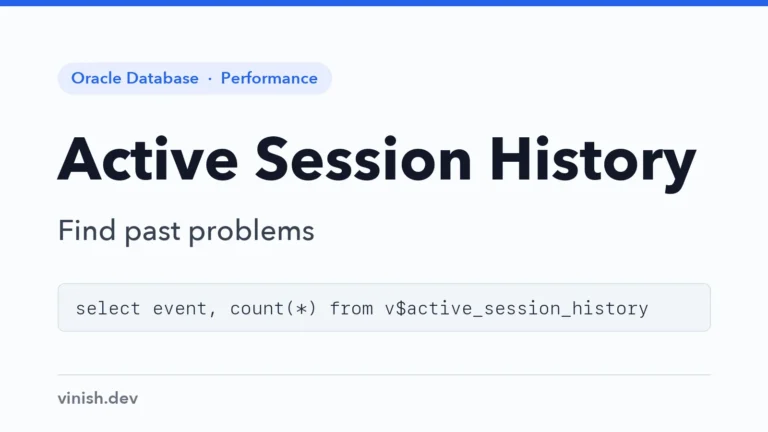
Analyze a finished workload with V$ACTIVE_SESSION_HISTORY: time on CPU and waits, the top SQL, and who blocked whom, after the fact.
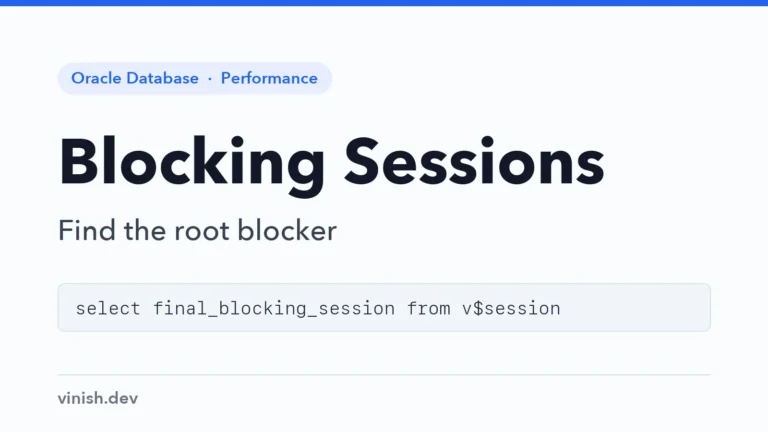
Build a three-session blocking chain, find its root blocker, the locks, and the exact row being waited for, and resolve the block.
Read a session's state, wait event, and blocking session in V$SESSION, find its statement, and total its waits with V$SESSION_EVENT.
Monitor a long-running query, find it in V$SQL_MONITOR, and read its SQL Monitor report as text and as an HTML page.
Compare conventional and direct-path inserts of 500,000 rows by time, redo, and undo, and see when the APPEND hint really pays off.
Measure hard parses, time, and shared pool memory for literal SQL and bind variables, and see what CURSOR_SHARING = FORCE changes.
Watch bind peeking and adaptive cursor sharing on a skewed column, read the child cursors in V$SQL, and see when the first plan sticks.
Write optimizer hints that work, find the ones Oracle ignores with the Hint Report, and see why forcing a plan can make queries slower.
See how correlated columns fool the optimizer, create a column group with DBMS_STATS, and make sure the optimizer really uses it.
See how stale statistics mislead the optimizer on new data, find stale and missing statistics, and gather them again with DBMS_STATS.
See how skewed data fools the optimizer without histograms, how SIZE AUTO creates them, and how frequency and hybrid histograms fix plans.
Read index usage from DBA_INDEX_USAGE, see why sampled tracking can miss rare uses, and remove unused indexes safely.