
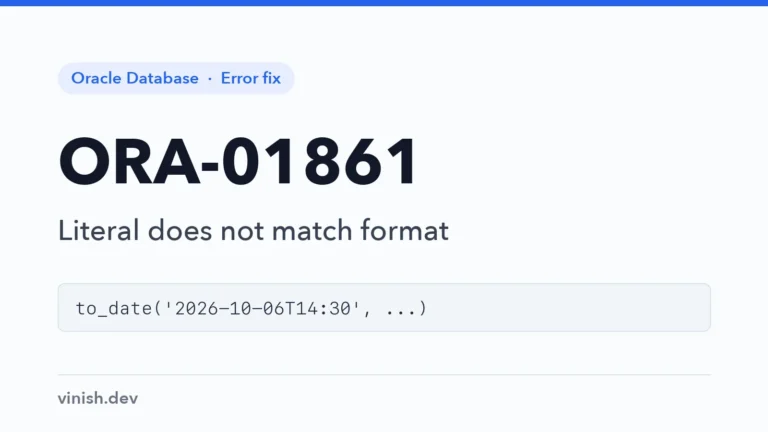
How to Fix ORA-01861: Literal Does Not Match Format String in Oracle
Line up date strings with their format models, handle ISO timestamps and FX, and stop comparing dates with strings.
Posts tagged AI-Assisted are created with support from artificial intelligence. I use AI tools to research, draft, and refine ideas—combining human insight with machine precision to deliver clear, informed, and creative content.
Line up date strings with their format models, handle ISO timestamps and FX, and stop comparing dates with strings.
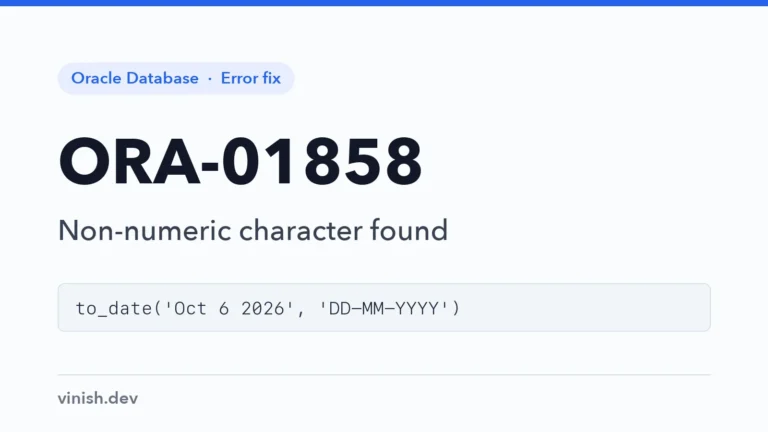
Fix TO_DATE strings with letters where the format expects digits, and convert dirty data safely with a default.
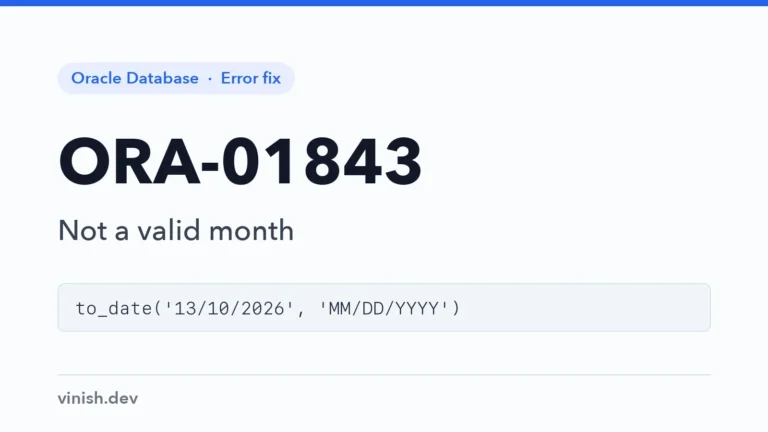
Fix TO_DATE calls where the month is invalid: swapped day and month, months above 12, and month names in another language.
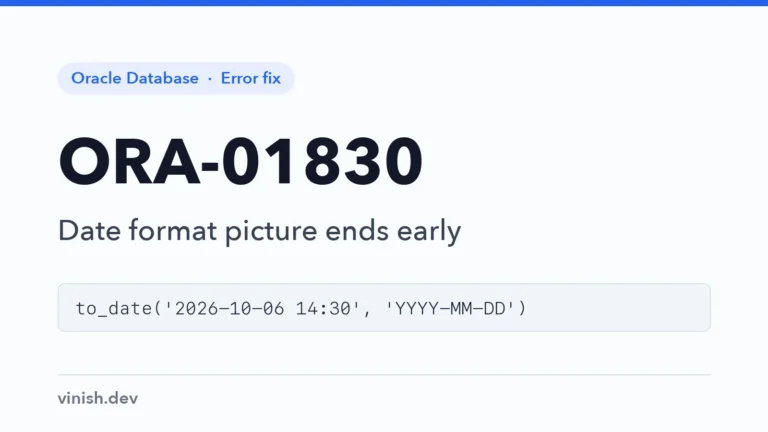
Fix TO_DATE calls whose input carries more than the format describes, usually a time, by extending the format or cutting the string.
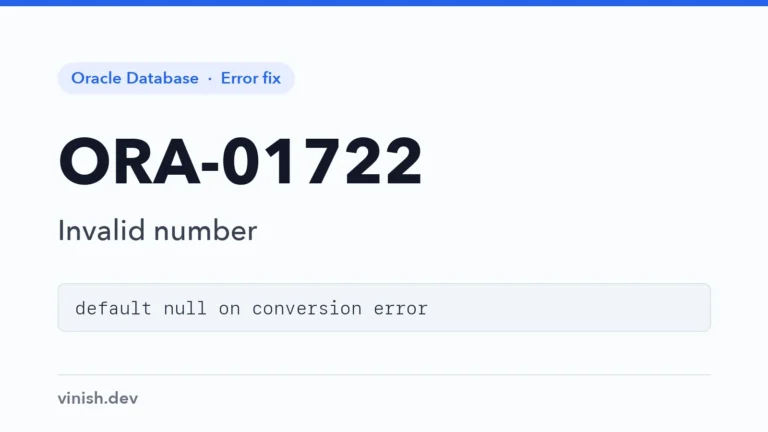
Find the value behind ORA-01722, avoid implicit conversions, and convert text to numbers safely in Oracle SQL.
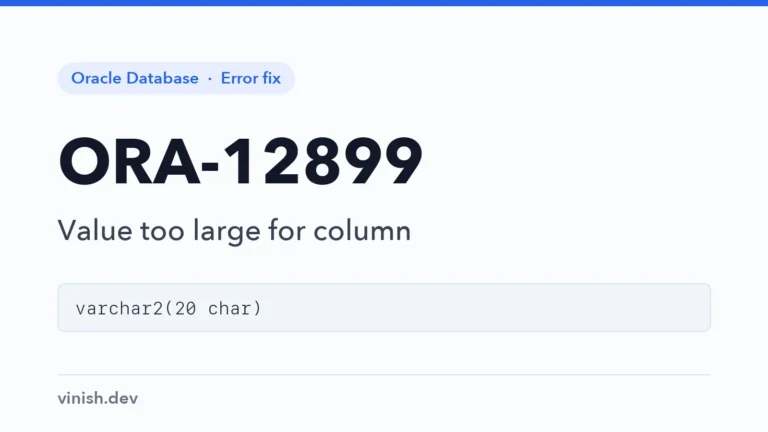
Read the actual and maximum lengths in ORA-12899, see why accented text needs more bytes, and size columns in characters.
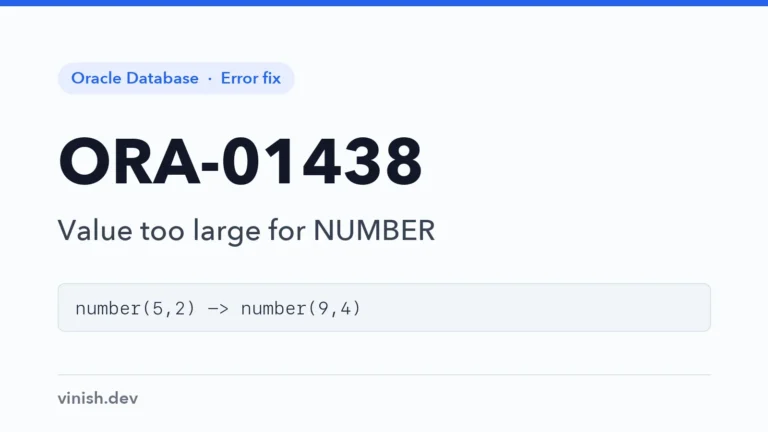
Understand how NUMBER precision and scale limit digits, why some values round silently, and how to fix ORA-01438.
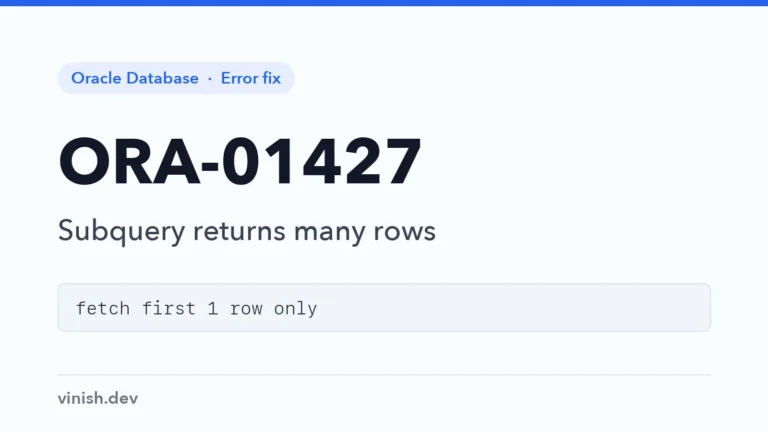
Fix subqueries that return more rows than = expects: pick the row you mean, aggregate, or switch to IN or a join.
Find where the NULL in an UPDATE comes from, and keep the old value or skip rows so NOT NULL columns stay filled.
Find the NOT NULL column named in ORA-01400 and fix the INSERT, or let DEFAULT ON NULL fill missing and NULL values.
Fix INSERT statements where unquoted text or a column name sits in the VALUES list, and copy values with INSERT SELECT.
Count the values and columns in INSERT statements and subquery comparisons, and fix ORA-00913 when there are too many.
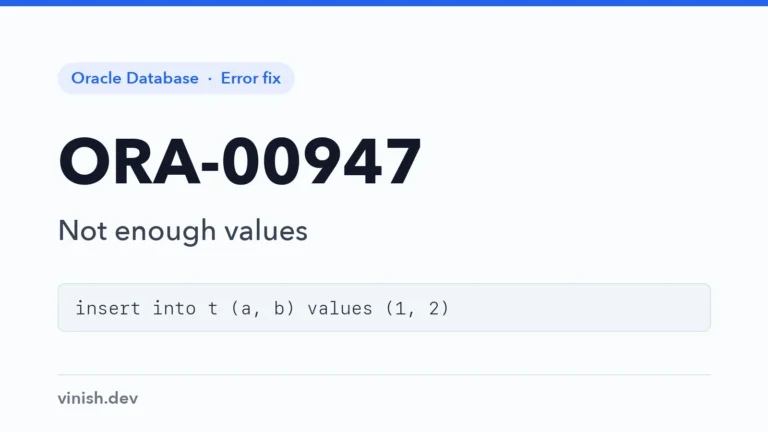
Match the number of values to the number of columns in INSERT statements, and let unlisted columns take their defaults.
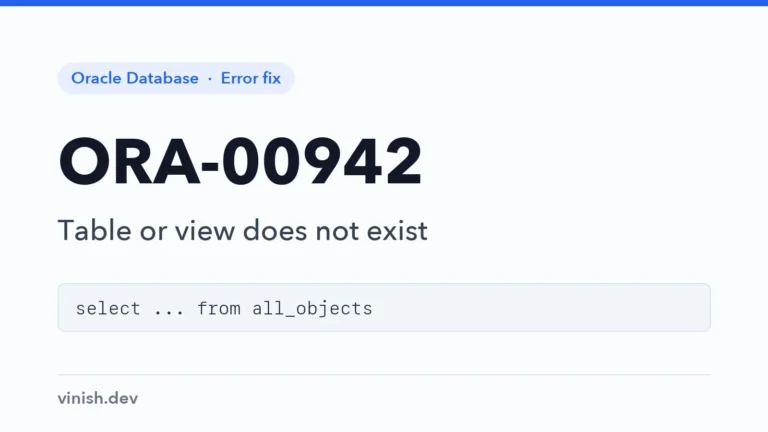
Find out why Oracle cannot see a table in ORA-00942: wrong schema, missing grant, quoted name, or a dropped object.
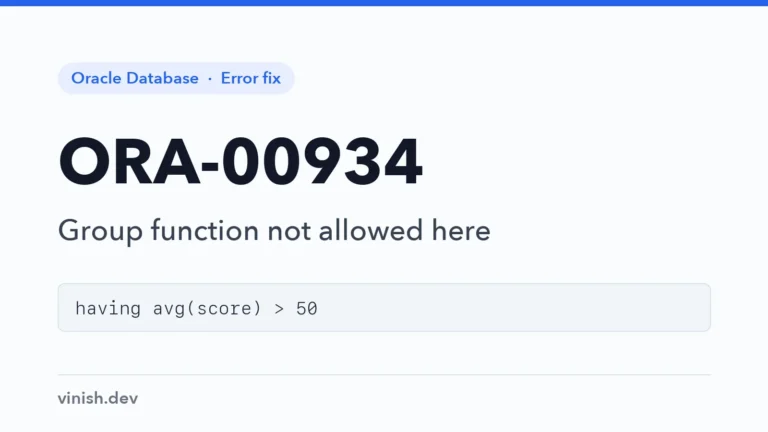
Move conditions on SUM, AVG, or COUNT out of WHERE and into HAVING or a subquery, and fix ORA-00934.
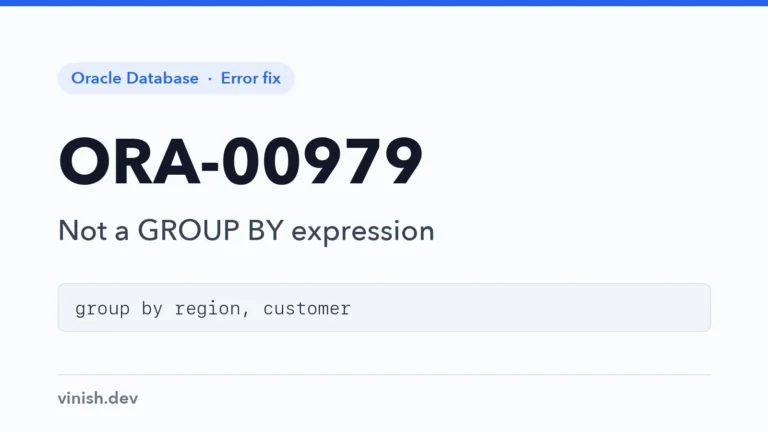
Fix grouped queries that use a column outside GROUP BY, by grouping by it or aggregating it, as the 26ai message suggests.
Fix queries that mix SUM or COUNT with plain columns and no GROUP BY, by grouping, dropping the column, or using OVER ().
Find where Oracle expected a value or column in ORA-00936: trailing commas, empty lists, and comparisons with no right side.