
How to Fix ORA-00979: Not a GROUP BY Expression in Oracle
Fix grouped queries that use a column outside GROUP BY, by grouping by it or aggregating it, as the 26ai message suggests.
Fix grouped queries that use a column outside GROUP BY, by grouping by it or aggregating it, as the 26ai message suggests.
Fix queries that mix SUM or COUNT with plain columns and no GROUP BY, by grouping, dropping the column, or using OVER ().
Find where Oracle expected a value or column in ORA-00936: trailing commas, empty lists, and comparisons with no right side.
Fix statements Oracle reads as finished too early, and understand the ORA-03048 and ORA-03049 messages 26ai shows instead.
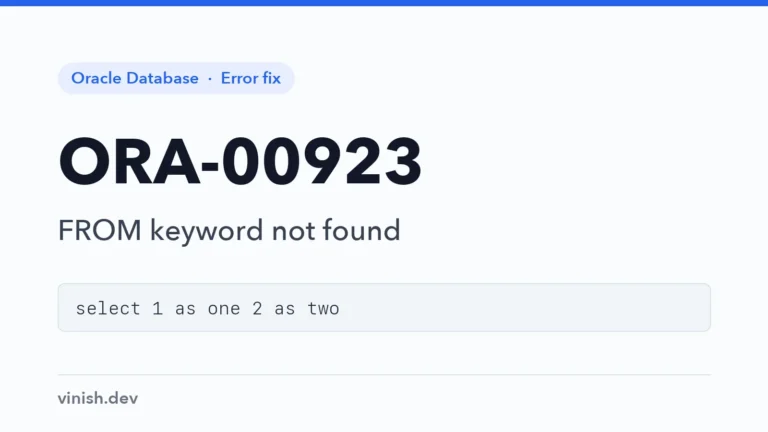
Find what ended the select list too early in ORA-00923: a missing comma, a reserved word as alias, or SELECT TOP.
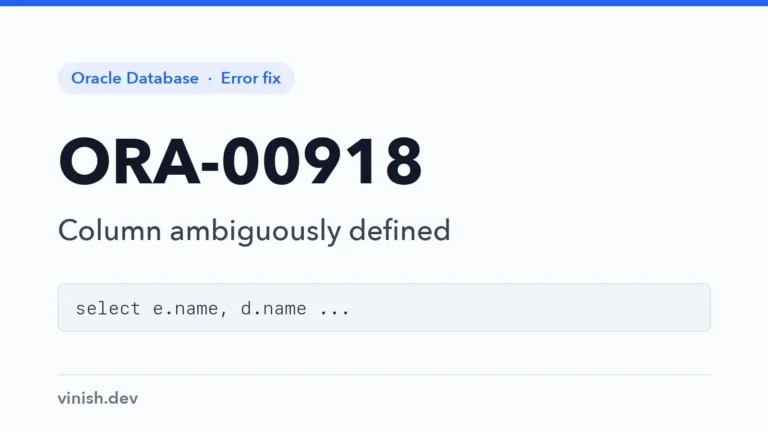
Tell Oracle which table a shared column name belongs to, with table aliases or a join with USING, and fix ORA-00918.
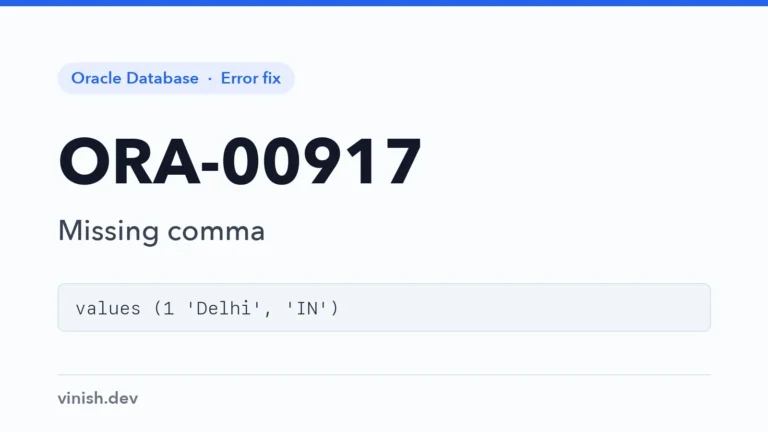
Find the missing comma in an INSERT column list or VALUES list from the position in the ORA-00917 error.
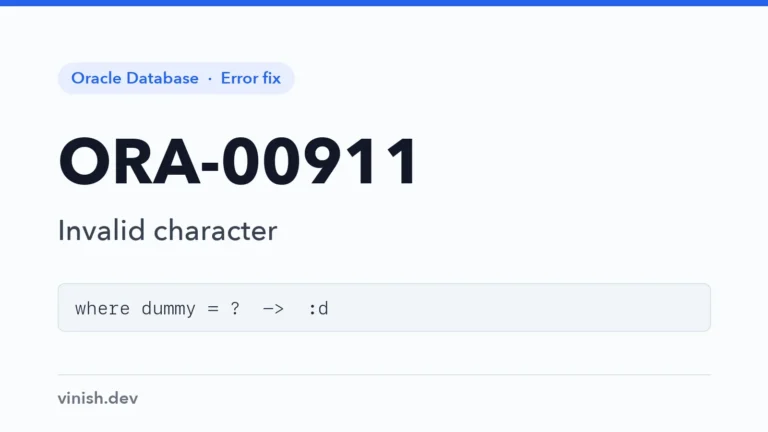
Find the character behind ORA-00911, often syntax from MySQL or JDBC, and rewrite it the Oracle way.
Use the error position to find where Oracle expected a closing parenthesis, and fix unbalanced lists and subqueries.
Find the name Oracle cannot resolve in ORA-00904 and fix typos, case-sensitive quoted columns, and misplaced aliases.
Find which constraint, column, and value caused ORA-00001, and load data without duplicates using MERGE or NOT EXISTS.
Trace a generic ORDS 555 error to the Oracle error behind it, through the ORDS log or debug output, and know the common status codes.
Stop REST clients from overwriting each other's changes with ETags and If-Match, and skip unchanged responses with 304.
Move ORDS REST modules between databases as scripts with SQLcl or ORDS_EXPORT, and restore a deleted module from its export.
Turn a JSON relational duality view into a document REST API with ORDS, with updates and built-in conflict detection.
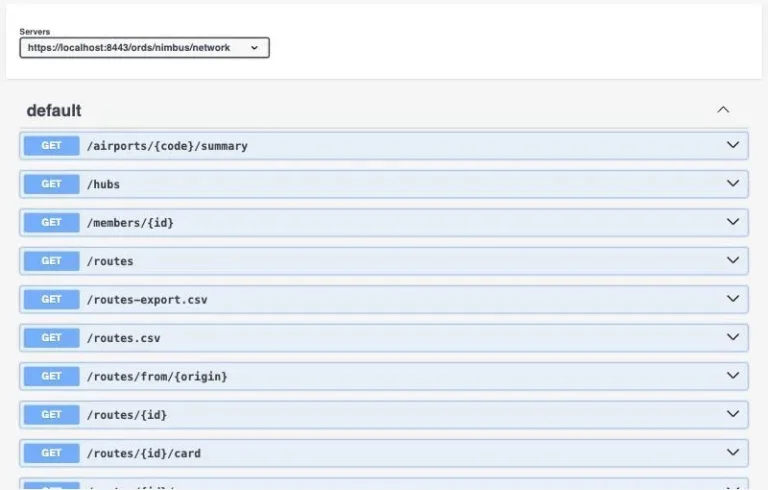
Use the OpenAPI documents ORDS generates for your REST modules, add good descriptions, and view them in Swagger UI.
Send SQL to ORDS over HTTP and get JSON results, with bind variables and scripts, using an OAuth client instead of a password.
Run one PL/SQL function before every ORDS REST call to log requests and refuse them during maintenance.