
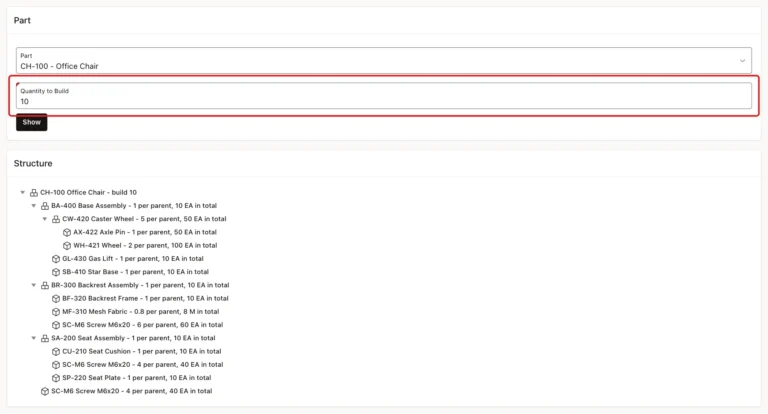
How to Show a Bill of Materials with Exploded Quantities in Oracle APEX
A recursive WITH query multiplies quantities through every level, a tree and two reports show the structure and parts to order, and a trigger refuses loops.
Oracle APEX (Application Express) is a low-code development platform for building scalable, secure enterprise applications. It allows developers to quickly create web-based applications using a browser-based interface, reducing the need for extensive hand-coding.
For a more structured learning journey, you can also explore the Oracle APEX Roadmap for a sequential path through related concepts, features, and development topics.
A recursive WITH query multiplies quantities through every level, a tree and two reports show the structure and parts to order, and a trigger refuses loops.
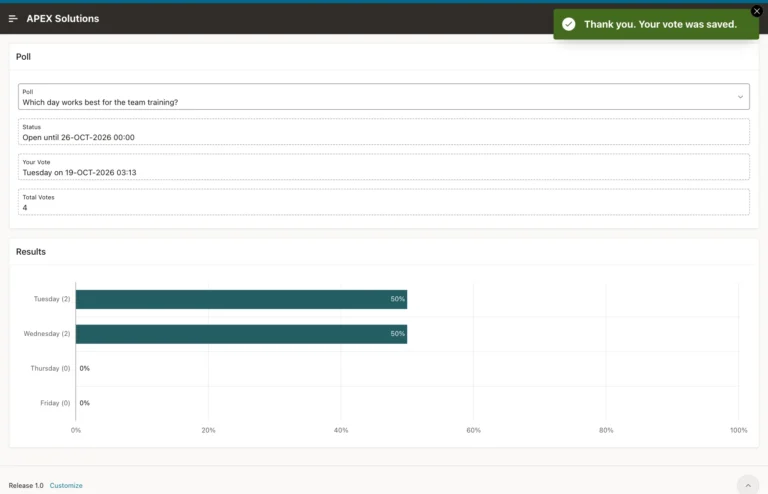
A unique key, a page error handling function and a bar chart that appears only after the user votes or the poll closes.
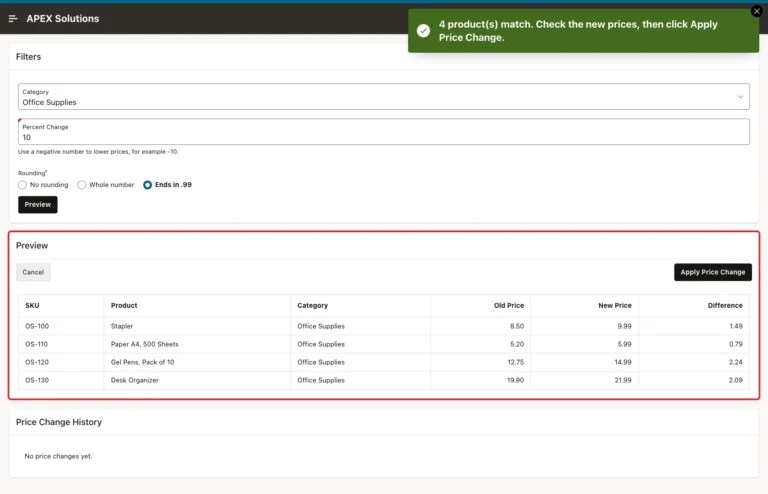
Filters, a preview report of old and new values, and an Apply button that runs one UPDATE only if the data still matches the preview.
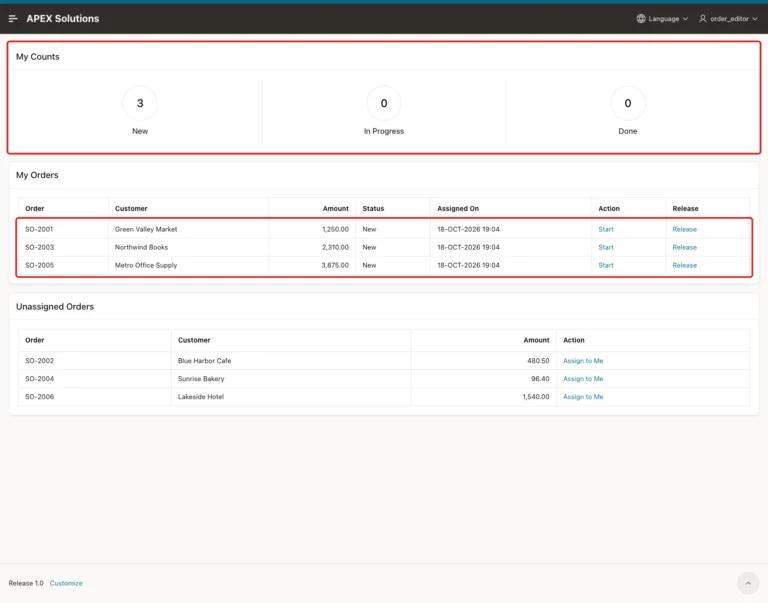
Bulk assignment with a shuttle, a My Work page filtered by APP_USER, and a PL/SQL package that enforces who may assign, take and release work.
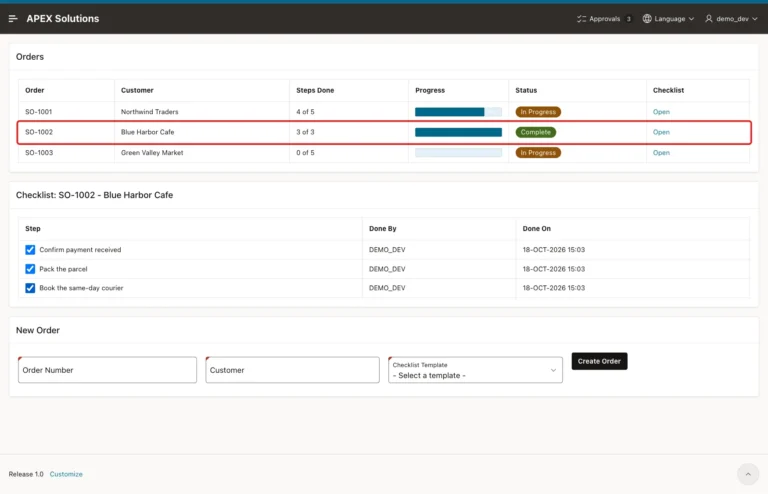
Copy template steps to each new record, tick them with checkboxes saved by a dynamic action, and show progress with a Percent Graph and a Complete badge.
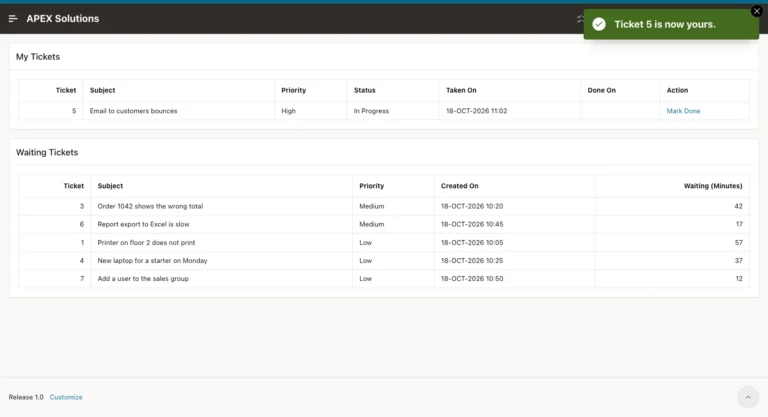
Read the queue in priority order with a SKIP LOCKED cursor, give each user the next free job, allow one open job per user and close it with Mark Done.
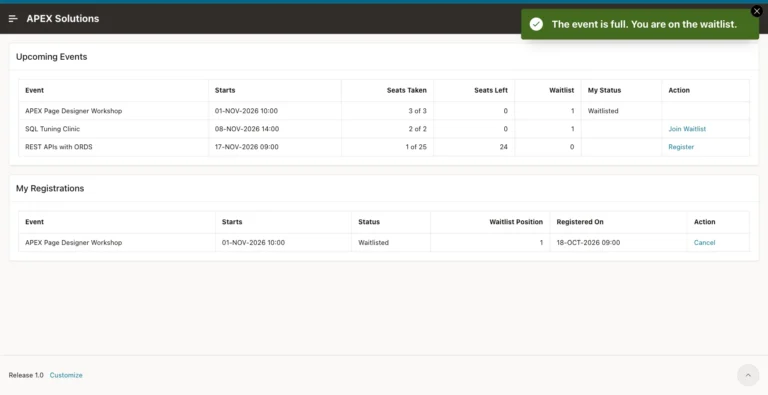
Count seats against a capacity, add a waitlist when an event is full, promote the first waiting user on cancel, and lock the row so no seat is sold twice.
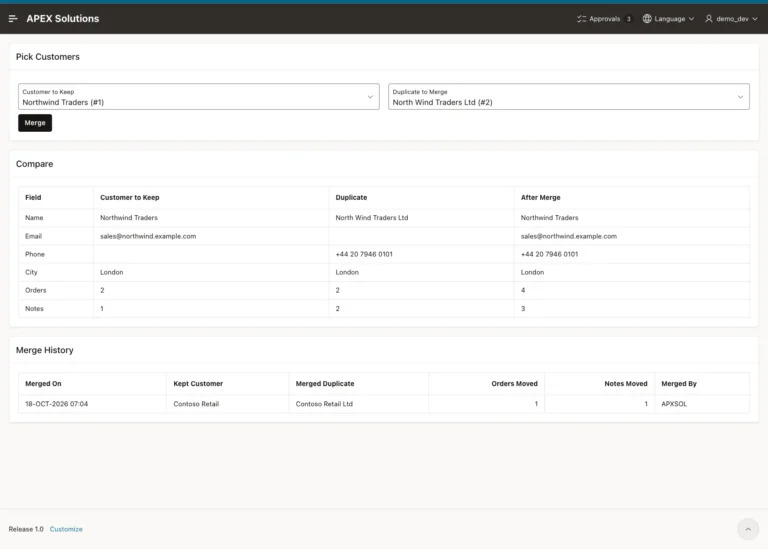
Pick the record to keep and the duplicate, compare them side by side, move the child rows with a locking PL/SQL procedure, mark the duplicate as merged and log it.
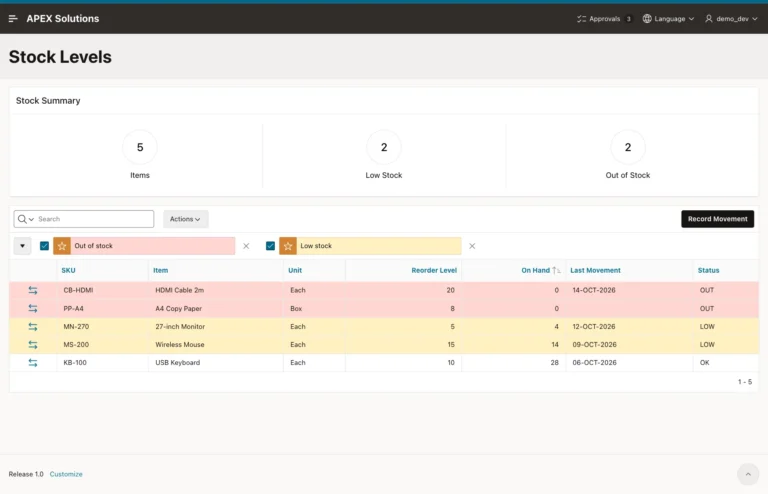
Record receipts and issues as movements, calculate stock on hand in a view, block issues beyond the stock with a locking validation, and highlight low stock.
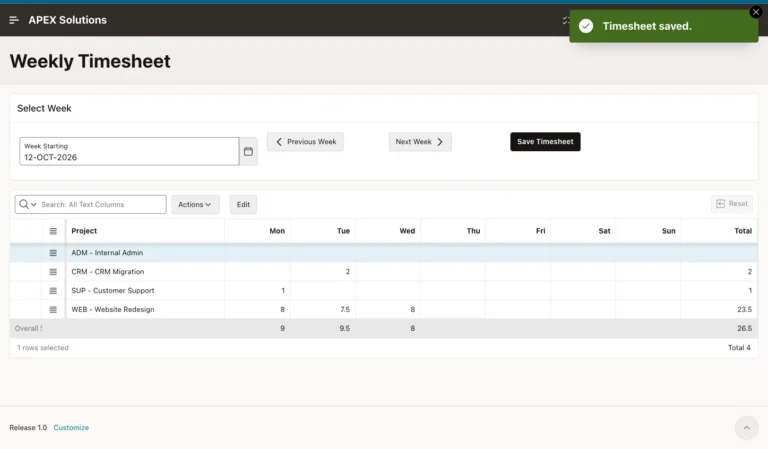
Pivot daily rows into Monday to Sunday columns, save the interactive grid with PL/SQL code, add row and day totals, and block more than 24 hours per day.
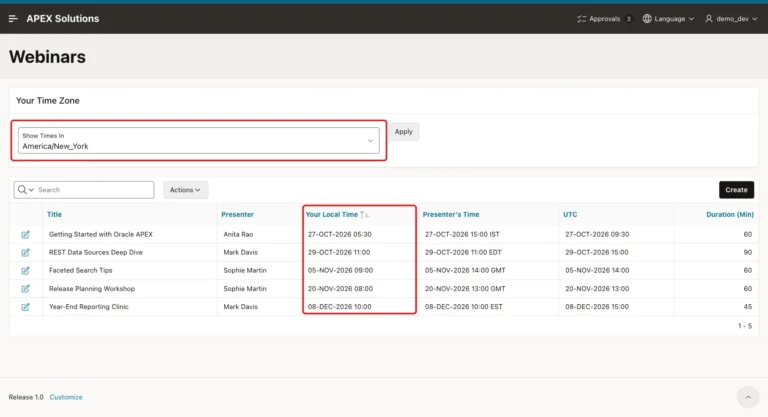
Store times as TIMESTAMP WITH LOCAL TIME ZONE, turn on Automatic Time Zone, show local, presenter and UTC times, and let users pick another time zone.
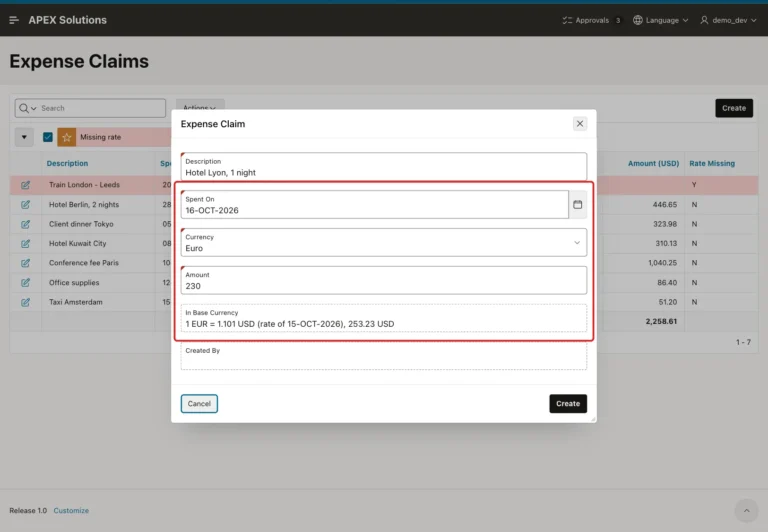
Store exchange rates by date, convert each amount with the rate of its day, preview it in the form, block missing rates and total in the base currency.
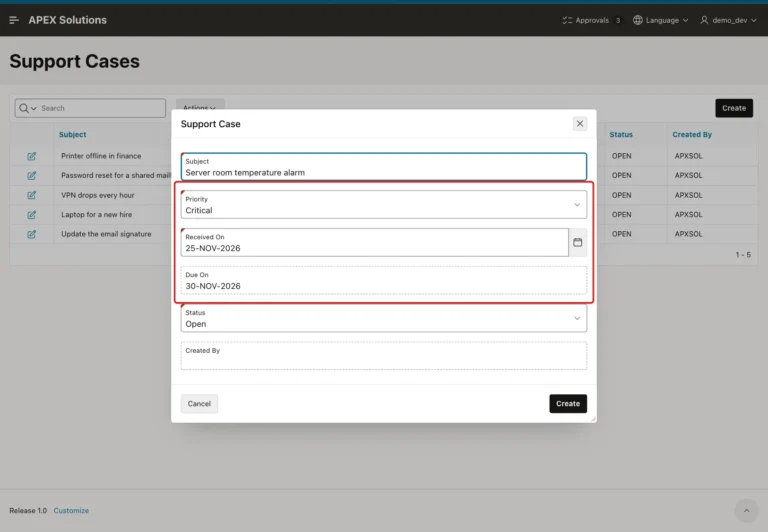
Build a holiday table and a PL/SQL business-day function, show the due date while typing, save it with a server computation, and report business days left.
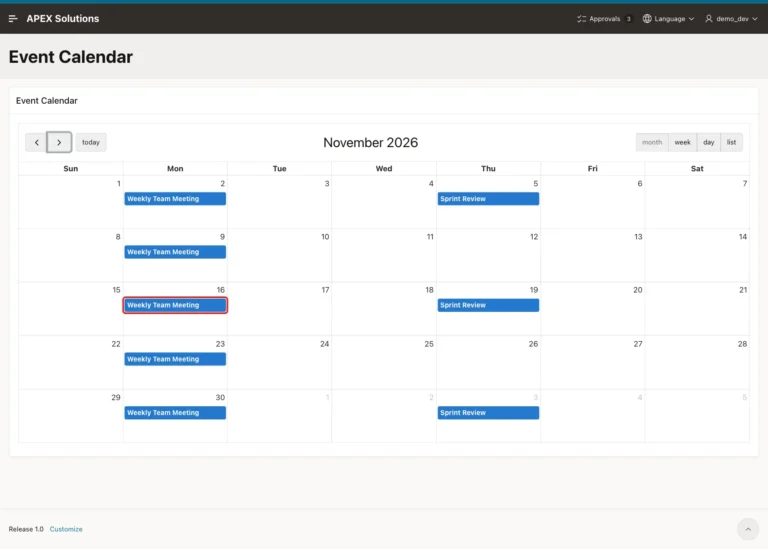
Store the repeat rule once, generate the dates with DBMS_SCHEDULER, show them on a calendar, and move or cancel single dates without losing them later.
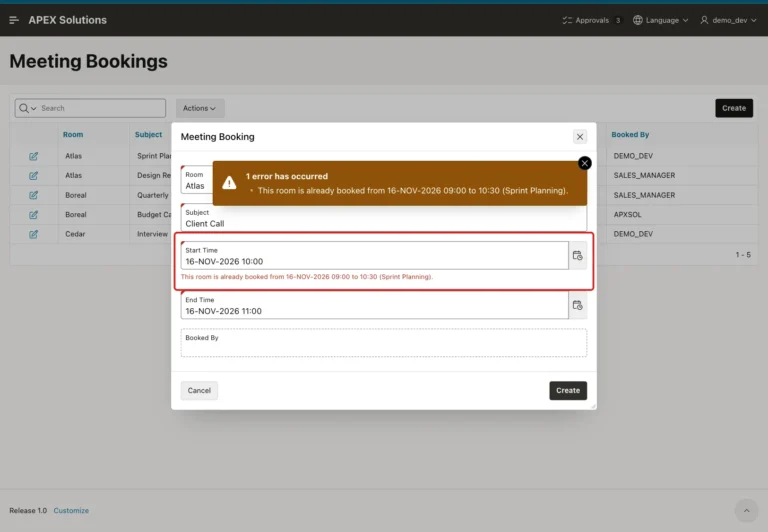
Check new bookings against saved ones with a validation, allow back-to-back slots, and lock the room row so two users saving at once cannot double-book.
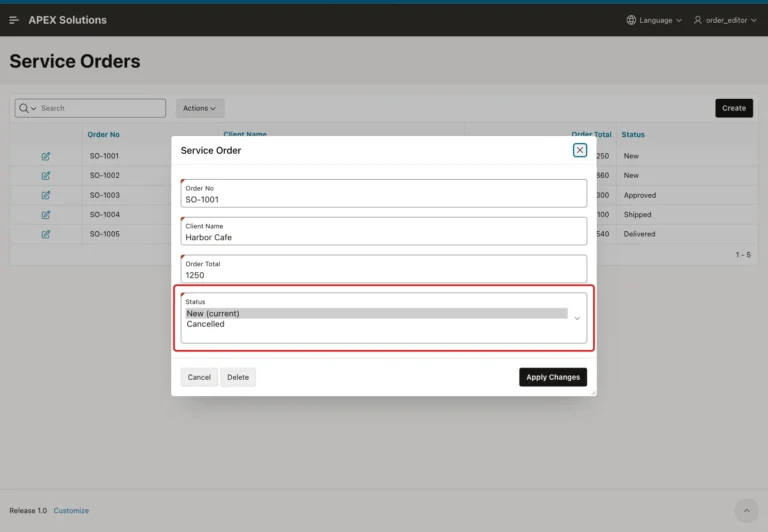
Store allowed status moves per role in a table, show only the next valid statuses in the form select list, and reject forced values with a validation.
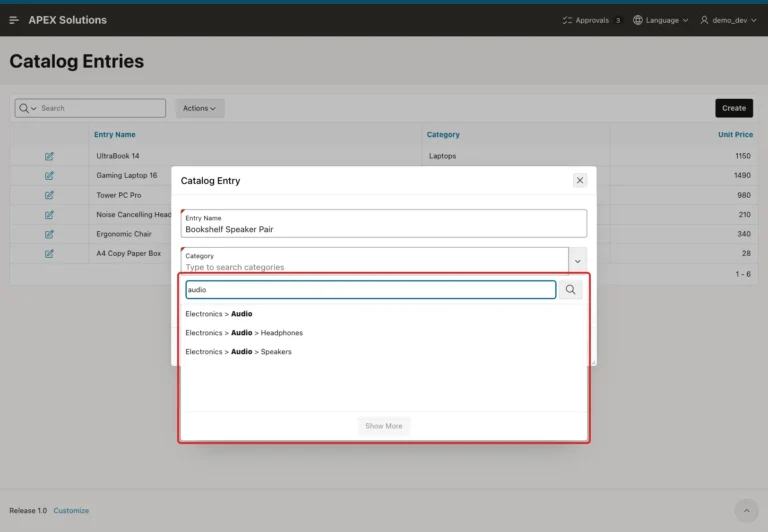
Build an indented select list and a searchable Popup LOV from a self-referencing category table with CONNECT BY, save the ID and show full paths in reports.

Use a unique index on upper(trim(name)), a declarative validation and a page error handling function to stop near duplicate names with a clear message.