
Are you tired of writing the same setup instructions for every single new project? You are definitely not alone in feeling this everyday frustration. Every developer faces the repetitive task of configuring files and setting up folders before they can build anything useful.
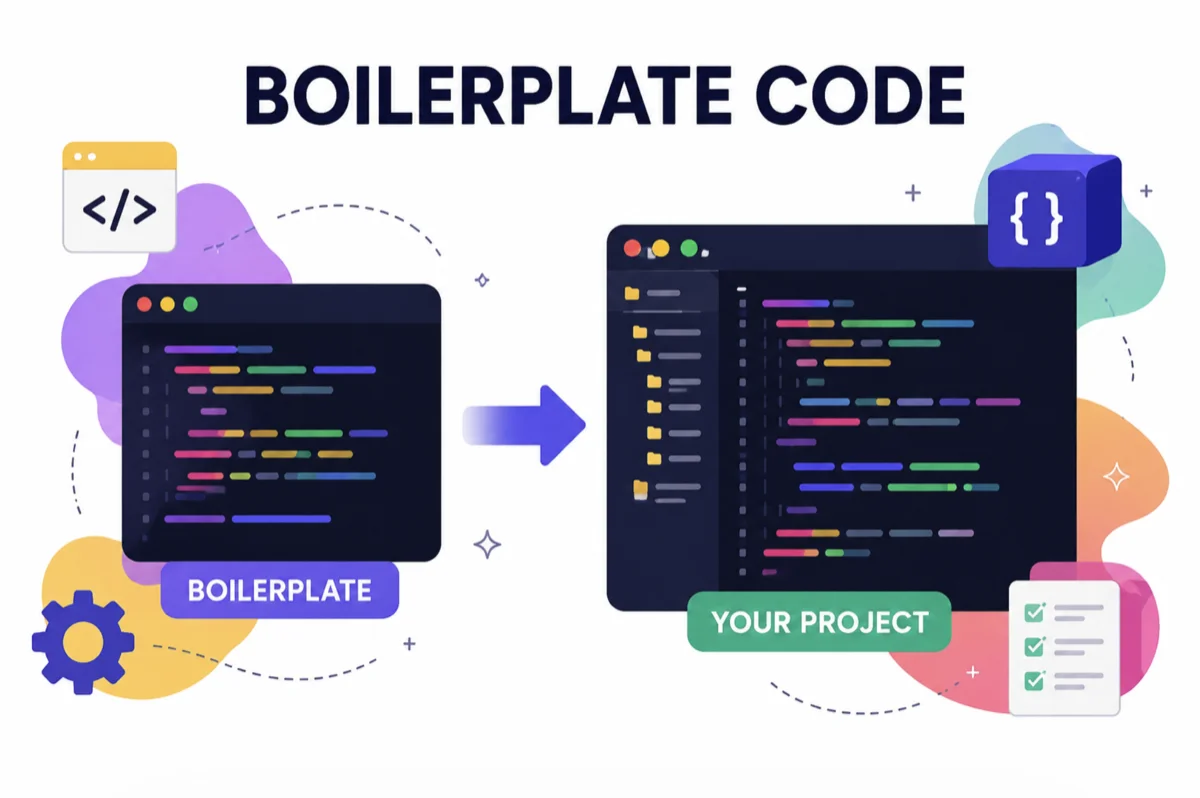
This initial starting point is what we call boilerplate code in the tech industry. You can think of it like a blueprint for building a new house. Instead of drawing the standard foundation and walls from scratch every time, you simply use a pre-made template to get a head start.
This efficient approach allows you to focus your energy on the unique features of your application. In this guide, you will learn exactly what boilerplate code is and why it matters so much. You will also discover how to manage these templates to boost your daily productivity.
What Exactly is Boilerplate Code?
Boilerplate code refers to sections of text that you must include in many places with little or no alteration. It is the mandatory structural foundation required by a programming language or framework. Without these standard blocks, your application simply will not run properly.
When you start exploring software architecture concepts, you quickly realize that standardizing your starting point is crucial. It ensures consistency across different modules and makes your codebase much easier to navigate. This standard approach ultimately saves everyone a massive amount of time.
As one senior developer wisely noted: "Boilerplate code is the necessary tax we pay for robust software foundations." This quote perfectly captures the essence of why we tolerate these repetitive snippets.
The Origins of the Term
The term actually comes from the newspaper industry back in the early twentieth century. Syndicated columns were sent to newspapers on pre-stamped steel plates that resembled the heavy metal plates used to make steam boilers. Since the text on these plates could not be changed, they were called boilerplate.
Today, the tech world uses the same term for unchangeable, standard text. Whether you are learning web application development or building complex backend systems, you will encounter these standard patterns everywhere. They form the backbone of modern programming.
Recognizing these patterns helps you understand the underlying mechanics of your tools. It also gives you a deeper appreciation for the frameworks you use daily.
Why Do You Need Boilerplate Code?
You might wonder why modern tools still require so much repetitive setup. The primary reason is that programming languages are designed to be extremely flexible and generic. They need to handle a vast array of different use cases and environments.
By using standard templates, you avoid missing critical configuration steps. This is especially important when you set up continuous integration pipelines for your team. Consistency is the absolute key to preventing unexpected deployment errors.
Furthermore, these templates serve as excellent learning tools when you adopt the best programming languages available today. By studying the standard starting points, you learn the recommended best practices of that specific technology.
Boosting Initial Development Speed
The most obvious benefit is the massive boost to your initial development speed. You do not have to reinvent the wheel every single Monday morning. You just copy the template and immediately start working on the actual business logic.
This rapid start is crucial for maintaining your momentum and focus. When you engage in test driven development, you want to jump straight into writing your tests. You certainly do not want to spend two hours configuring a testing environment first.
Ultimately, your time is your most valuable asset. Using predefined templates frees up your mental bandwidth for solving actual user problems.
Common Examples of Boilerplate Code
You interact with standard starting code more often than you might think. Let us look at a few common examples that you probably use every week. Recognizing them will help you spot great opportunities for automation.
The most classic example is the basic HTML5 starter document. Every single webpage requires the same declarative tags before you can add any visible content. This ensures the browser understands exactly what to render.
Another common area is database connectivity. Writing standard connection strings and error handlers is required for almost all developer portfolio projects. You will type these exact lines hundreds of times throughout your career.
A Practical HTML Boilerplate Example
To make things clear, let us look at the standard HTML5 boilerplate. This snippet tells the browser how to handle character encoding and mobile responsiveness.
<!DOCTYPE html>
<html lang="en">
<head>
    <meta charset="UTF-8">
    <meta name="viewport" content="width=device-width, initial-scale=1.0">
    <title>Your Document Title</title>
</head>
<body>
    <h1>Hello World</h1>
</body>
</html>
As you can see, almost everything in that snippet is required just to display a simple heading. You will find similar mandatory structures in the top coding languages you use daily.
The Downsides of Too Much Boilerplate
While templates are incredibly useful, they do come with a few notable drawbacks. The biggest issue is that they can severely clutter your files and make them difficult to read. When standard configuration hides your actual logic, you have a real problem.
This clutter can sometimes mask serious underlying issues in your logic. If you are trying to identify code smells, navigating through hundreds of lines of repetitive setup makes your job much harder. It significantly increases the cognitive load required to understand the system.
Additionally, manually copying and pasting large chunks of text often leads to human error. This is one of the most common junior developer mistakes that you will encounter. You might easily forget to update a variable name in the copied text.
Maintenance and Updates
Another challenge arises when the underlying framework updates its recommended standards. If you have manually pasted the old setup into fifty different files, you now have a massive update task ahead of you. This is why a good code refactoring process is essential.
You have to manually track down and update every single instance of the outdated code. This tedious maintenance work is exactly what you want to avoid as a developer.
To help you understand the tradeoffs clearly, here is a helpful comparison table.
| Feature | Boilerplate Code | Custom Logic |
|---|---|---|
| Reusability | Extremely high | Usually very low |
| Creativity | None required | Requires deep thought |
| Maintenance | Updates are tedious | Updates are targeted |
| Readability | Can clutter files | Highly specific |
Modern Alternatives and Solutions
Thankfully, the software industry has recognized these pain points and developed clever solutions. You no longer have to manually copy and paste everything yourself. The modern ecosystem offers automated tools to handle the heavy lifting for you.
Command-line interfaces are now the standard way to generate new projects. These tools automatically scaffold out your entire directory structure and insert the necessary standard files. You can find out more by exploring current web development trends and tutorials.
Another popular alternative is adopting low code platforms for certain repetitive tasks. These platforms abstract away the standard configuration entirely so you only focus on the visual layout.
Using AI to Generate Templates
Artificial intelligence has recently become a massive game-changer for generating standard setups. You can now simply ask your AI assistant to generate the basic structure for your specific framework. This helps you write secure code much faster than before.
You can even use advanced prompt engineering techniques to get perfectly customized templates. This ensures the generated text perfectly matches your team standards.
While AI is incredibly powerful, it is important to remember that it is just a tool. If you ever wonder why AI won't replace software developers, it is because AI handles the repetitive setup while you handle the complex business logic.
How to Manage Boilerplate Effectively
To maximize your efficiency, you need a solid strategy for managing your templates. The best approach is to create your own centralized repository of snippets. Most modern code editors allow you to save custom snippets that you can trigger with a simple keyboard shortcut.
You should actively maintain these snippets just like you maintain your regular application files. When you review a software engineering roadmap, you will see that tool mastery is a key milestone. Mastering your editor snippets will save you countless hours.
Furthermore, you should standardize these templates across your entire team. Good code review practices become much easier when everyone uses the exact same starting foundation.
Leveraging Framework Generators
You should always prefer official framework generators over manual creation. These official tools are constantly updated by the community to reflect the latest security and performance standards.
Using official tools also makes onboarding new team members much smoother. A new principal software engineer can jump right in if you follow industry standards. They will immediately recognize the familiar structure.
If you are exploring spec driven development, standard generators ensure your scaffolding perfectly matches your API specifications from day one.
Understanding Industry Terminology
As you navigate your career, you will encounter many strange terms alongside boilerplate. Understanding this jargon is crucial for effective communication with your peers. It makes team meetings much more productive.
You will often hear terms like scaffolding, scaffolding generators, and starter kits. You can learn more about these by checking out a list of web development acronyms that are commonly used. They all refer to different ways of handling the standard setup.
If you plan to become a developer advocate, mastering these software development acronyms is mandatory. You have to speak the language of the community fluently.
Best Practices to Remember
As we wrap up this discussion, let us review a few key best practices. Keep these in mind the next time you start a brand new repository. They will help you maintain a clean and professional workspace.
- Always use official CLI tools whenever they are available for your chosen framework.
- Create custom editor snippets for the small blocks you type more than twice a day.
- Never copy and paste large blocks without understanding exactly what every single line does.
- Regularly update your personal snippet library to match the latest industry security standards.
- Keep your programmer cv building updated by noting your experience with modern tooling and automation.
By following these simple rules, you will significantly reduce the friction of starting new tasks. You will spend less time configuring and more time actually building.
Conclusion
Boilerplate code is an unavoidable reality of modern programming, but it does not have to slow you down. By understanding its purpose and leveraging modern automation tools, you can turn this repetitive chore into a streamlined process. You now have the knowledge to manage your templates effectively and improve your daily coding efficiency.
Take the time to set up your snippets today, and you will reap the productivity benefits for years to come.
