
Building software often feels like a relentless race against the clock. You have new features to launch and bugs to fix immediately to keep your users happy. Sometimes you simply have to take deliberate shortcuts to meet those pressing business deadlines.
These strategic shortcuts are often referred to as tech debt in the programming world. Just like traditional financial debt, you borrow time from the future to get things done today. You will eventually have to pay that borrowed time back with interest as your project grows.
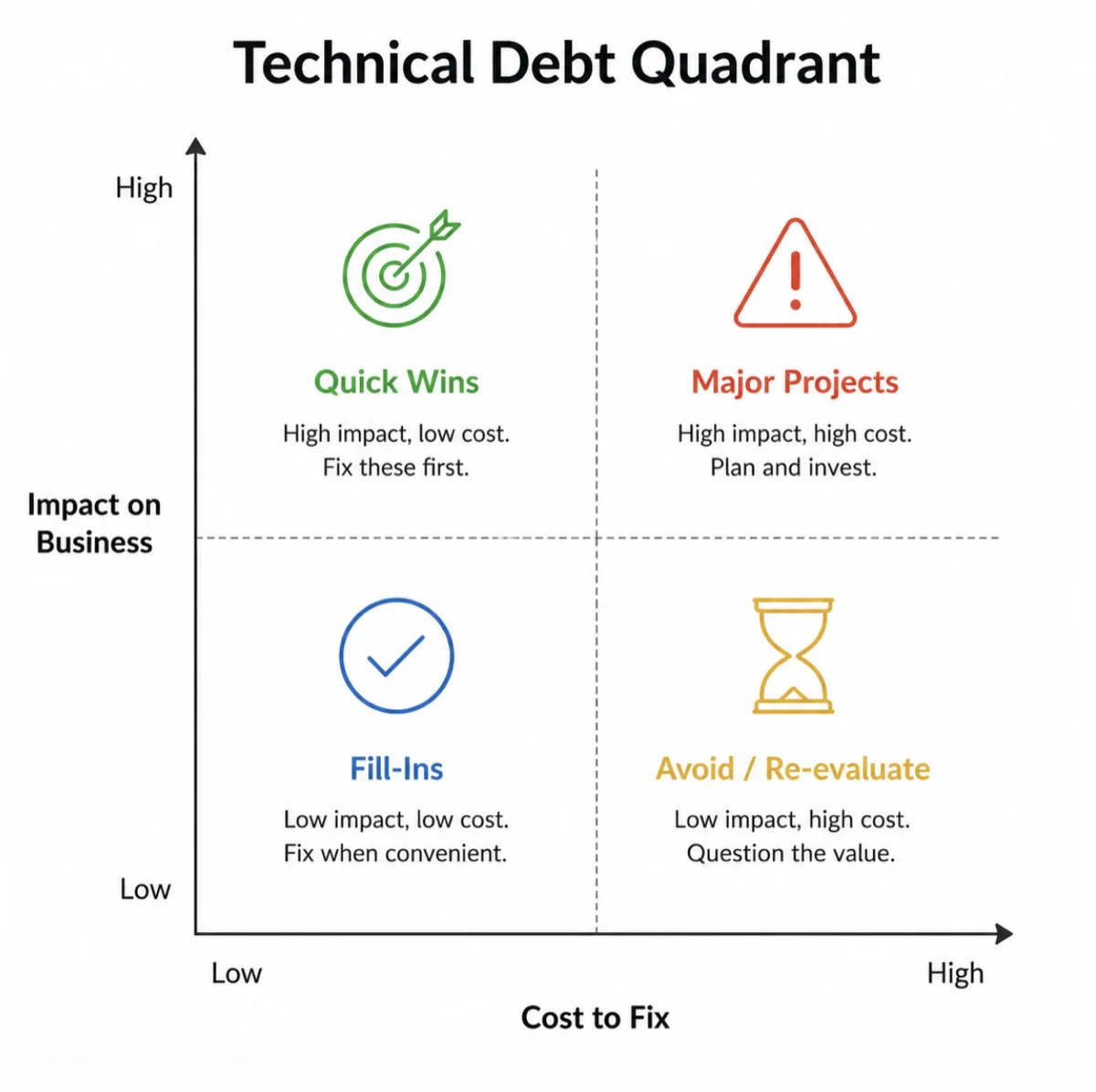
Understanding exactly how to manage this dynamic is crucial for the long-term health of your codebase. This is where the Technical Debt Quadrant comes into play as a highly effective visualization tool. It helps you categorize your complex development decisions clearly and objectively.
What is the Technical Debt Quadrant?
The Technical Debt Quadrant is a vital framework introduced by software engineering expert Martin Fowler. It helps you deeply understand that not all coding shortcuts are created equal. You can use it daily to distinguish between acceptable trade-offs and dangerous coding habits.
The quadrant plots your team's coding decisions along two main intersecting axes. The first axis measures whether the debt was taken on deliberately or inadvertently by your developers. The second axis measures whether your overall approach was fundamentally reckless or prudent.
By mapping your choices on this visual grid, you gain a crystal-clear picture of your software architecture health. It allows your agile development teams to communicate much better about the true state of the project. You can strategically prioritize which parts of the legacy code need immediate attention and refactoring.
Not all debt is inherently bad, but understanding its true nature is the very first step toward effective tech debt management.
The Deliberate vs Inadvertent Axis
Deliberate debt happens when you make a fully conscious choice to cut a corner during development. You know you are doing something suboptimal, but you have a strong strategic reason for it. This often happens when you desperately need to speed up development to meet a critical market window.
Inadvertent debt occurs completely without your prior knowledge or direct intention. You write the code to the absolute best of your ability at the current time. Only later do you realize that your initial design was flawed or incomplete based on new project requirements.
Both types of debt happen regularly in every major software engineering project worldwide. Recognizing exactly which type you are currently dealing with fundamentally changes how you approach code refactoring later.
The Reckless vs Prudent Axis
Reckless debt is what happens when you prioritize sheer speed over everything else without a backup plan. You ignore proven good design principles because you feel you simply do not have the time for them. This aggressive approach consistently leads to incredibly messy codebases and severe long-term consequences.
Prudent debt is a much more calculated and highly thoughtful risk for your team. You know you are taking a shortcut, but you fully understand the massive impact it will have on the system. You also create a firm, written plan to go back and clean up the code once the immediate rush is over.
Exploring the Four Quadrants
When you creatively combine these two axes, you get the four specific sections of the Technical Debt Quadrant. Each distinct quadrant represents a completely different scenario you might easily face during software creation. Let us look closely at each of these four areas to understand them better.
Reckless and Deliberate
This is easily the most dangerous zone for your entire software project. In this quadrant, you knowingly write terribly bad code just to get the new feature out the door quickly. Your stressed team might say they simply do not have time for proper design or thorough software testing.
You are essentially sweeping massive architectural problems straight under the rug. This destructive behavior quickly leads to a highly fragile system that is incredibly difficult to maintain. You must avoid this specific quadrant at all costs if you want sustainable and predictable development speed.
Prudent and Deliberate
This quadrant is precisely where highly strategic tech debt management actually happens. You purposely decide to take on debt because the raw business value of shipping early outweighs the cost of refactoring later. Your capable team might say they must ship now and gracefully deal with the structural consequences later.
The core key here is that you carefully document the debt and plan for its eventual repayment. You treat it exactly like a real financial loan that absolutely needs to be settled quickly. This is a very common and highly acceptable practice in modern agile development environments.
Reckless and Inadvertent
This frustrating situation usually arises from a deep lack of experience or base knowledge within the development team. You inadvertently create messy code because you simply do not know any better at the time. A struggling developer in this quadrant might ask what a specific design pattern even means.
The debt constantly accumulates silently and can easily bring your project to a grinding halt over time. The absolute best way to fix this specific issue is through continuous education, dedicated mentorship, and regular code reviews. You really need to actively elevate the foundational software engineering skills of your entire team.
Prudent and Inadvertent
This is a completely natural byproduct of constantly learning and evolving your product over a long period. You diligently write the best code you can with the precise information you currently possess. Months later, you suddenly realize there was a much better way to robustly structure your software architecture.
Your team might look at old code and proudly realize they now know exactly how it should have been done. This is actually a truly wonderful sign of continuous growth and professional maturity in your developers. You simply need to allocate proper time for code refactoring to brilliantly apply your new knowledge to the legacy code.
Comparing the Quadrants
A very quick comparison can easily help you identify which specific type of debt your team is currently dealing with. Use this simple table to assess your current codebase situation completely objectively. It will seamlessly guide your critical discussions and planning sessions during future team meetings.
| Quadrant Type | Common Team Mindset | Resulting Action Required |
|---|---|---|
| Reckless and Deliberate | We do not have time for software design. | Stop and address team culture immediately. |
| Prudent and Deliberate | We must ship now and fix it later. | Schedule time for targeted refactoring soon. |
| Reckless and Inadvertent | What is proper software layering anyway? | Invest in team training and regular mentorship. |
| Prudent and Inadvertent | Now we know how we should have done it. | Update legacy code with new architectural insights. |
Why You Need Active Tech Debt Management
Ignoring the current chaotic state of your codebase is a guaranteed recipe for total disaster. Small coding shortcuts eventually pile up into massive operational roadblocks that aggressively slow down new feature development. You will quickly find your talented team spending all their precious time fixing bugs instead of creating value.
Active tech debt management effectively keeps your software project moving forward smoothly and highly predictably. It strongly requires you to track your shortcuts carefully and strictly prioritize paying them off regularly. You absolutely should treat debt repayment as a core, unskippable part of your daily agile development cycle.
When you diligently manage your debt properly, you powerfully protect your software architecture from rapidly deteriorating. You also effectively keep your developers happy because they do not have to fiercely fight messy legacy code daily. A beautifully clean codebase directly leads to much higher team morale and significantly better overall productivity.
Continuous, relentless attention to technical excellence and good design tremendously enhances agility and project longevity.
Strategies for Handling Debt Effectively
You cannot simply choose to ignore the Technical Debt Quadrant once you truly understand its core principles. You absolutely need highly actionable strategies to purposefully keep your software project healthy over the long years. Here are a few highly practical ways you can easily integrate these concepts into your daily workflow.
- Make hidden coding debt completely visible by logging it in your issue tracker right alongside new product features.
- Allocate a strict, set percentage of every single development sprint strictly for vital code refactoring tasks.
- Establish crystal-clear, beautifully written coding standards to aggressively prevent reckless and inadvertent mistakes from happening.
- Encourage open, extremely honest communication about architectural trade-offs before they are ever finalized.
- Review your messy legacy code regularly to clearly identify key areas that need immediate, thoughtful modernization.
Implementing these critical steps requires very strong discipline from both senior management and the core development team. You must all universally agree that long-term project health is exactly as important as short-term financial gains. Unwavering consistency is truly the only reliable way to successfully prevent massive technical bankruptcy.
Measuring and Tracking Your Progress
You desperately need a reliable way to measure your ongoing success as you apply the Technical Debt Quadrant to your daily work. Start by carefully tracking the exact amount of time your developers spend fixing bugs versus actually building new features. A wildly high bug-fixing ratio usually indicates an overwhelming, dangerous amount of reckless technical debt.
You definitely should also closely monitor your team's overall development speed over several long months. If it constantly takes increasingly longer to ship incredibly simple features, you are highly likely drowning in unmanaged legacy code. These vital metrics provide completely objective evidence that you need to radically prioritize system refactoring immediately.
Regular, highly thorough code quality audits can also easily help you pinpoint exactly where the worst debt lives in your architecture. You can powerfully use automated software engineering tools to quickly scan for complex, hard-to-maintain system files. Bringing this hard data to your weekly planning meetings guarantees that debt repayment remains a top priority forever.
The Long-Term Consequences of Ignoring the Quadrant
If you foolishly fail to use the Technical Debt Quadrant, your project will certainly suffer severe long-term consequences. Development speed will inevitably and painfully crawl to a complete halt as the codebase becomes far too complex to navigate. Even the absolute simplest changes will suddenly start breaking completely unrelated parts of your web application.
Your absolute brightest and best developers will likely become completely frustrated and rapidly leave for much better environments. No professional, dedicated engineer actively enjoys working in a fragile system where absolutely every task feels like an exhausting uphill battle. The staggering financial cost of hiring and thoroughly training new staff will easily far exceed the original cost of doing things right the first time.
Eventually, the core business itself will suffer greatly because you simply cannot respond to market changes quickly enough. You might even, unfortunately, face the dreaded scenario where an incredibly massive complete system rewrite becomes the only viable option left. You can easily completely avoid all of this highly unnecessary pain by simply taking your tech debt management seriously starting right today.
Conclusion
The widely acclaimed Technical Debt Quadrant is truly much more than just a vague theoretical concept for software engineers. It is a highly practical, incredibly powerful tool that helps you make incredibly informed decisions about your daily code quality. By fully and deeply understanding the four distinct types of debt, you can effectively choose the absolute right approach for your specific, unique situation.
You definitely should never be overly afraid to confidently take on prudent, highly deliberate debt when the urgent business case truly calls for it. However, you must always be aggressively hyper-vigilant against completely reckless coding practices that rapidly ruin your beautiful software architecture. Make sure you treat your technical shortcuts precisely like very real financial loans that actively require extremely timely repayment.
