Free Human Anatomy 3D Models: Heart, Brain, Lungs, Eye, Kidneys, Inner Ear, Tooth and More (GLB, OBJ, STL)
Twelve free human anatomy 3D models: a heart with its great vessels, a brain, lungs with the windpipe, an eyeball, kidneys with the bladder, a liver, a stomach, the intestines, a cutaway molar, an inner ear, a skin cross-section block and a tongue. Free for commercial use under CC BY 4.0, no login.
- 12 models
- 7,844–62,168 triangles
- 189 KB–1.0 MB each
- GLB, glTF, OBJ, STL
- CC BY 4.0
- No login
All 12 models
Drag a model to turn it, or tap it to open the 3D viewer, where you can zoom and download it. Sizes are width × depth × height.
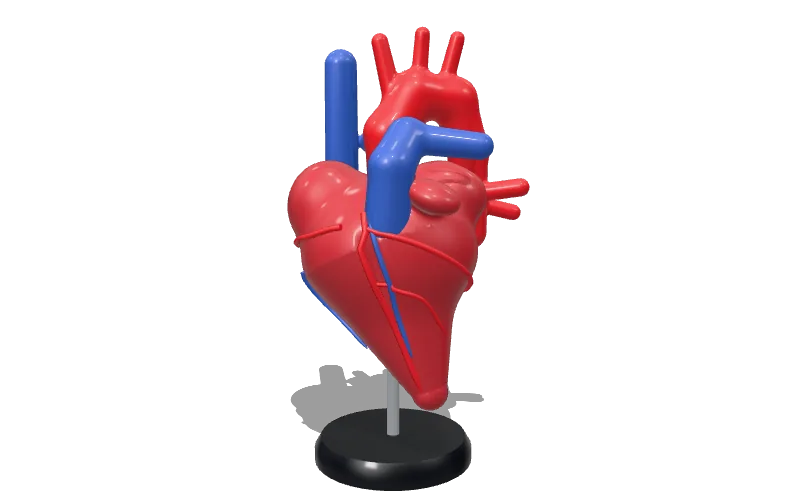
Anatomical Heart
Heart with vessels
A real size heart with the aorta and its branches, blue pulmonary trunk and vena cava, and coronary vessels over the muscle.
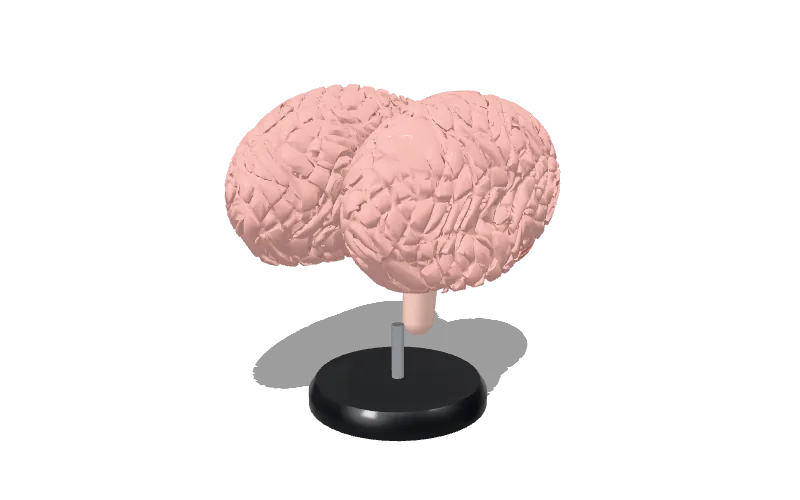
Human Brain
Brain with cerebellum
A folded brain with two hemispheres, the deep middle fissure, a ridged cerebellum at the back and the brain stem.
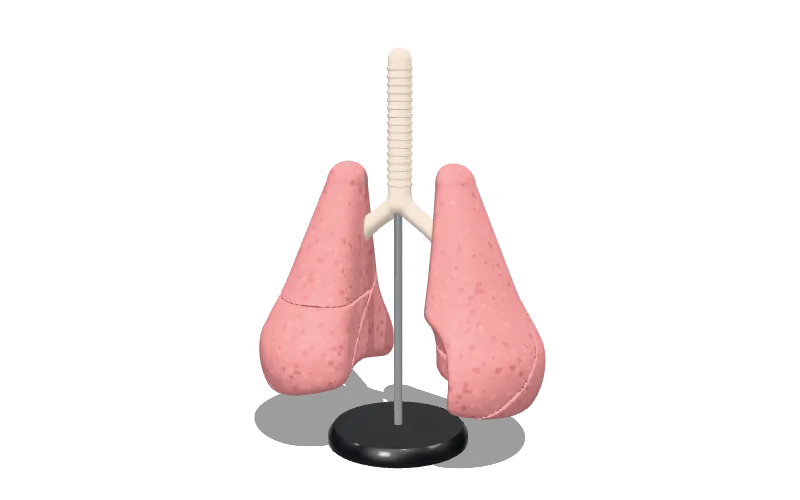
Human Lungs
Lungs and windpipe
Two pink lungs with lobe fissures and the heart notch, joined by a ringed windpipe and its two main bronchi.
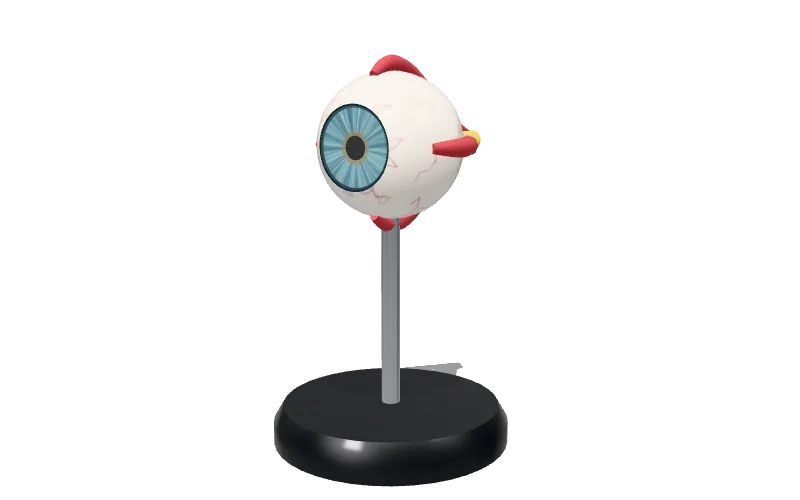
Human Eyeball
Eye with muscles
A 2.4 cm eyeball with a blue iris, a black pupil, a clear cornea, red veined white, four eye muscles and the optic nerve.
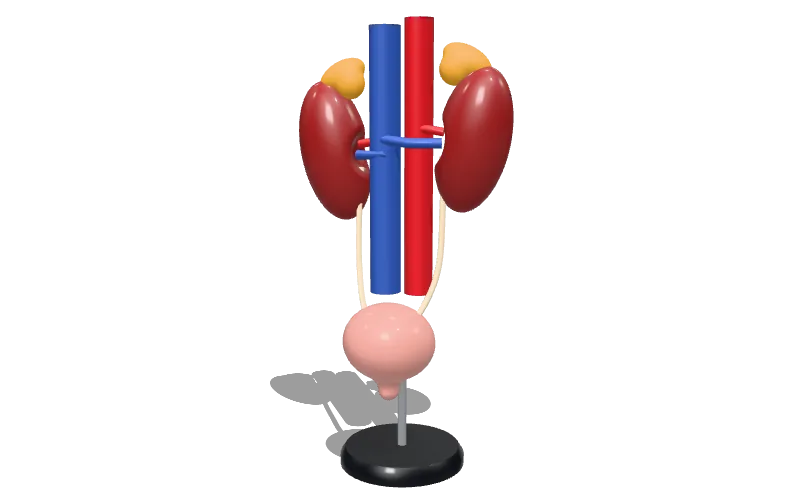
Human Kidneys
Urinary system
Two kidneys with yellow adrenal glands, renal arteries and veins off the aorta and vena cava, ureters and the bladder.
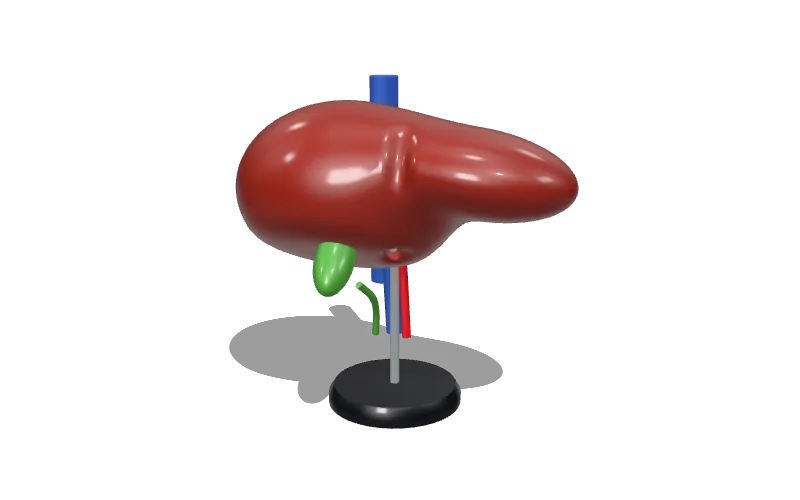
Human Liver
Liver and gallbladder
A glossy brown liver with its large right lobe and slim left lobe, a green gallbladder, bile duct and blood vessels.
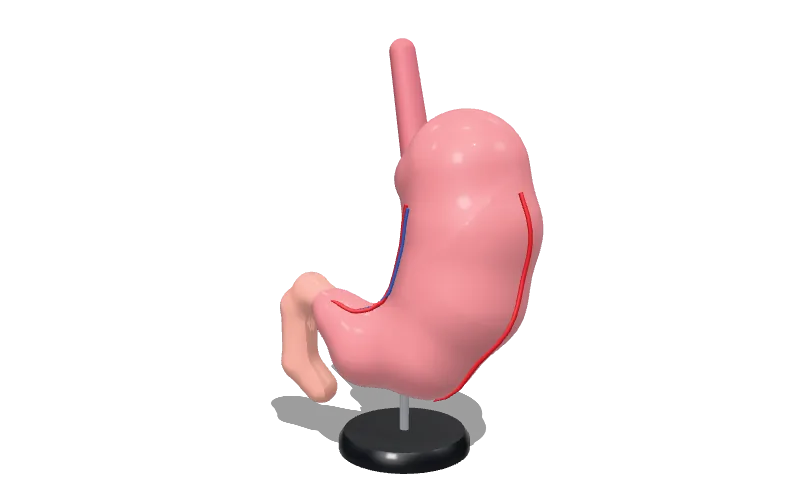
Human Stomach
Stomach and duodenum
A J shaped stomach with the domed top, the narrow outlet and the first loop of small bowel, fed by the food pipe.
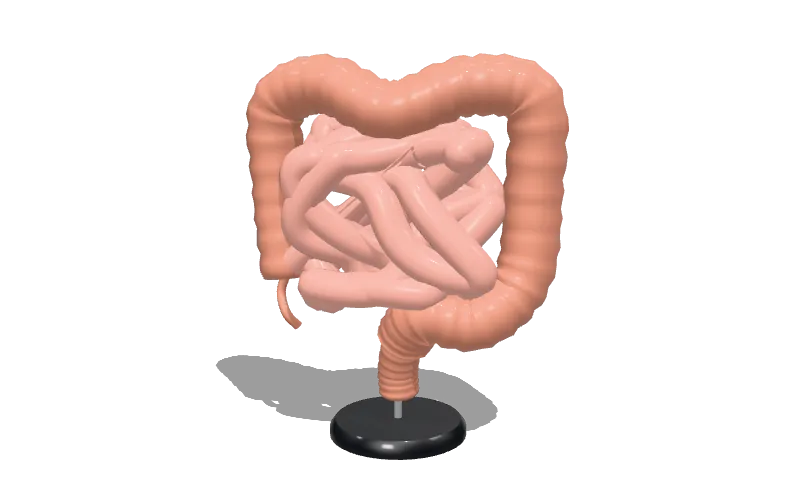
Human Intestines
Small and large bowel
The large bowel framing a coiled small bowel, with pouched colon walls, the appendix and the rectum below.
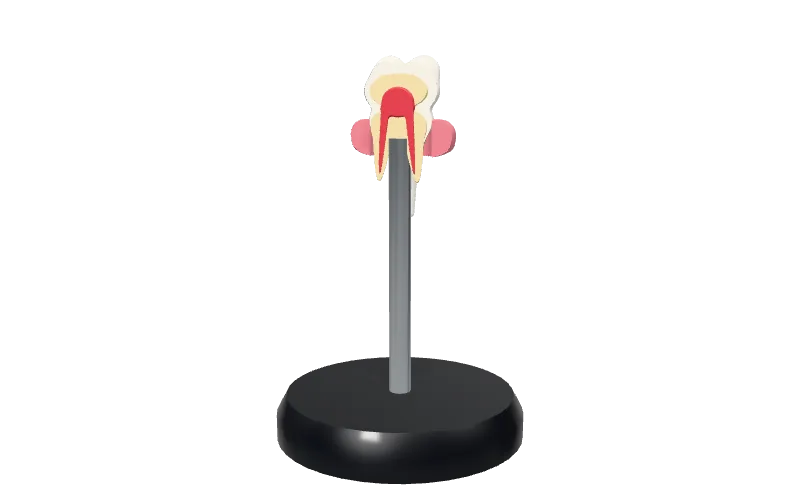
Molar Tooth Model
Cutaway tooth
A cutaway molar with white enamel, yellow dentin and the red pulp inside, three roots and a pink gum collar.
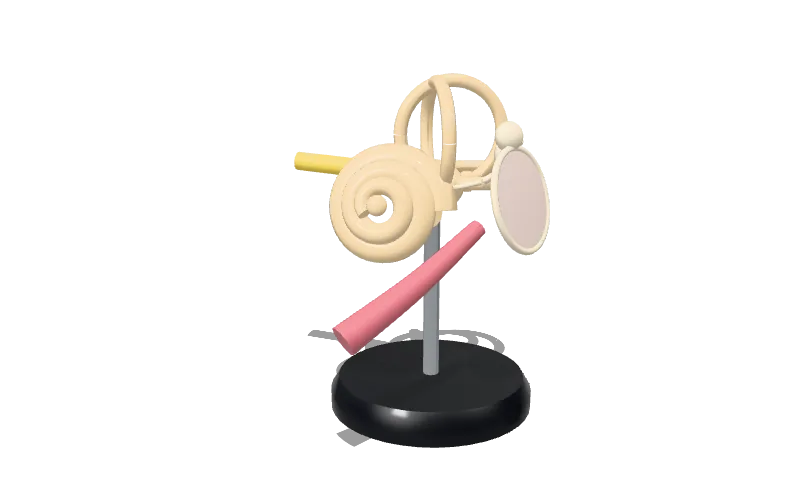
Inner Ear Model
Ear, enlarged
An enlarged inner ear: the snail shaped cochlea, three looped canals, the tiny ear bones, the eardrum and the nerve.
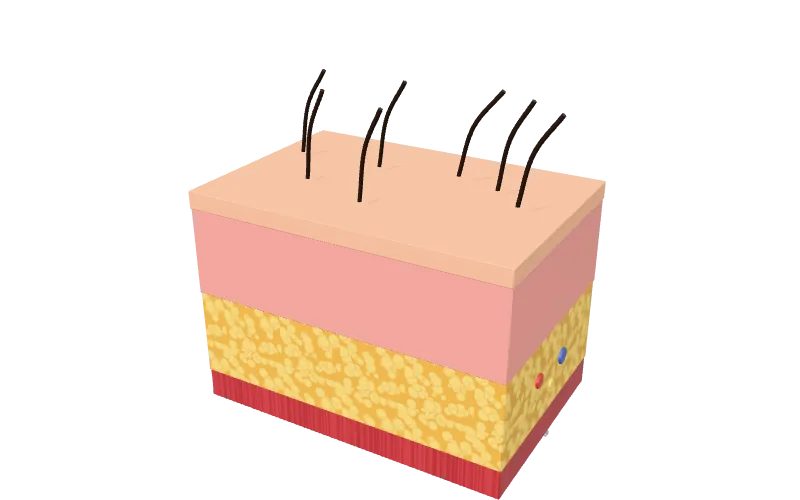
Skin Cross-Section Model
Teaching block
A skin block in layers: outer skin, dermis, yellow fat and muscle, with hairs, glands, vessels and nerves.
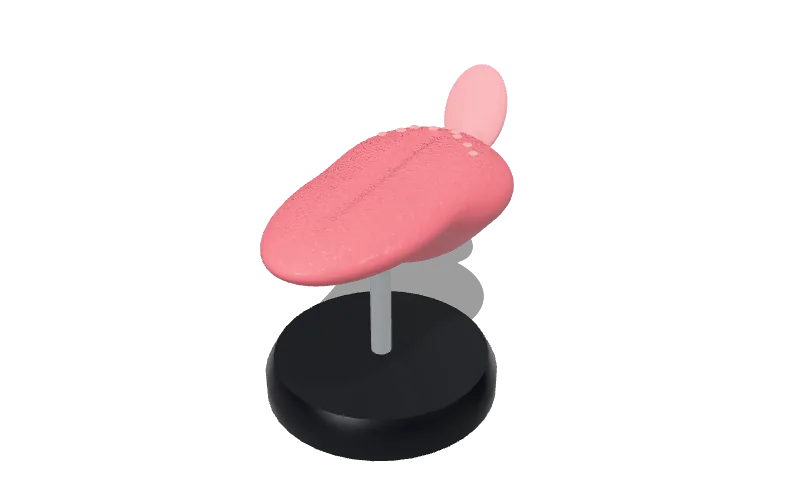
Human Tongue
Tongue and epiglottis
A pink tongue with a fine bumpy top, a groove down the middle, the V row of large taste bumps and the epiglottis.
Made for games
- Main organsHeart, brain, lungs, liver, stomach, intestines and kidneys with the bladder, each with its main vessels, ducts or airways attached.
- Small partsA 2.4 cm eyeball with its muscles and nerve, a cutaway molar showing enamel, dentin and pulp, and an inner ear enlarged five times.
- Teaching blocksA layered skin block with hairs, glands, fat, vessels and nerves, and a tongue with its taste bumps and epiglottis.
- Ready for classReal size organs on stands, from about 8,000 to 62,000 triangles and up to about 1.1 MB each, for slides, apps and lessons.
How to use these GLB models
GLB is binary glTF 2.0: one file with the mesh, materials and node names. Every modern 3D tool reads it.
three.js
Load it with GLTFLoader, as in the code below. Babylon.js, PlayCanvas and A-Frame load GLB directly too.
Unity
Add the free glTFast package (Package Manager, add by name: com.unity.cloud.gltfast), then drag the .glb into Assets.
Godot 4
Drop the .glb into the FileSystem dock. Godot imports it as a scene you can instance.
Blender
File, Import, glTF 2.0. From there you can also export to FBX, OBJ or STL.
import * as THREE from 'three';
import { GLTFLoader } from 'three/addons/loaders/GLTFLoader.js';

const gltf = await new GLTFLoader().loadAsync('model.glb');
const model = gltf.scene;
scene.add(model);

// the model is in metres, +Y up, facing +Z, standing on the ground at the origin

// spin an organ on its stand for a lesson (three.js)
const heart = (await new GLTFLoader().loadAsync('anatomical-heart.glb')).scene;
heart.scale.setScalar(5); scene.add(heart); // real size is small: scale it up for the camera
renderer.setAnimationLoop(t => { heart.rotation.y = t / 3000; renderer.render(scene, camera); });
Licence: free with credit (CC BY 4.0)
All models are made by vinish.dev and released under Creative Commons Attribution 4.0. You may use them in personal and commercial projects, change them and share them. The one condition is credit, for example in your game's credits, your app's about page or your video description:
Each file carries its own credit line inside it (the glTF asset.copyright field), and each zip has a CREDITS.txt. If you change a model, say so after the credit, for example "recoloured".
Questions
Are these medically accurate?
They are simplified teaching models of our own design, with the main parts in the right places and the usual anatomy colours. They are not for diagnosis or surgery planning.
How big are they?
Organs are real size in metres: the heart is about 12 cm, the brain about 17 cm long, the lungs about 25 cm wide and the eyeball 2.4 cm. The inner ear is enlarged five times and the skin block is a 12 cm teaching block.
Can I take the parts apart?
Each model is one file, but every tissue has its own material, such as arteries, veins, enamel or fat, so you can hide or recolour parts by material in Blender or your engine.
Can I remove the stand?
Yes. The stand uses its own black and chrome materials, so delete those faces in Blender to get the organ on its own.
What goes with them?
Pair them with the Human Skeleton, Cells and Viruses, Medical Equipment, Hospital Room and Science Lab packs.
Can I use these models in a commercial game?
Yes. CC BY 4.0 allows commercial use. Put the credit line in your credits or about screen.
Do I need an account?
No. There is no login, sign-up or email. Open a model in the 3D view and press Download: the file is yours.
Can I get OBJ, STL or glTF?
Yes. Open the model in the 3D view and pick glTF, OBJ or STL. Your browser makes the file from the GLB in a second or two. OBJ and STL have no animation. STL is in millimetres with Z up; the models are made of separate parts, so a slicer may need to repair or merge them before 3D printing. For FBX, import the GLB into Blender (File, Import, glTF 2.0) and export it.
Can I change the models?
Yes. You may edit, recolour or cut them up. Keep the credit and mention that you changed them.
More from vinish.dev
- Free 3D Models: every pack in the library
- All 3D model categories: the full list on one page, with a search box
- Free Market Stall 3D Models: Pop-up gazebos and wooden awning stalls of a modern farmers market, each one loaded with its own goods and a blank chalkboard sign.
- Free DNA and Molecule 3D Models: Glossy ball-and-stick models in the usual model kit colours: black carbon, white hydrogen, red oxygen, blue nitrogen, each on a clear rod stand.
- Free Armor 3D Models: Polished steel plates with rolled edges and rivets, steel mail, red velvet with brass studs and quilted linen, most of them on wooden museum stands.
- Free Lighthouse 3D Models: Banded paint, granite blocks, white shingles, red brick and riveted iron, each topped with a railed gallery, a glazed lamp room and a glowing lens.
- Free Road Sign 3D Models: Picture-only signs with crisp printed faces, galvanised backs, round steel posts, black caps, clamp bands and small concrete collars.
- Free Cup and Mug 3D Models: Glazed ceramic, speckled enamel, brushed steel, hammered copper and clear glass, with coffee, tea, water, lemonade and brandy inside some of them.
- Free Animal Skull 3D Models: Smooth pale bone with ivory teeth, brown ridged horns and tan antlers, ready for desert scenes, hunting lodges, witch huts, museums and Halloween.
- Free Podium 3D Models: Clean marble, pastel, terrazzo, stone, wood and glowing neon stages for product renders, mockups, ads and online shop images.
- Free Wedding 3D Models: Soft blush, ivory and peach roses with gold, silver and white satin, ready for venue walkthroughs, event planning renders and wedding scenes.
- Free Warehouse 3D Models: Bright safety yellow, red and blue steel with pine pallets and taped cartons, ready for logistics sims, factory levels and storage scenes.
- Free Sci-Fi Turret 3D Models: Clean white and grey armor with glowing cyan, orange and red lights, ready for tower defense, base building and shooter games.
- Free Cartoon Vehicle 3D Models: Chunky, toy-like cars and trucks with big wheels and bright glossy paint, ready for kids games, city builders and casual racers.
- Free Armored Vehicle 3D Models: Wheeled and tracked armor beyond the tank: troop carriers, scout cars, engineer and support vehicles at real size.
- Free Fantasy Village 3D Models: Storybook homes and village props with glowing windows, at real building size, ready for cosy games, fairy tale scenes and kids apps.
- Free Gas Station 3D Models: Everything for a roadside fuel stop, from pumps and canopy to the kiosk, car wash and forecourt props, at real size.
- Free Crystal and Gem 3D Models: Raw minerals, polished stones and cut gems at real size, ready for mining games, treasure rooms, shops and science scenes.
- Free 1980s Room 3D Models: Everything for a retro teen bedroom or living room scene, at real size and with no brands, words or numbers.
- Free Wine, Beer and Cocktail 3D Models: Real-size glasses with real wall thickness and the drink inside as its own see-through part, ready for bars, restaurants and party scenes.
- Free Dice and Playing Card 3D Models: Real-size game night props with round-pip dice and suit-pip cards, ready for board game scenes, card tables and game rooms.
- Free Tabletop Miniature STL: Each mini is one closed solid on its own round base at real millimetre size: download the STL, slice, prime and paint.
- Free Sci-Fi Soldier 3D Models: A future squad for a shooter or space game: armoured troopers with glowing visors, specialists with packs and tools, and officers. Idle, walk and run.
- Free Building Materials 3D Models: Strapped pallets, stacked timber, bar bundles and bulk bags at real size, for building sites, yards, games and films.
- Free Tableware 3D Models: China, glass, silver and wood for the table, from a butter dish to a laid dinner place, for dining rooms, restaurants, games and films.
- Free Alien Creature 3D Models: Strange alien animals from a small hopper to a 5.7 m tunnel worm, for sci-fi games, alien planets, films and prints.
- Free Garage 3D Models: Lifts, jacks, tool chests and tire machines for car repair shops, garages and mechanic games.
- Free Fossil 3D Models: Skulls, skeletons and stone fossils for museum scenes, dig site games and science lessons.
- Free Viking Village 3D Models: Halls, workshops, walls and docks for Norse settlements, survival games and saga scenes.
- Free Beach 3D Models: Umbrellas, towers, huts and sand toys for seaside scenes, summer games and holiday worlds.
- Free Casino 3D Models: Tables, slot machines and chips for casino scenes, heist games and card game worlds.
- Free Theme Park 3D Models: Bright fairground rides and stands for park builder games, carnival scenes and kids worlds.
- Free Flying Car and Air Taxi 3D Models: Near-future eVTOL air taxis, flying cars and landing pads for city builders, sci-fi games and future mobility scenes.
- Free Strategy Game Building 3D Models: Chunky medieval base buildings for real time strategy, city builder and tower defence games.
- Free Cartoon Building 3D Models: Bright, bendy toon buildings for kids games, casual city builders and cartoon worlds.
- Free Tank 3D Models: Tracked armour from the interwar years to today for war games, dioramas and battle scenes.
- Free Wheel and Tire 3D Models: Car, truck and classic wheels with real tread for garages, car games and parts shops.
- Free Slime and Cute Monster 3D Models: Friendly slimes and little monsters for casual games, RPG enemies and kids scenes.
- Free Home and Service Robot 3D Models: Everyday robots for smart homes, hotels, hospitals and near-future game scenes.
- Free Backdrops and Scenes 3D Models: Ready-made sets to stand a character or a product in for renders, thumbnails and game menus.
- Free 1950s Diner 3D Models: Chrome, red vinyl, neon and sweet treats for retro diner scenes, games and product shots.
- Free Coffee and Tea 3D Models: Cups, pots and brewers with drinks inside for cafe scenes, kitchen tables and product shots.
- Free Retro Computer 3D Models: Old computers, drives, disks and a tape cabinet for retro rooms, labs and period scenes.
- Free Cookware 3D Models: Pots, pans, a wok, a kettle and a steamer for kitchen scenes, cooking games and product shots.
- Free Modular Wall Kit 3D Models: Brick wall pieces with windows, doors and arches that snap together into streets and houses.
- Free Japanese Buildings 3D Models: Pagodas, shrines, townhouses, farmhouses and castle walls of a traditional Japanese town.
- Free Train Station 3D Models: Platforms, canopies, ticket halls, footbridges and the furniture of a railway station.
- Free Low Poly Car 3D Models for Games: 12 vehicles with separate wheels
- Sample GLB Files: small test files for loaders, viewers and engines
- Free browser games and simulators by vinish.dev