Free DNA and Molecule 3D Models: Double Helix, Water, Benzene, Caffeine, Buckyball, Salt Crystal and More (GLB, OBJ, STL)
Twelve free DNA and molecule 3D models: a DNA double helix, water, carbon dioxide, methane, ammonia, ethanol, benzene, glucose, caffeine, a carbon 60 buckyball, a salt crystal lattice and a Bohr atom model. Free for commercial use under CC BY 4.0, no login.
- 12 models
- 1,792–28,368 triangles
- 41 KB–563 KB each
- GLB, glTF, OBJ, STL
- CC BY 4.0
- No login
All 12 models
Drag a model to turn it, or tap it to open the 3D viewer, where you can zoom and download it. Sizes are width × depth × height.
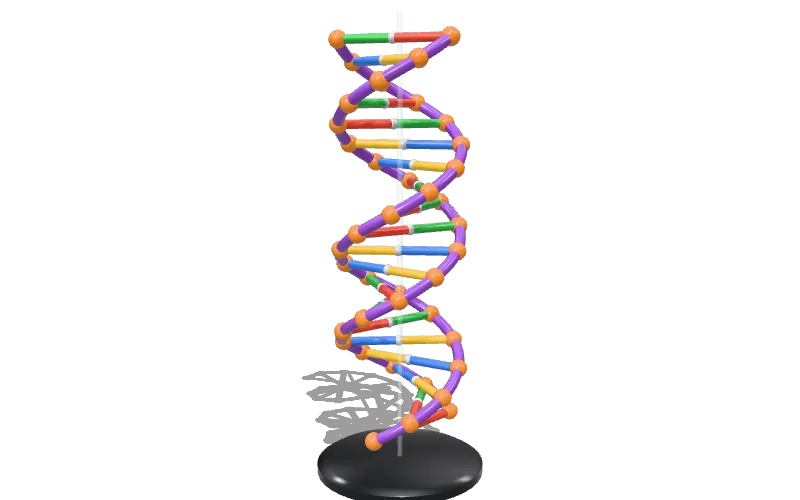
DNA Double Helix Model
Ball and stick DNA
A 54 cm DNA double helix with purple backbones, orange phosphate balls and twenty colour coded base pairs on a stand.
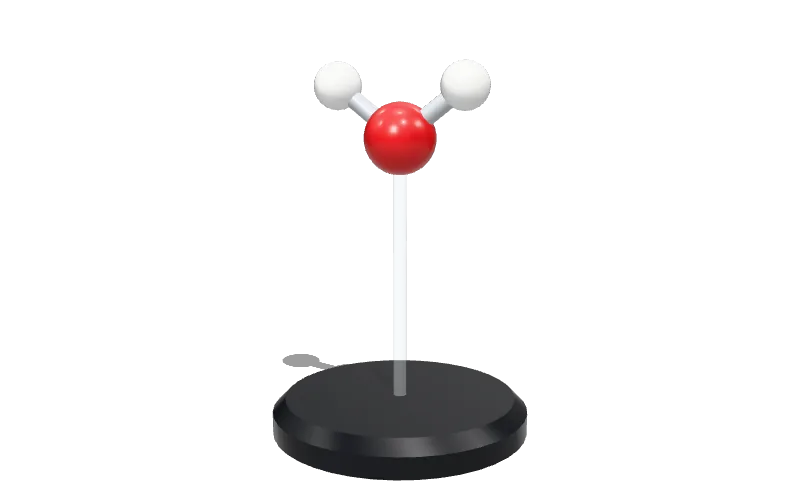
Water Molecule
H2O model
A water molecule model: one red oxygen and two white hydrogens at the real bent angle, on a black stand.
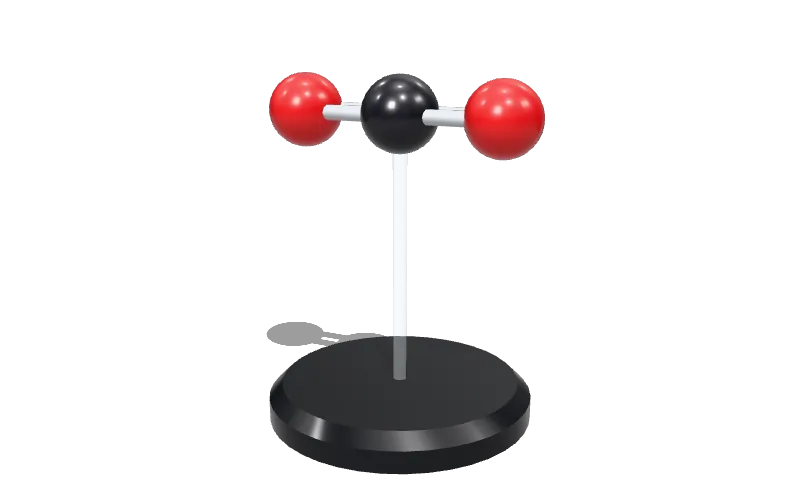
Carbon Dioxide Molecule
CO2 model
A straight carbon dioxide model with a black carbon between two red oxygens, joined by double bond sticks.
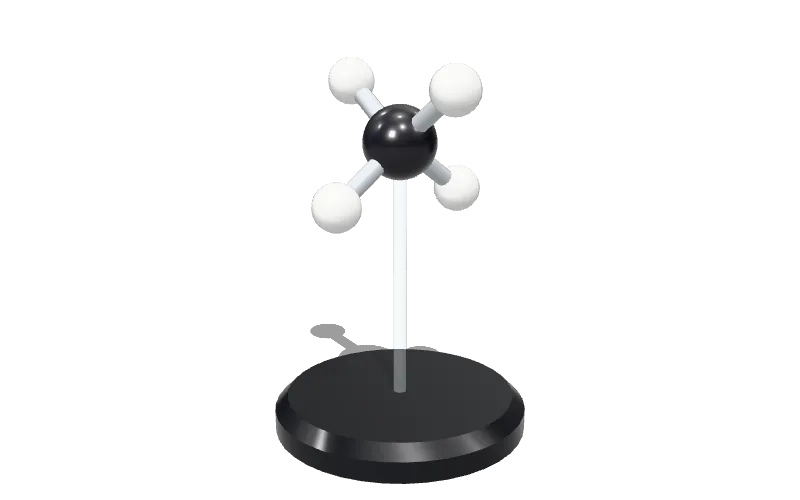
Methane Molecule
CH4 model
A methane model with a black carbon and four white hydrogens pointing to the corners of a tetrahedron.
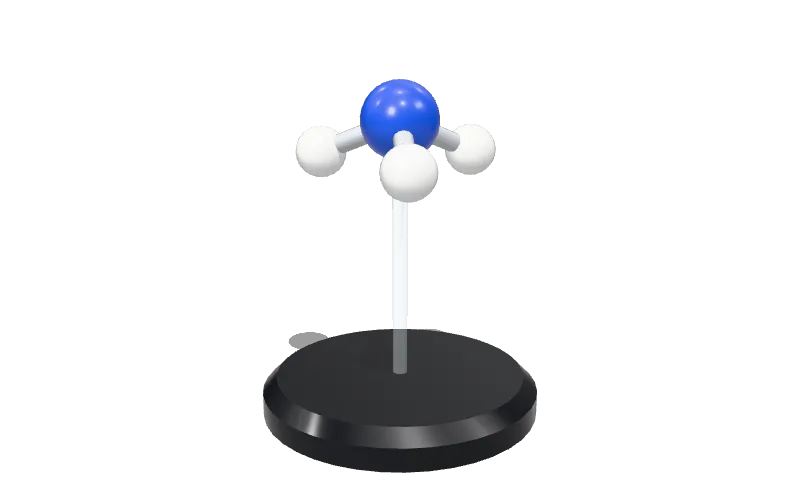
Ammonia Molecule
NH3 model
An ammonia model with a blue nitrogen on top of three white hydrogens, set in a low pyramid shape.
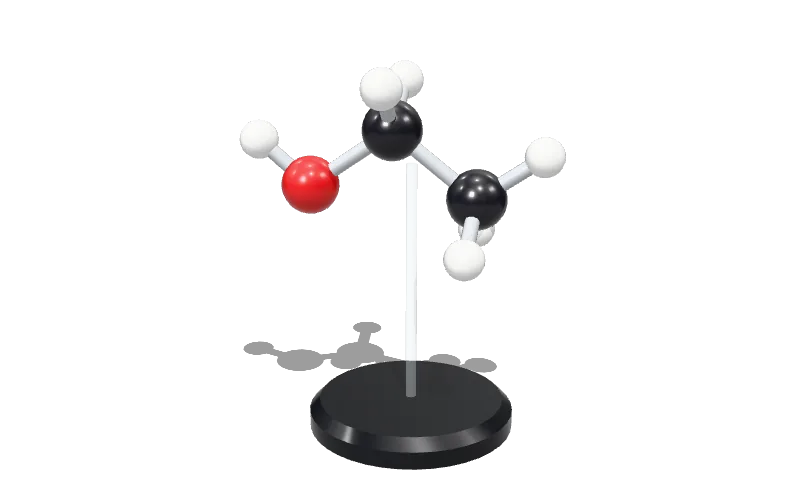
Ethanol Molecule
C2H5OH model
An ethanol model with two black carbons, a red oxygen and six white hydrogens in their real positions.
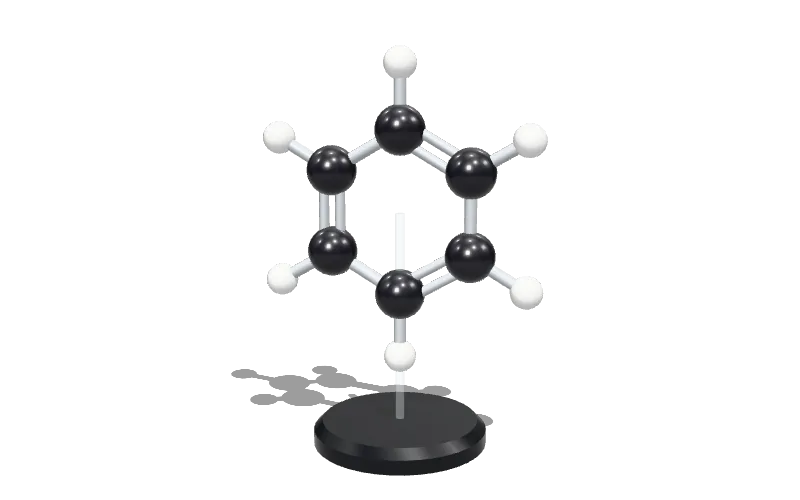
Benzene Ring Molecule
C6H6 model
A flat benzene ring of six black carbons with alternating double bonds and six white hydrogens around it.
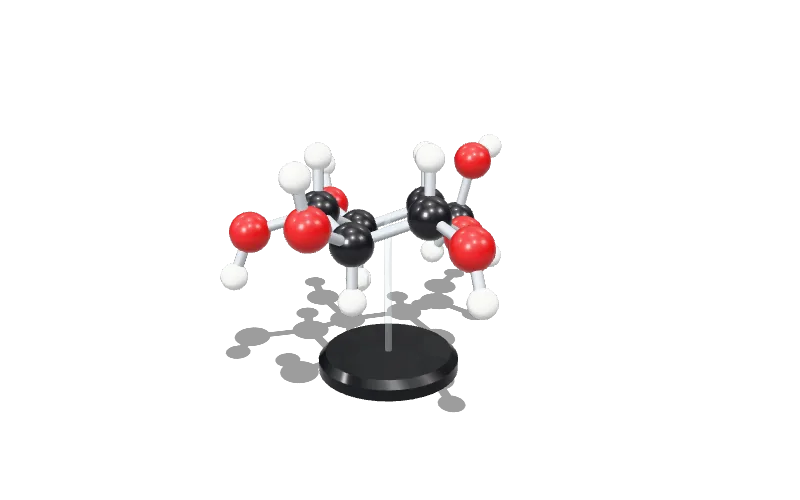
Glucose Molecule
Sugar ring model
A glucose sugar ring in its chair shape, with five carbons and an oxygen in the ring and the hydroxyl groups around it.
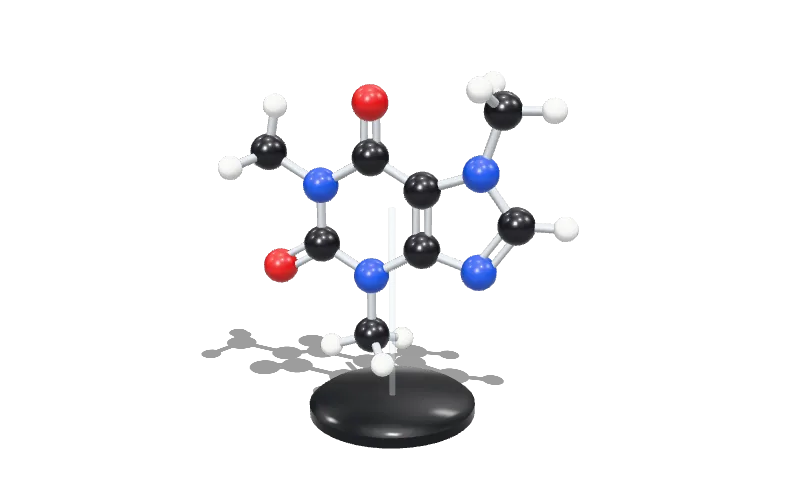
Caffeine Molecule
C8H10N4O2 model
A flat caffeine model with fused six and five atom rings, blue nitrogens, red oxygens and three methyl groups.
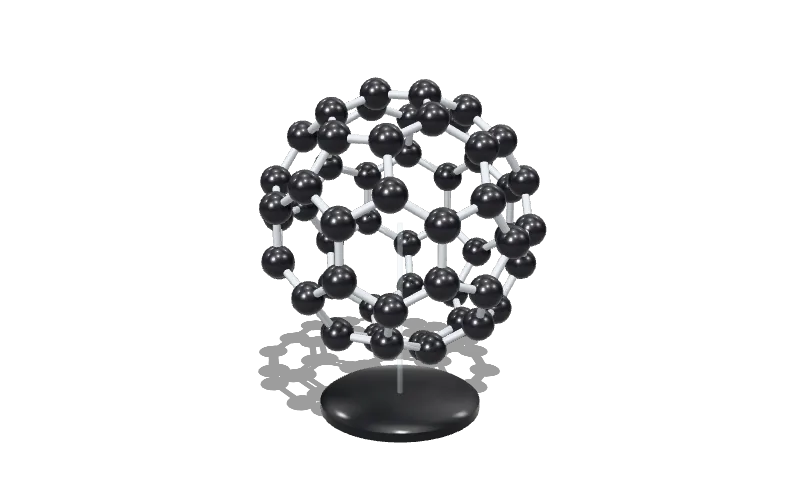
Buckyball C60
Carbon 60 cage
A carbon 60 buckyball: sixty black carbon atoms joined in a hollow cage of pentagons and hexagons, on a stand.
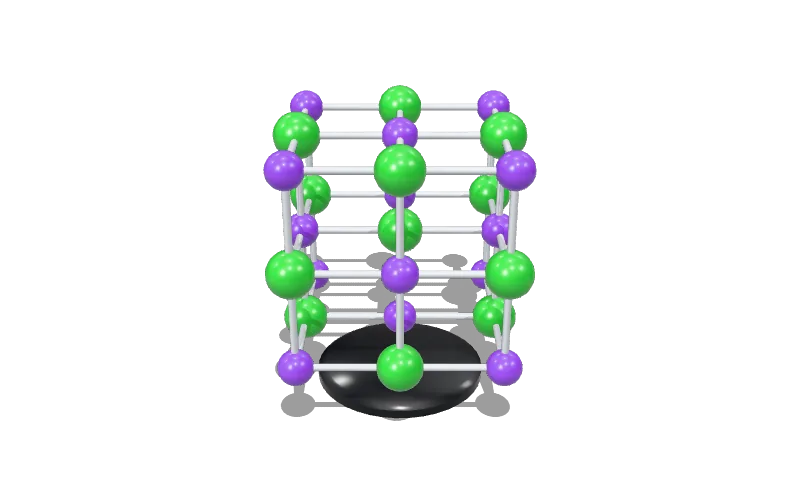
Salt Crystal Lattice
Sodium chloride model
A sodium chloride crystal cube of 27 ions, purple sodium and larger green chlorine, linked in a three by three grid.
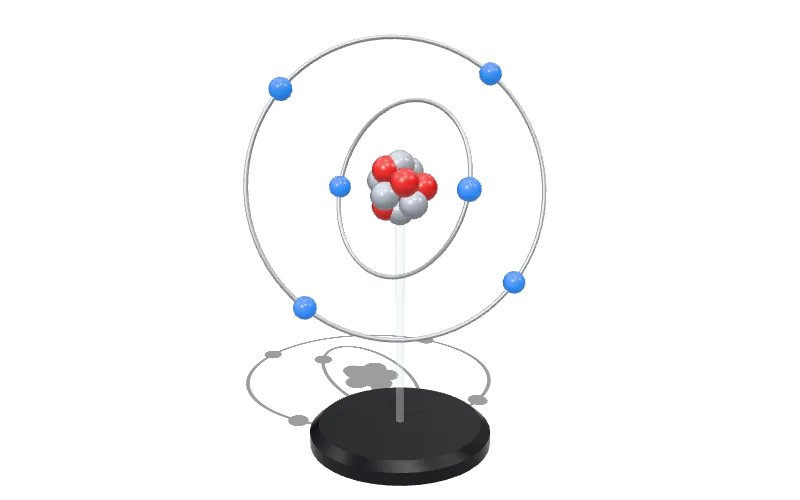
Bohr Atom Model
Atom with orbits
A classic atom model with a red and grey nucleus and blue electrons on two tilted metal orbit rings, on a stand.
Made for games
- Real shapesAtoms sit at real bond lengths and angles, scaled so one angstrom is 4 cm, from the bent water molecule to the tetrahedral methane.
- Classroom favouritesWater, carbon dioxide, methane, ammonia, ethanol, benzene, glucose and caffeine, plus a sodium chloride crystal cube.
- Big showpiecesA 54 cm DNA double helix with colour coded base pairs, a 60 atom buckyball cage and a Bohr atom with orbiting electrons.
- Tiny filesFrom about 1,800 to 28,000 triangles and under 0.6 MB each, so a whole set loads fast in a lesson app or a lab scene.
How to use these GLB models
GLB is binary glTF 2.0: one file with the mesh, materials and node names. Every modern 3D tool reads it.
three.js
Load it with GLTFLoader, as in the code below. Babylon.js, PlayCanvas and A-Frame load GLB directly too.
Unity
Add the free glTFast package (Package Manager, add by name: com.unity.cloud.gltfast), then drag the .glb into Assets.
Godot 4
Drop the .glb into the FileSystem dock. Godot imports it as a scene you can instance.
Blender
File, Import, glTF 2.0. From there you can also export to FBX, OBJ or STL.
import * as THREE from 'three';
import { GLTFLoader } from 'three/addons/loaders/GLTFLoader.js';

const gltf = await new GLTFLoader().loadAsync('model.glb');
const model = gltf.scene;
scene.add(model);

// the model is in metres, +Y up, facing +Z, standing on the ground at the origin

// slowly spin the DNA model (three.js)
const dna = (await new GLTFLoader().loadAsync('dna-double-helix-model.glb')).scene; scene.add(dna);
renderer.setAnimationLoop(t => { dna.rotation.y = t / 2000; renderer.render(scene, camera); });
Licence: free with credit (CC BY 4.0)
All models are made by vinish.dev and released under Creative Commons Attribution 4.0. You may use them in personal and commercial projects, change them and share them. The one condition is credit, for example in your game's credits, your app's about page or your video description:
Each file carries its own credit line inside it (the glTF asset.copyright field), and each zip has a CREDITS.txt. If you change a model, say so after the credit, for example "recoloured".
Questions
What do the atom colours mean?
They follow the usual model kit colours: black for carbon, white for hydrogen, red for oxygen, blue for nitrogen, purple for sodium and green for chlorine.
Are the shapes accurate?
Yes, for teaching. The atoms sit at real bond lengths and angles at a scale of 4 cm per angstrom, and double bonds are shown as two sticks.
Which bases are in the DNA model?
Twenty base pairs in four colours: green A pairs with red T and yellow G pairs with blue C, between two purple backbones with orange phosphate balls.
How big are they?
The DNA helix is about 54 cm tall on its stand, the buckyball about 37 cm and the small molecules like water about 15 to 20 cm with the stand.
What goes with them?
Pair them with the Science Lab, Lab Glassware, Cells and Viruses, Medical Equipment and Human Skeleton packs.
Can I use these models in a commercial game?
Yes. CC BY 4.0 allows commercial use. Put the credit line in your credits or about screen.
Do I need an account?
No. There is no login, sign-up or email. Open a model in the 3D view and press Download: the file is yours.
Can I get OBJ, STL or glTF?
Yes. Open the model in the 3D view and pick glTF, OBJ or STL. Your browser makes the file from the GLB in a second or two. OBJ and STL have no animation. STL is in millimetres with Z up; the models are made of separate parts, so a slicer may need to repair or merge them before 3D printing. For FBX, import the GLB into Blender (File, Import, glTF 2.0) and export it.
Can I change the models?
Yes. You may edit, recolour or cut them up. Keep the credit and mention that you changed them.
More from vinish.dev
- Free 3D Models: every pack in the library
- All 3D model categories: the full list on one page, with a search box
- Free Market Stall 3D Models: Pop-up gazebos and wooden awning stalls of a modern farmers market, each one loaded with its own goods and a blank chalkboard sign.
- Free Armor 3D Models: Polished steel plates with rolled edges and rivets, steel mail, red velvet with brass studs and quilted linen, most of them on wooden museum stands.
- Free Human Anatomy 3D Models: Teaching models in classic anatomy colours, red arteries and blue veins, each on a black display stand, sculpted in code at real size.
- Free Lighthouse 3D Models: Banded paint, granite blocks, white shingles, red brick and riveted iron, each topped with a railed gallery, a glazed lamp room and a glowing lens.
- Free Road Sign 3D Models: Picture-only signs with crisp printed faces, galvanised backs, round steel posts, black caps, clamp bands and small concrete collars.
- Free Cup and Mug 3D Models: Glazed ceramic, speckled enamel, brushed steel, hammered copper and clear glass, with coffee, tea, water, lemonade and brandy inside some of them.
- Free Animal Skull 3D Models: Smooth pale bone with ivory teeth, brown ridged horns and tan antlers, ready for desert scenes, hunting lodges, witch huts, museums and Halloween.
- Free Podium 3D Models: Clean marble, pastel, terrazzo, stone, wood and glowing neon stages for product renders, mockups, ads and online shop images.
- Free Wedding 3D Models: Soft blush, ivory and peach roses with gold, silver and white satin, ready for venue walkthroughs, event planning renders and wedding scenes.
- Free Warehouse 3D Models: Bright safety yellow, red and blue steel with pine pallets and taped cartons, ready for logistics sims, factory levels and storage scenes.
- Free Sci-Fi Turret 3D Models: Clean white and grey armor with glowing cyan, orange and red lights, ready for tower defense, base building and shooter games.
- Free Cartoon Vehicle 3D Models: Chunky, toy-like cars and trucks with big wheels and bright glossy paint, ready for kids games, city builders and casual racers.
- Free Armored Vehicle 3D Models: Wheeled and tracked armor beyond the tank: troop carriers, scout cars, engineer and support vehicles at real size.
- Free Fantasy Village 3D Models: Storybook homes and village props with glowing windows, at real building size, ready for cosy games, fairy tale scenes and kids apps.
- Free Gas Station 3D Models: Everything for a roadside fuel stop, from pumps and canopy to the kiosk, car wash and forecourt props, at real size.
- Free Crystal and Gem 3D Models: Raw minerals, polished stones and cut gems at real size, ready for mining games, treasure rooms, shops and science scenes.
- Free 1980s Room 3D Models: Everything for a retro teen bedroom or living room scene, at real size and with no brands, words or numbers.
- Free Wine, Beer and Cocktail 3D Models: Real-size glasses with real wall thickness and the drink inside as its own see-through part, ready for bars, restaurants and party scenes.
- Free Dice and Playing Card 3D Models: Real-size game night props with round-pip dice and suit-pip cards, ready for board game scenes, card tables and game rooms.
- Free Tabletop Miniature STL: Each mini is one closed solid on its own round base at real millimetre size: download the STL, slice, prime and paint.
- Free Sci-Fi Soldier 3D Models: A future squad for a shooter or space game: armoured troopers with glowing visors, specialists with packs and tools, and officers. Idle, walk and run.
- Free Building Materials 3D Models: Strapped pallets, stacked timber, bar bundles and bulk bags at real size, for building sites, yards, games and films.
- Free Tableware 3D Models: China, glass, silver and wood for the table, from a butter dish to a laid dinner place, for dining rooms, restaurants, games and films.
- Free Alien Creature 3D Models: Strange alien animals from a small hopper to a 5.7 m tunnel worm, for sci-fi games, alien planets, films and prints.
- Free Garage 3D Models: Lifts, jacks, tool chests and tire machines for car repair shops, garages and mechanic games.
- Free Fossil 3D Models: Skulls, skeletons and stone fossils for museum scenes, dig site games and science lessons.
- Free Viking Village 3D Models: Halls, workshops, walls and docks for Norse settlements, survival games and saga scenes.
- Free Beach 3D Models: Umbrellas, towers, huts and sand toys for seaside scenes, summer games and holiday worlds.
- Free Casino 3D Models: Tables, slot machines and chips for casino scenes, heist games and card game worlds.
- Free Theme Park 3D Models: Bright fairground rides and stands for park builder games, carnival scenes and kids worlds.
- Free Flying Car and Air Taxi 3D Models: Near-future eVTOL air taxis, flying cars and landing pads for city builders, sci-fi games and future mobility scenes.
- Free Strategy Game Building 3D Models: Chunky medieval base buildings for real time strategy, city builder and tower defence games.
- Free Cartoon Building 3D Models: Bright, bendy toon buildings for kids games, casual city builders and cartoon worlds.
- Free Tank 3D Models: Tracked armour from the interwar years to today for war games, dioramas and battle scenes.
- Free Wheel and Tire 3D Models: Car, truck and classic wheels with real tread for garages, car games and parts shops.
- Free Slime and Cute Monster 3D Models: Friendly slimes and little monsters for casual games, RPG enemies and kids scenes.
- Free Home and Service Robot 3D Models: Everyday robots for smart homes, hotels, hospitals and near-future game scenes.
- Free Backdrops and Scenes 3D Models: Ready-made sets to stand a character or a product in for renders, thumbnails and game menus.
- Free 1950s Diner 3D Models: Chrome, red vinyl, neon and sweet treats for retro diner scenes, games and product shots.
- Free Coffee and Tea 3D Models: Cups, pots and brewers with drinks inside for cafe scenes, kitchen tables and product shots.
- Free Retro Computer 3D Models: Old computers, drives, disks and a tape cabinet for retro rooms, labs and period scenes.
- Free Cookware 3D Models: Pots, pans, a wok, a kettle and a steamer for kitchen scenes, cooking games and product shots.
- Free Modular Wall Kit 3D Models: Brick wall pieces with windows, doors and arches that snap together into streets and houses.
- Free Japanese Buildings 3D Models: Pagodas, shrines, townhouses, farmhouses and castle walls of a traditional Japanese town.
- Free Train Station 3D Models: Platforms, canopies, ticket halls, footbridges and the furniture of a railway station.
- Free Low Poly Car 3D Models for Games: 12 vehicles with separate wheels
- Sample GLB Files: small test files for loaders, viewers and engines
- Free browser games and simulators by vinish.dev