
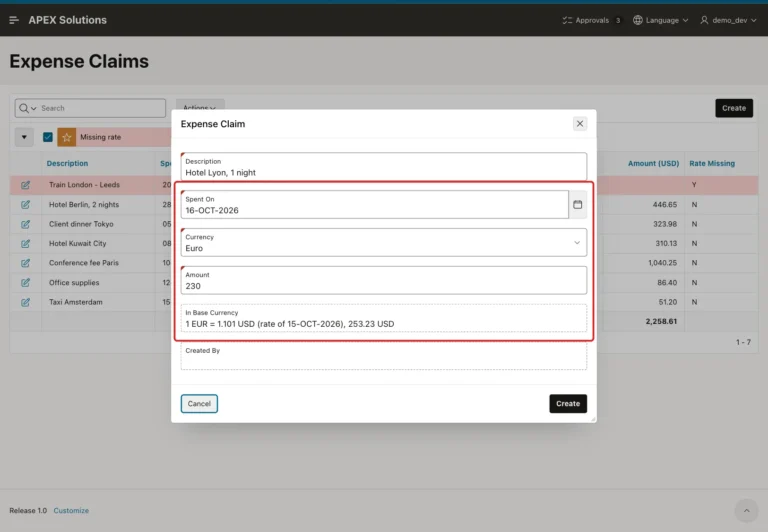
How to Handle Multi-Currency Amounts with Exchange Rates in Oracle APEX
Store exchange rates by date, convert each amount with the rate of its day, preview it in the form, block missing rates and total in the base currency.
Store exchange rates by date, convert each amount with the rate of its day, preview it in the form, block missing rates and total in the base currency.
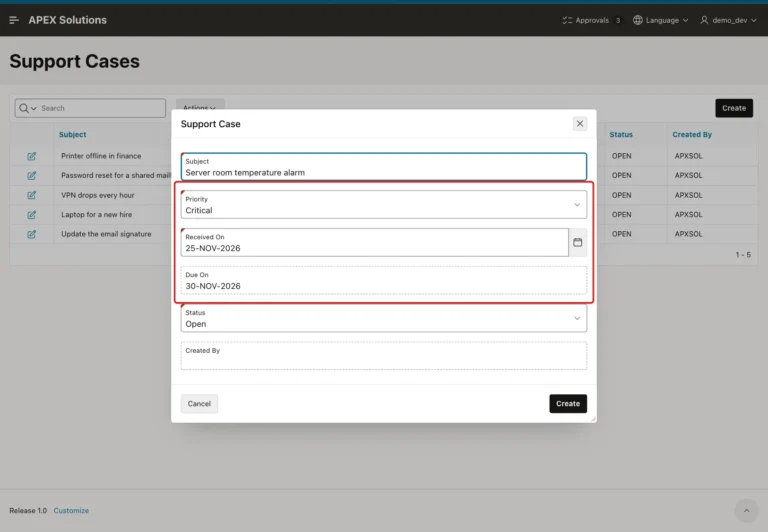
Build a holiday table and a PL/SQL business-day function, show the due date while typing, save it with a server computation, and report business days left.
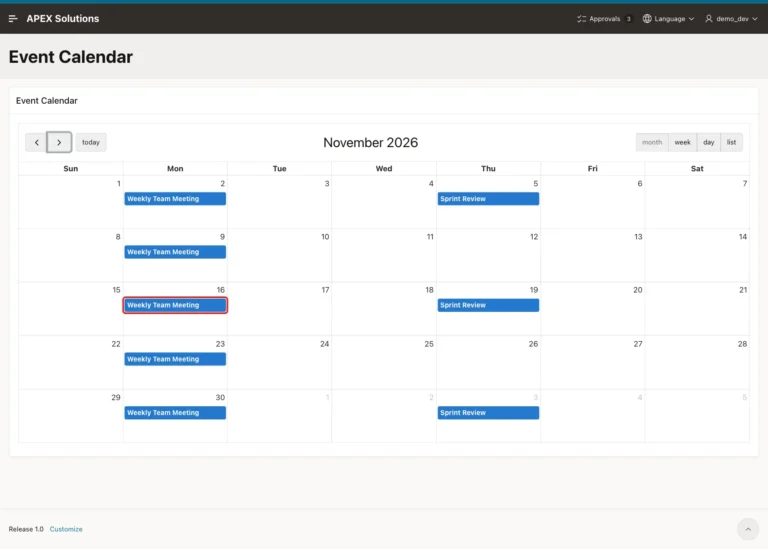
Store the repeat rule once, generate the dates with DBMS_SCHEDULER, show them on a calendar, and move or cancel single dates without losing them later.
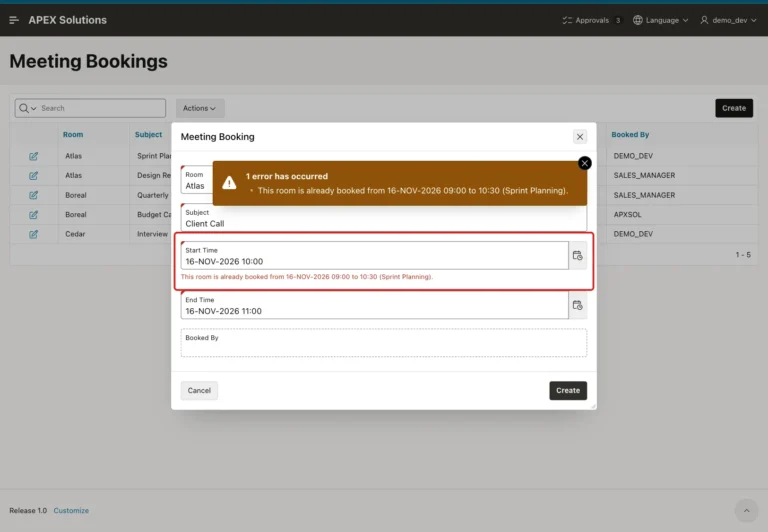
Check new bookings against saved ones with a validation, allow back-to-back slots, and lock the room row so two users saving at once cannot double-book.
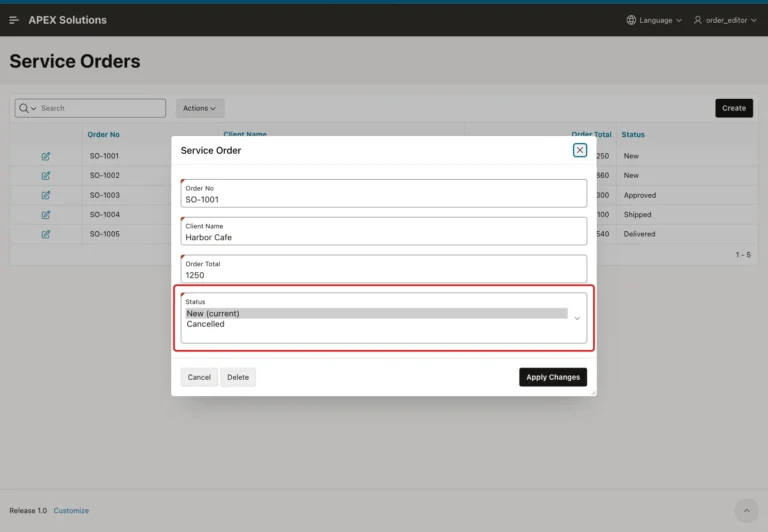
Store allowed status moves per role in a table, show only the next valid statuses in the form select list, and reject forced values with a validation.
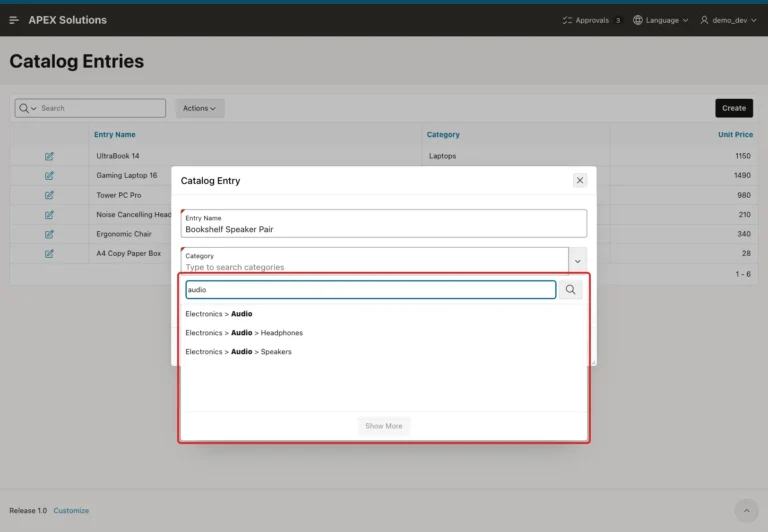
Build an indented select list and a searchable Popup LOV from a self-referencing category table with CONNECT BY, save the ID and show full paths in reports.

Use a unique index on upper(trim(name)), a declarative validation and a page error handling function to stop near duplicate names with a clear message.
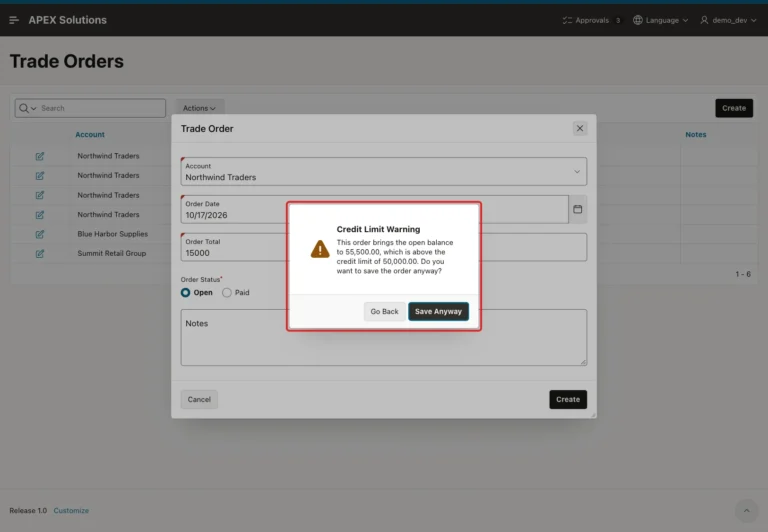
Check a soft rule on the server, ask the user with a declarative Confirm dialog, record the answer in a hidden item and keep hard errors as real validations.
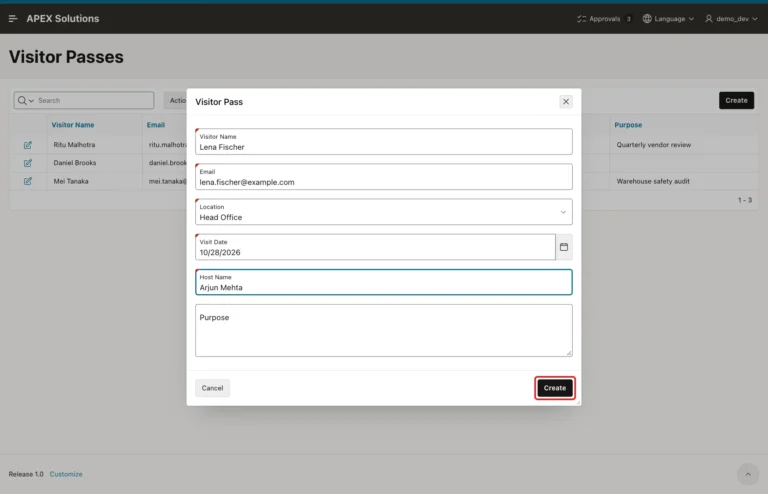
Check the required items with a custom input change event and a JavaScript condition, switch the buttons with Enable and Disable actions, and keep server checks.

Store surveys, questions and options in tables, draw the form with a Dynamic Content region, validate the answers on the server and show the results in a chart.
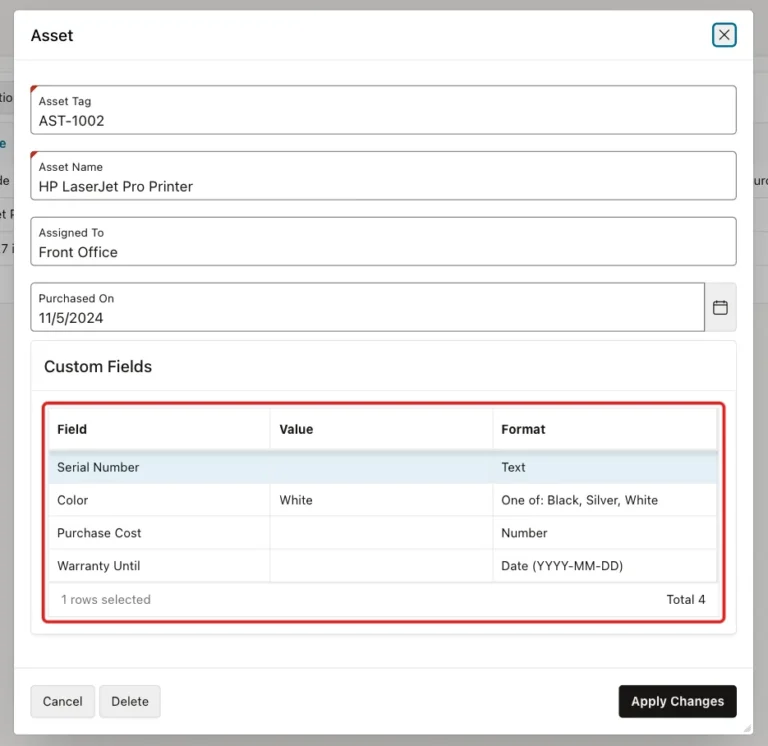
Store field definitions and values in two tables, edit them with an Interactive Grid on the form, validate each type and block saves with missing required values.
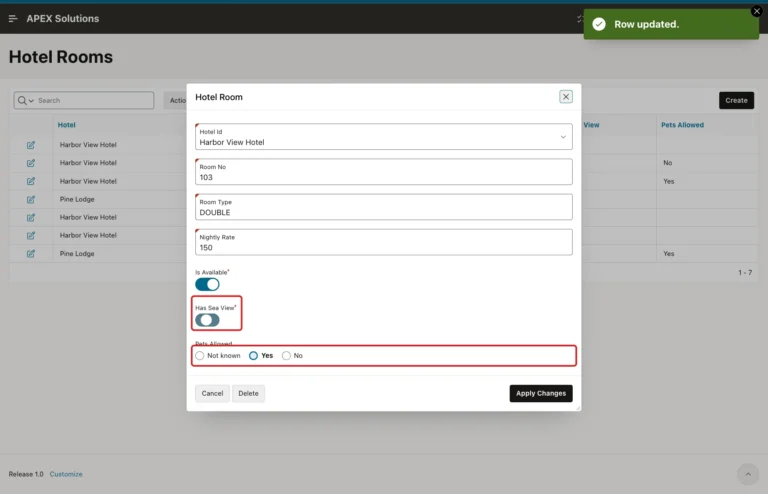
Build a report and form on BOOLEAN columns, keep NULL values safe, give new records the right default, and filter reports by Yes or No.
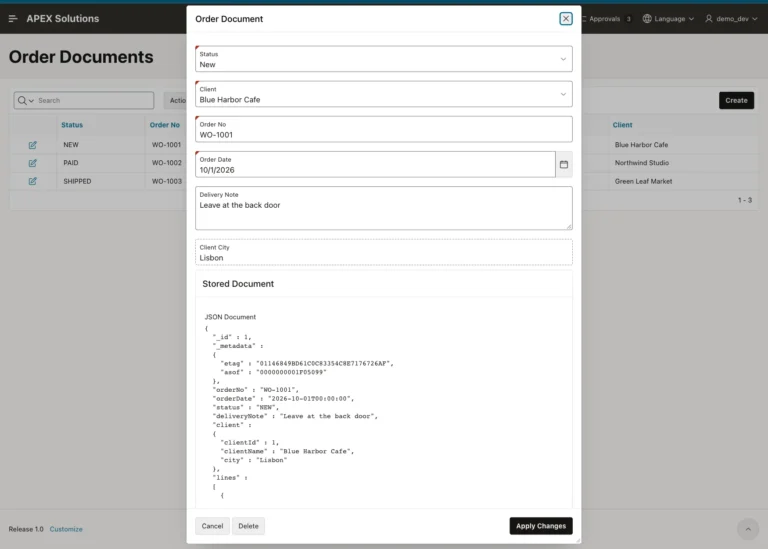
Edit order documents stored in relational tables through a duality view, keep read-only client data safe, and stop saves after another session changed the document.
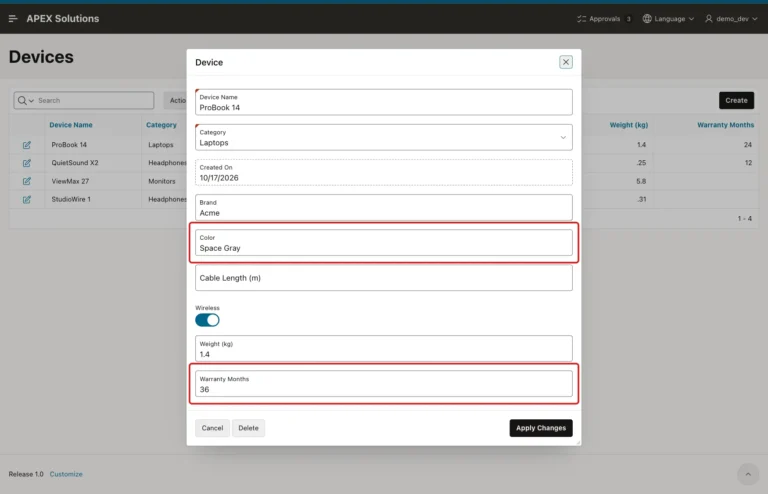
Build a report and a form on a 26ai JSON column with a JSON Source, edit attributes as normal fields, and learn what APEX writes for empty values.
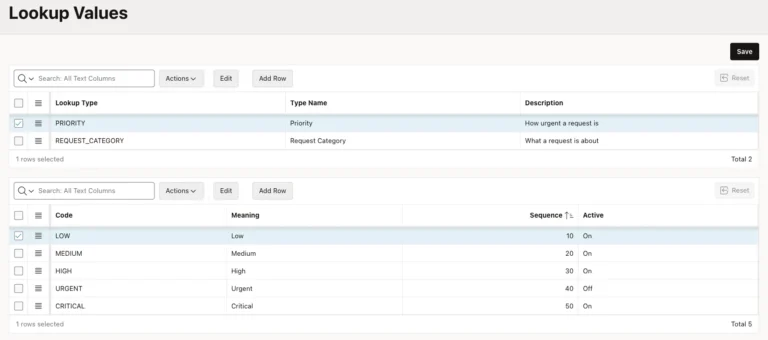
Keep every short list in two lookup tables, maintain them on one master-detail page, and use shared lists of values that hide retired values but keep old records.
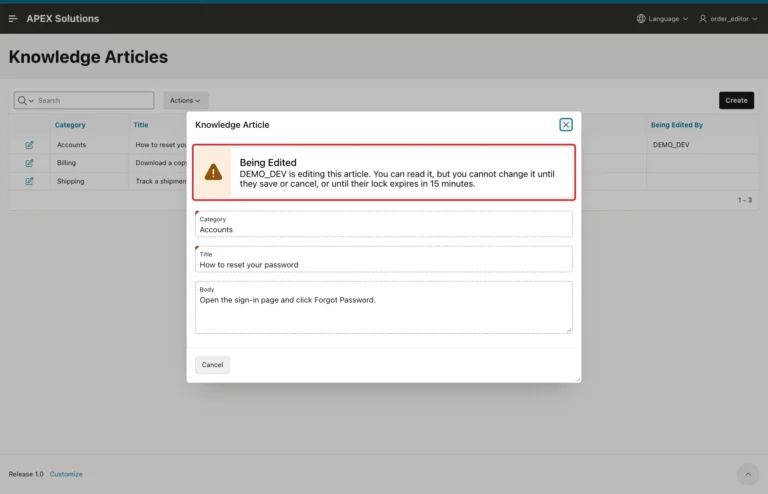
Build a checkout lock with a lock table and a small package, show other users a read-only form with the editor's name, and release the lock on save, cancel or expiry.
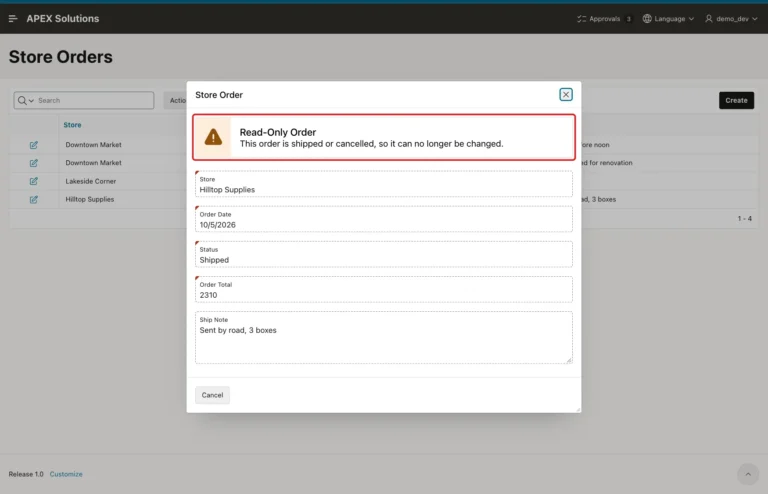
Use the page Read Only condition with a status query, hide Save and Delete, show a notice, and add a validation that blocks forced SAVE and DELETE requests.
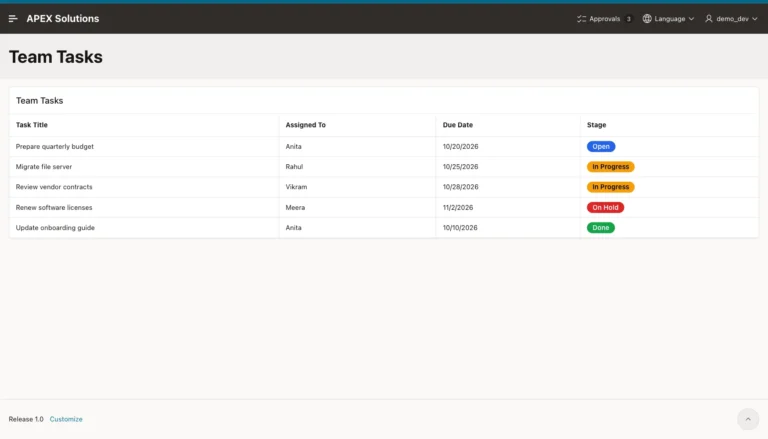
Use a Color Picker item with preset colors and a contrast check, a virtual column for the text color, and an HTML Expression that turns report columns into badges.