
For decades, the "budgeting season" has been a source of dread for finance teams and department heads alike. It is an annual ritual that typically involves a chaotic mix of static Excel spreadsheets, version control nightmares, endless email threads, and the crude logic of "take last year's numbers and add 5%."
This traditional approach is inherently flawed because it is backward-looking. It relies on the assumption that the future will look exactly like the past, only slightly bigger. In today's volatile economic climate—marked by supply chain disruptions, fluctuating inflation, and rapid shifts in consumer behavior—this assumption is a recipe for disaster.
This is where Artificial Intelligence (AI) integration into Enterprise Resource Planning (ERP) systems changes the game. By moving from static data entry to dynamic, predictive modeling, AI turns budgeting from a quarterly administrative chore into a strategic weapon.
Here is a comprehensive look at how AI is re-architecting the budgeting process within modern ERPs, written for those building and using these systems.
The Paradigm Shift: From Descriptive to Predictive Analytics
To understand the value of AI, we must first distinguish between the two types of data analysis that ERPs perform.
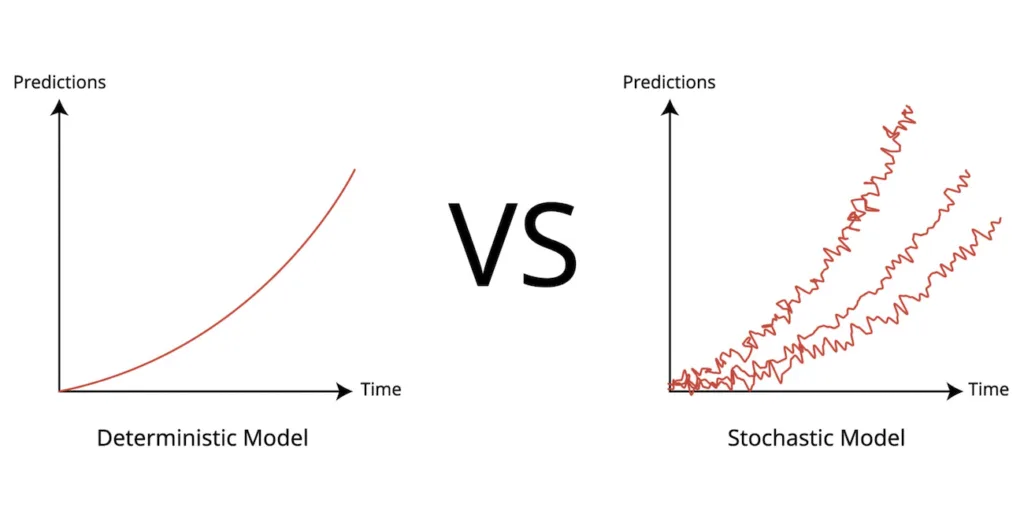
Traditional ERPs are descriptive. They are excellent systems of record that act like a digital rearview mirror. They can tell you exactly how much you spent on server costs in Q3 of last year, or what your payroll burden was in December. While accurate, this data is static. It tells you what happened.
AI-enabled ERPs are predictive. They ingest that historical data and treat it not as a final report, but as a training set. By combining internal historicals with external variables—such as market trends, interest rates, commodity prices, and even weather patterns—the AI generates a forecast of what you will likely spend. It shifts the focus from accounting to forecasting.
Key AI Capabilities in Modern ERP Budgeting
How does this actually look in practice? AI doesn't just "make the budget better"; it introduces specific, agentic capabilities that optimize the workflow.
1. Intelligent Revenue Forecasting
Instead of relying on gut feeling, "sandbagging" by sales managers, or simple linear regression, AI models in ERPs (like Oracle NetSuite, Microsoft Dynamics 365, or SAP S/4HANA) analyze vast datasets to predict revenue with high precision.
- The Mechanism: Machine Learning (ML) algorithms perform time-series analysis on historical sales data. Crucially, they also layer in qualitative data: pipeline health from the CRM, sales rep conversion rates, and external economic indicators.
- The Benefit: The system provides a confidence interval. Instead of a flat "We will make $1M," the ERP says, "There is an 85% probability of revenue between $950k and $1.1M." This allows finance leaders to allocate resources based on risk tolerance rather than blind optimism.
2. Automated Expense Anomaly Detection (Continuous Auditing)
One of the biggest leaks in a budget comes from "rogue spend"—small, unnoticed expenses that add up, or categorization errors that skew reports. In a manual system, these are often caught months later, if at all.
- The Mechanism: An AI agent constantly monitors the General Ledger in near real-time. It learns the "normal" patterns of spending for every department and vendor. If the Marketing department usually spends $5k on ads but suddenly logs a $50k invoice, or if a software license expense is wrongly tagged as "Office Supplies," the AI flags it instantly.
- The Benefit: This shifts the finance team's role from "data janitors" who fix coding errors at the end of the month to strategic analysts. The budget remains accurate and clean day-to-day, eliminating end-of-quarter surprises.
3. Driver-Based Budgeting & Scenario Planning
In a traditional setup, running a "What If" scenario is a manual nightmare. Asking "What if raw material costs rise by 10%?" often requires breaking complex spreadsheet formulas and days of work to re-calculate the bottom line.
- The Mechanism: AI enables continuous simulation. You can adjust a single driver (e.g.,
Global Fuel Cost), and the AI instantly propagates that change across the entire ERP ecosystem—updating manufacturing costs, shipping margins, and bottom-line profitability. - The Benefit: Agility. When a supply chain crisis hits, an organization can re-forecast the entire year's budget in minutes, testing multiple mitigation strategies to see which yields the best outcome.
4. Predictive Cash Flow Management
Profit is opinion; cash is fact. Many profitable companies fail simply because they run out of cash. Traditional ERPs struggle to predict when cash will actually land in the bank.
- The Mechanism: AI analyzes customer payment behaviors. It knows that Client A always pays on day 29, while Client B usually pays on day 45 despite the "Net 30" terms. It combines this with predicted accounts payable outflows.
- The Benefit: The ERP can generate a highly accurate cash position forecast for the next 30, 60, or 90 days. This allows the CFO to optimize working capital, knowing exactly when they can safely invest in R&D or when they need to draw on a line of credit.
5. Smart Vendor Management
Budgeting isn't just about internal spending; it's about what you pay others.
- The Mechanism: AI can analyze vendor pricing trends across the market. If you are budgeting $500 per unit for a component, but the market average has dropped to $450, the AI can flag this discrepancy during the budgeting phase.
- The Benefit: This empowers procurement teams with data leverage during negotiations, ensuring the budget reflects the most competitive market rates available.
The Developer's Perspective: The Architecture Challenge
For developers and engineers working in the ERP space, "AI Budgeting" isn't magic; it is a rigorous data engineering challenge. Building or implementing these features requires focusing on three core pillars:
1. The Data Integrity Pipeline
AI models are strictly "garbage-in, garbage-out." If the historical data in the ERP is messy—duplicate vendors, inconsistent tagging, or missing dates—the predictions will be useless. Developers must build strict validation pipelines and automated data cleansing tools to ensure the training data is pristine.
2. External Signal Ingestion
The most powerful predictive models need context. Developers need to build robust APIs to ingest non-financial data into the ERP. This could include:
- Web traffic data: To predict future e-commerce sales.
- Weather data: To predict utility costs or retail foot traffic.
- Commodity indices: To predict raw material costs.
3. Explainable AI (XAI)
A "black box" budget is useless to a CFO. If the AI says, "Cut the travel budget by 12%," the finance team needs to know why. Developers must prioritize Explainable AI (XAI). The UI must expose the logic: "Forecast suggested a 12% cut because travel costs have historically correlated with a predicted rise in fuel prices for Q3." Trust is just as important as accuracy.
Conclusion
The role of AI in ERP budgeting isn't to replace the finance professional's judgment. It is to automate the tedious arithmetic and provide a smarter, data-backed baseline. By shifting the focus from data gathering to strategic analysis, AI allows companies to budget for the future reality, rather than just copying the past. For developers, this represents a new frontier: building systems that don't just record value, but help create it.
